Biography
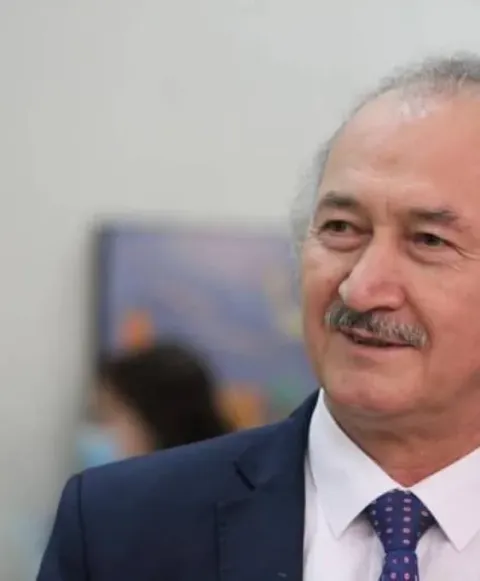
Akmal Nuriddinov (known by the artistic name Akmal Nur) is an Uzbek painter. He was born on 27 February 1959 in the city of Namangan. He studied at the Benkov Republican Art College (1974–1978) and at the Tashkent Institute of Theatre and Art (1984).
From the 1990s the theme of love became central to his work, which draws on images from Eastern poetry and folk tradition such as the pomegranate, apple, moon, river, fish and boat. His paintings celebrate the triumph of good and light and spiritual values; among them are «The Spring of Hope», «The Legend of Kushan», «The Apple of Love», «The Valley of Love» and «The Fairy on the Moon».
He became an academician of the Academy of Arts of Uzbekistan in 1997 and received the title People's Artist of Uzbekistan in 2003. Since 2012 he has headed the Academy of Arts and teaches as a professor at the Kamoliddin Behzod National Institute of Fine Arts and Design. His works have been shown at exhibitions abroad, including a virtual exhibition organised in Iran.
Education
- Benkov Republican Art CollegeCollege · Tashkent · 1974–1978
- Ostrovsky Tashkent State Theatre and Art InstituteUniversity · Tashkent · 1984now State Institute of Arts and Culture of Uzbekistan
Career
- Academy of Arts of UzbekistanPresident · Tashkent · 2012–present
- Kamoliddin Behzod National Institute of Arts and DesignProfessor · Tashkent · 2012–present
Awards
 People's Painter of Uzbekistan2003 · Uzbekistan
 Order «For Selfless Service»2019 · Uzbekistan
Life path
- 1959Birth
Born on 27 February in Namangan.
- 1978Graduated from the art college
Completed studies at the Benkov Republican Art College.
- 1984Graduated from the institute
Graduated from the Tashkent Institute of Theatre and Art.
- 1997Academician
Became an academician of the Academy of Arts of Uzbekistan.
- 2003People's Artist title
Awarded the title People's Artist of Uzbekistan.
- 2012Head of the Academy of Arts
Became head of the Academy of Arts of Uzbekistan.
- 2019Order for Selfless Service
Awarded the Order «Fidokorona xizmatlari uchun».