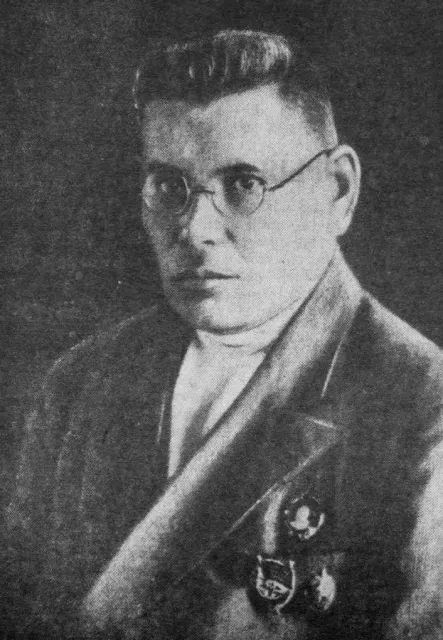
Nikolay Gikalo
Soviet party official: First Secretary of the Communist Party of Uzbekistan in 1929, then head of the Azerbaijani (1929–1930) and Belarusian (1932–1937) parties; executed in 1938, rehabilitated in 1955.
- Occupation:
- Politician
- Lived:
- March 8 1897(41 years old) ♓ — April 25, 1938
Biography
Nikolay Gikalo was a Soviet party official who briefly led the Communist Party of Uzbekistan in 1929. He later headed the Communist parties of Azerbaijan and Belarus.
He was born on 8 March 1897 in Odessa into a peasant family. He graduated from a military paramedic school in Tiflis in 1915 and joined the Bolshevik party in 1917. He took part in establishing Soviet power in the North Caucasus and from 1925 held party posts there.
From April to June 1929 he was First Secretary of the Central Committee of the Communist Party of Uzbekistan, succeeded by Isaak Zelensky. He was then First Secretary of the Communist Party of Azerbaijan from August 1929 to June 1930, and of the Communist Party of Belarus from January 1932 to March 1937. From March to October 1937 he led the Kharkiv regional party committee.
Gikalo was arrested on 11 October 1937. The Military Collegium of the USSR Supreme Court sentenced him to death on 25 April 1938, and the sentence was carried out the same day. He was rehabilitated in 1955.
Career
- Central Committee of the Communist Party of UzbekistanFirst Secretary · Tashkent · 1929–1929
Life path
- 1897Birth
Born in Odessa into a peasant family.
- 1917Bolshevik party
Joined the party and later took part in establishing Soviet power in the North Caucasus.
- 1929Communist Party of Uzbekistan
First Secretary of the Central Committee from April to June.
- 1929–1930Communist Party of Azerbaijan
First Secretary of the Central Committee.
- 1932–1937Communist Party of Belarus
First Secretary of the Central Committee.
- 1937Kharkiv regional committee
Led the regional committee from March to October; arrested on 11 October.
- 1938Sentence and rehabilitation
Sentenced to death and shot on 25 April; rehabilitated in 1955.