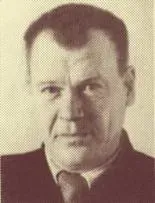
Aleksandr Borovkov
Soviet orientalist and Turkologist born in Tashkent, corresponding member of the USSR Academy of Sciences, author of the Uzbek-Russian dictionary and a grammar of the Uzbek language.
- Occupation:
- Scientist, Philologist, Orientalist
- Born:
- March 29 1904 ♈ — 1962
- Birthplace:
- Tashkent
Biography
Aleksandr Konstantinovich Borovkov was born in Tashkent on 29 March 1904 (16 March in the Old Style). From 1922 to 1928 he studied at the Oriental Faculty of the Central Asian State University, where he also taught (1923–1928) and worked as a researcher at the Central Asian Museum.
In 1928 he moved to Leningrad and taught at the Leningrad Institute of Oriental Studies until 1938. From 1929 to 1932 he was a postgraduate at the Institute of Language and Thought of the USSR Academy of Sciences under Academician N. Ya. Marr. In 1935 he was granted the degree of candidate of philology without defending a dissertation and became a docent.
From 1938 Borovkov was a senior researcher and head of the Central Asian Cabinet at the Institute of Oriental Studies of the USSR Academy of Sciences. In 1939–1945 he worked in Tashkent as deputy director of the Uzbek branch of the USSR Academy of Sciences (later the Academy of Sciences of the Uzbek SSR) and contributed to the growth of Uzbek scholarship. In 1943 he was named Honoured Science Worker of the Uzbek SSR; he later became a corresponding member of the Academy of Sciences of the Uzbek SSR.
In 1948–1950 he was deputy director of the Institute of Oriental Studies. In 1958 he was elected a corresponding member of the USSR Academy of Sciences; he held the degree of doctor of philology and the title of professor. From 1959 he was deputy director of the Leningrad branch of the Institute of Linguistics, and in 1961–1962 its head.
His interests covered the grammar, vocabulary and dialects of Uzbek, the written monuments of the Chagatai language, Karachay-Balkar, and the cultures of the peoples of Central Asia. His Uzbek-Russian dictionary (1959) went through many editions. He was awarded the Order of Lenin and the Order of the Badge of Honour.
Borovkov died in Leningrad in November 1962 and was buried at the Shuvalovo Cemetery. His edition of the lexicon of the Central Asian Qur’an commentary of the 12th–13th centuries appeared in 1963, after his death.
Education
- Central Asian State UniversityUniversity · Tashkent · 1922–1928 · Oriental Faculty
Career
- Academy of Sciences of UzbekistanDeputy director of the Uzbek branch of the USSR Academy of Sciences · Tashkent · 1939–1945
- Institute of Oriental Studies of the USSR Academy of SciencesSenior researcher, head of the Central Asian Cabinet, deputy director · 1938–…
- Leningrad Institute of Oriental StudiesLecturer · 1928–1938
- Leningrad Branch of the Institute of Linguistics of the USSR Academy of SciencesDeputy director, head of the branch · 1959–1962
Awards
- Honoured Science Worker of the Uzbek SSR1943 · Uzbek SSR
 Order of LeninUSSR

Life path
- 1904Birth
Born in Tashkent.
- 1922–1928University studies
Studied at the Oriental Faculty of the Central Asian State University and taught there.
- 1928–1938Leningrad Institute of Oriental Studies
Taught at the institute in Leningrad.
- 1929–1932Postgraduate studies
Studied at the Institute of Language and Thought of the USSR Academy of Sciences under N. Ya. Marr.
- 1935Academic degree
Became a candidate of philology without defending a dissertation and received the rank of docent.
- 1938Institute of Oriental Studies
Senior researcher and head of the Central Asian Cabinet at the Institute of Oriental Studies of the USSR Academy of Sciences.
- 1939–1945Work in Tashkent
Deputy director of the Uzbek branch of the USSR Academy of Sciences.
- 1943Honoured Science Worker
Named Honoured Science Worker of the Uzbek SSR.
- 1948–1950Deputy director of the institute
Deputy director of the Institute of Oriental Studies of the USSR Academy of Sciences.
- 1958Corresponding member
Elected a corresponding member of the USSR Academy of Sciences.
- 1959–1962Institute of Linguistics
Deputy director of its Leningrad branch and, from 1961, its head.
- 1962Death
Died in Leningrad in November.
Works
- “The Karachay-Balkar Language” (1934)Monograph
A description of the Karachay-Balkar language.
- “Alisher Navoi as the Founder of the Uzbek Literary Language” (1940)Scholarly work
On Navoi’s place in the history of the Uzbek literary language.
- “Agglutination and Inflection in the Turkic Languages” (1951)Scholarly work
A study in Turkic grammar.
- “Russian-Uzbek Dictionary” (1951)Dictionary
A four-volume dictionary published in Tashkent. Published in 1951–1955.
- “Grammar of the Uzbek Language” (1957)Grammar
Published in Tashkent.
- “Uzbek-Russian Dictionary” (1959)Dictionary
The principal dictionary, reprinted many times.
- “Badai al-Lughat” (1961)Edition of a dictionary
Edited the dictionary of Tali Imani of Herat to Navoi’s works.
- “The Lexicon of the Central Asian Tafsir of the 12th–13th Centuries” (1963)Scholarly work
Published in Moscow after the scholar’s death.