Tashkent
Notable people born here (750 people)
Tashkent is the capital and largest city of Uzbekistan, with the status of a region. It lies in the ancient Chach oasis in the Chirchiq valley and is one of the leading political, economic and cultural centres of Central Asia.
- Population
- 3,178,100 (2026)
- Elevation
- 455 m above sea level
Also well known


Cities and districts (4)











About the place — Tashkent
History
The Tashkent oasis has long been known as Chach (Shash). The name appears in an inscription of the Sasanian king Shapur I in the 3rd century, and the oasis rulers minted their own coins. In the early Middle Ages the town was called Binkath and was a busy stop on the Silk Road.
The name Tashkent is recorded in 11th-century sources, including the works of al-Biruni. Under the Shaybanids the Barak Khan and Kukeldash madrasas were built. In the 18th century the city became an independent city-state of four quarters (dahas), and in the early 19th century it fell to the Khanate of Kokand.
Russian troops took Tashkent in 1865, and it became the seat of the Governor-Generalship of Turkestan. A new town with straight streets grew next to the old one, and the railway arrived in 1899.
Since 1930 Tashkent has been the capital of the Uzbek SSR. During the Second World War many factories and hundreds of thousands of people were evacuated here. After the earthquake of 26 April 1966 much of the city was rebuilt, and in 1977 the first metro in Central Asia opened.
Since 1991 Tashkent has been the capital of independent Uzbekistan. Today it has 12 districts and keeps growing with new neighbourhoods, business centres and metro lines.
Geography
The city lies in the north-east of the country, in the valley of the Chirchiq River at the foot of the Western Tian Shan, 440–480 m above sea level. Tashkent Region surrounds it on all sides, and the Kazakh border runs close to its outskirts. The Chatkal and Kurama ranges rise to the east and north-east.
Canals drawn from the Chirchiq — the Bozsu, Ankhor, Salar, Karasu and others — flow through the city, softening its climate and watering its many parks and avenues.
The climate is continental: summers are long, hot and dry, with July averaging above 27 °C; winters are short but can be snowy and cold, with January around 0 °C. Precipitation is 360–390 mm a year, mostly in winter and spring.
Sights
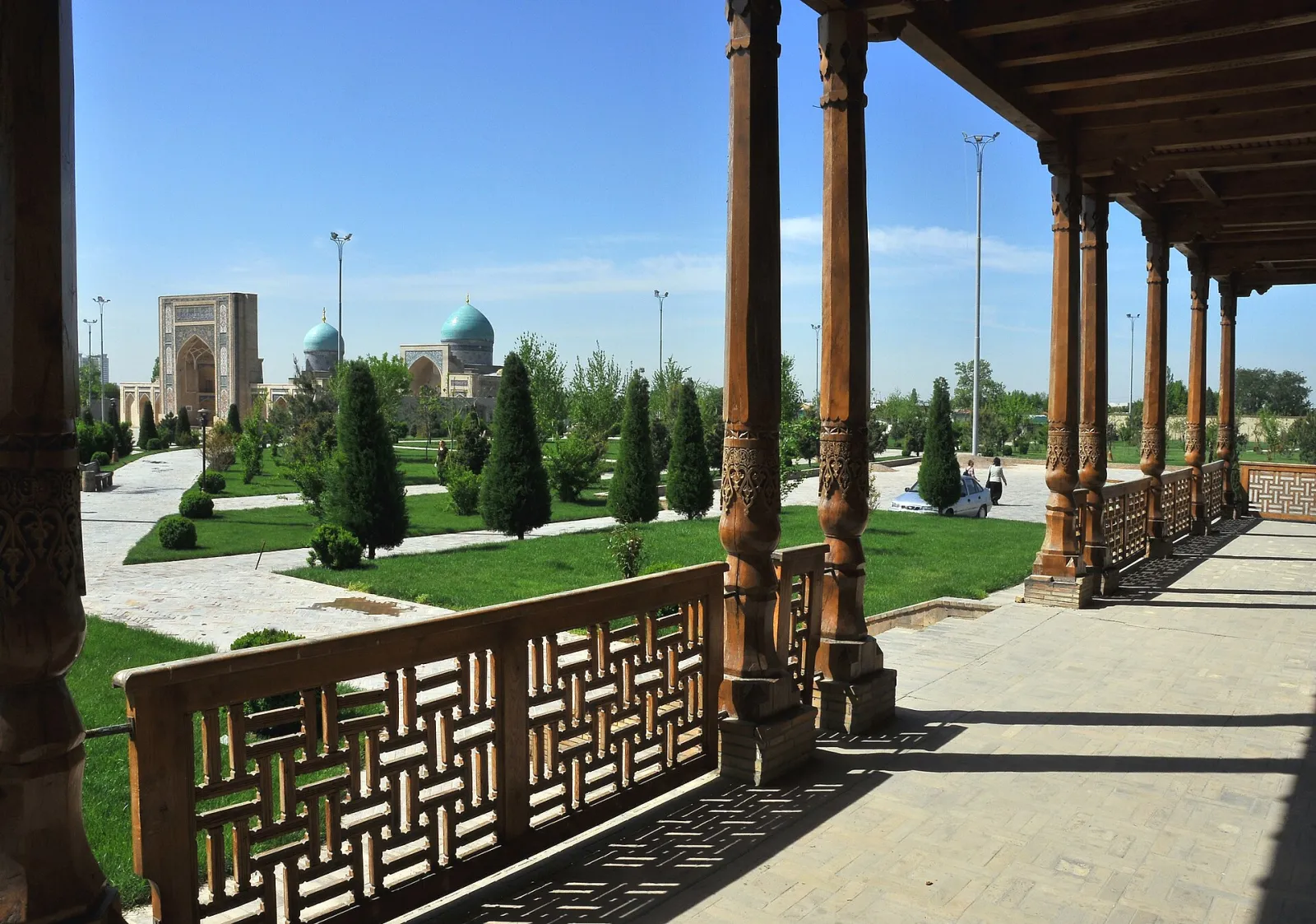
- Hazrati Imam complex — the religious heart of the old town: the Barak Khan Madrasa, the mausoleum of Kaffal Shashi and a library holding the ancient Uthman Quran.
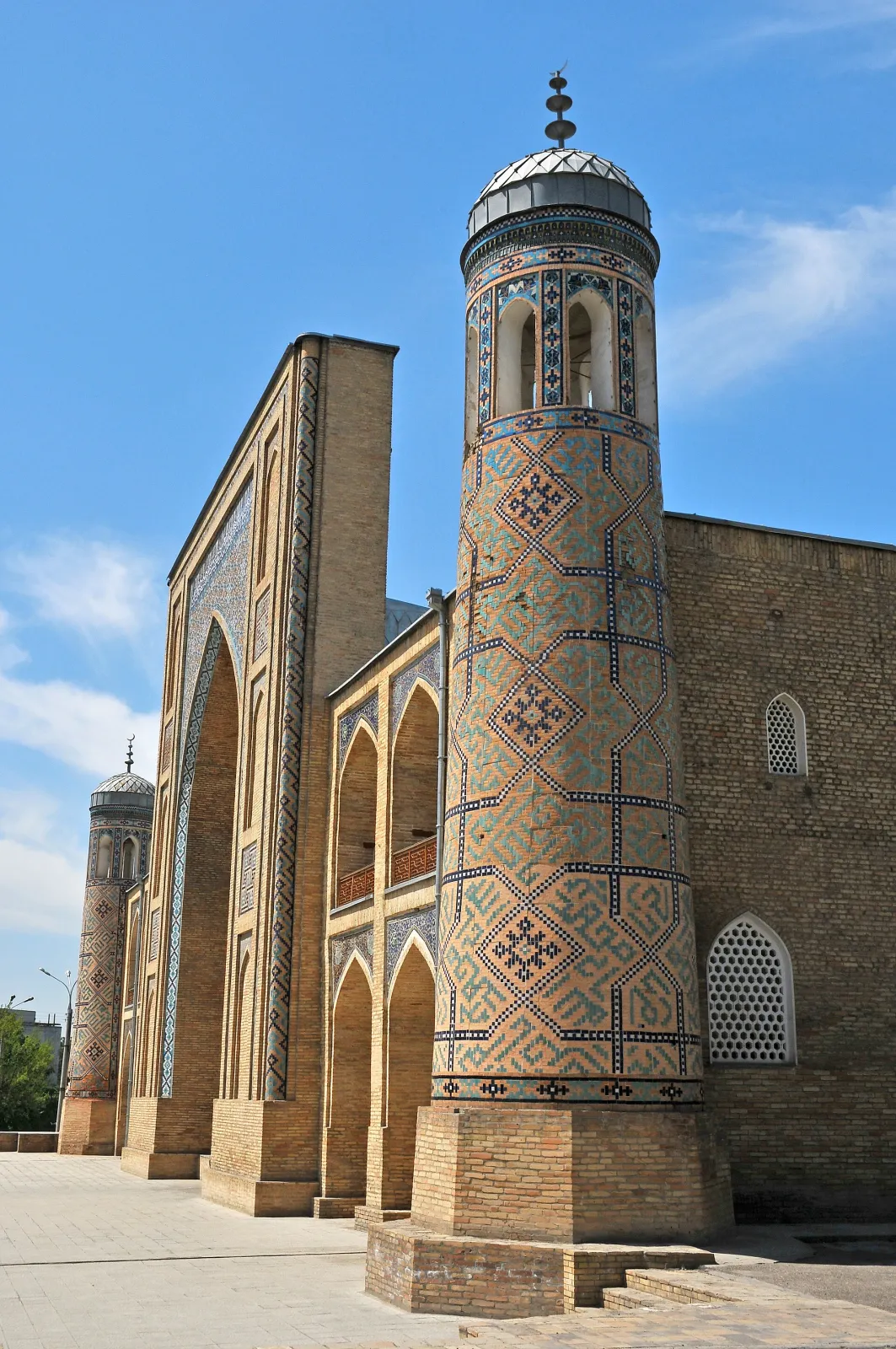
- Kukeldash Madrasa — a large 16th-century madrasa next to Chorsu.
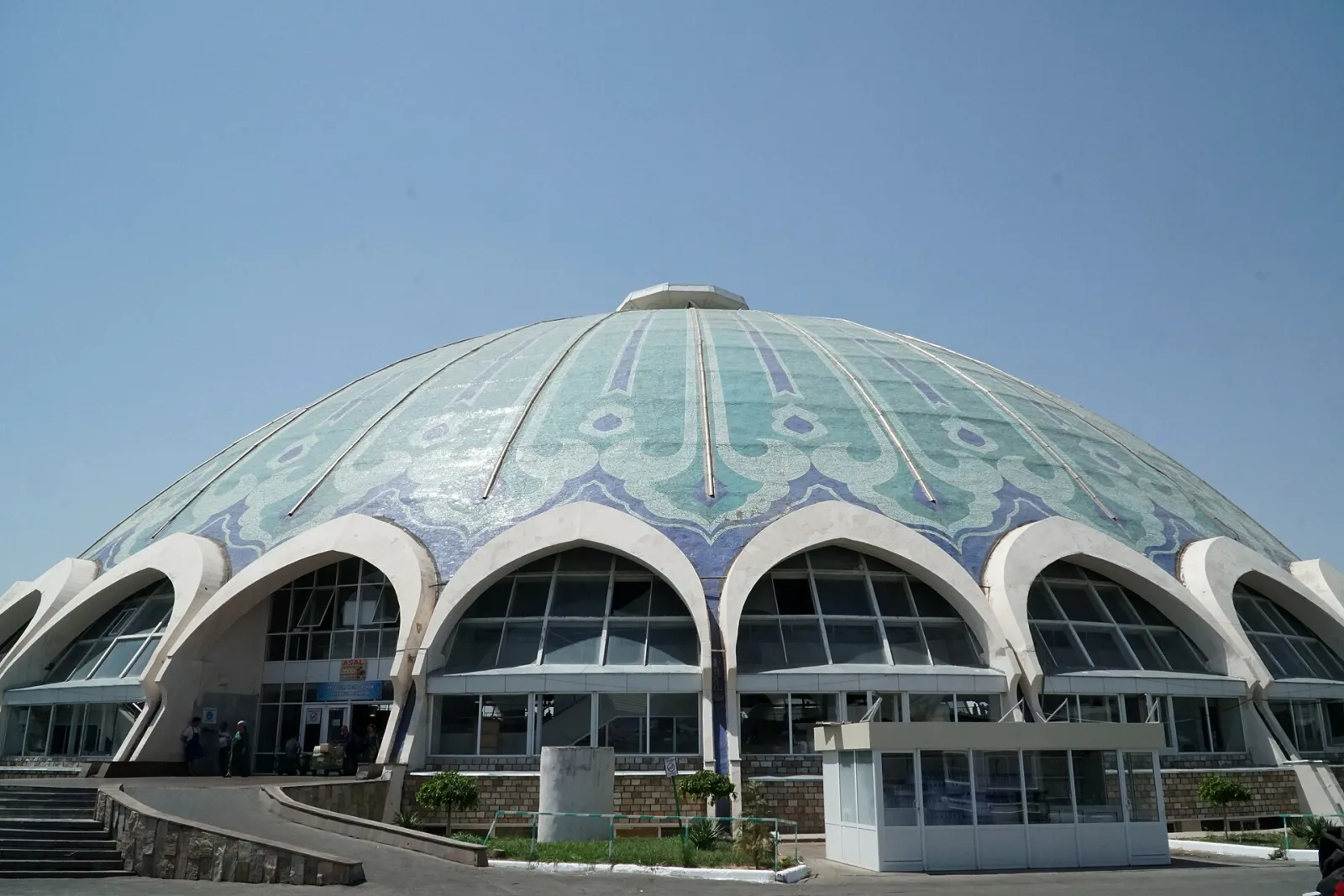
- Chorsu Bazaar — the city's best-known market under a huge blue dome.
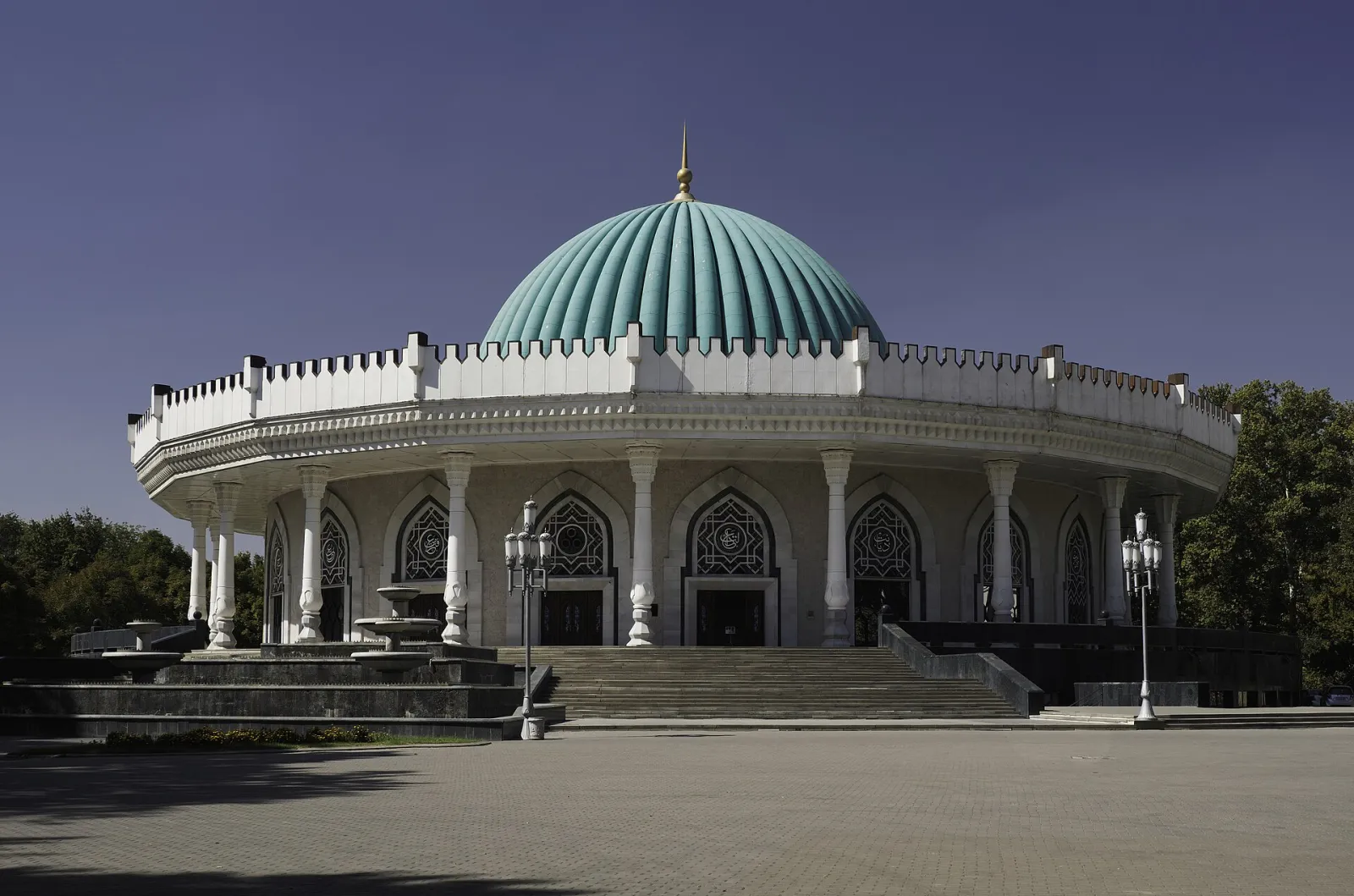
- Amir Timur Square and Museum of Timurid History — a central square and a museum beneath a turquoise dome.
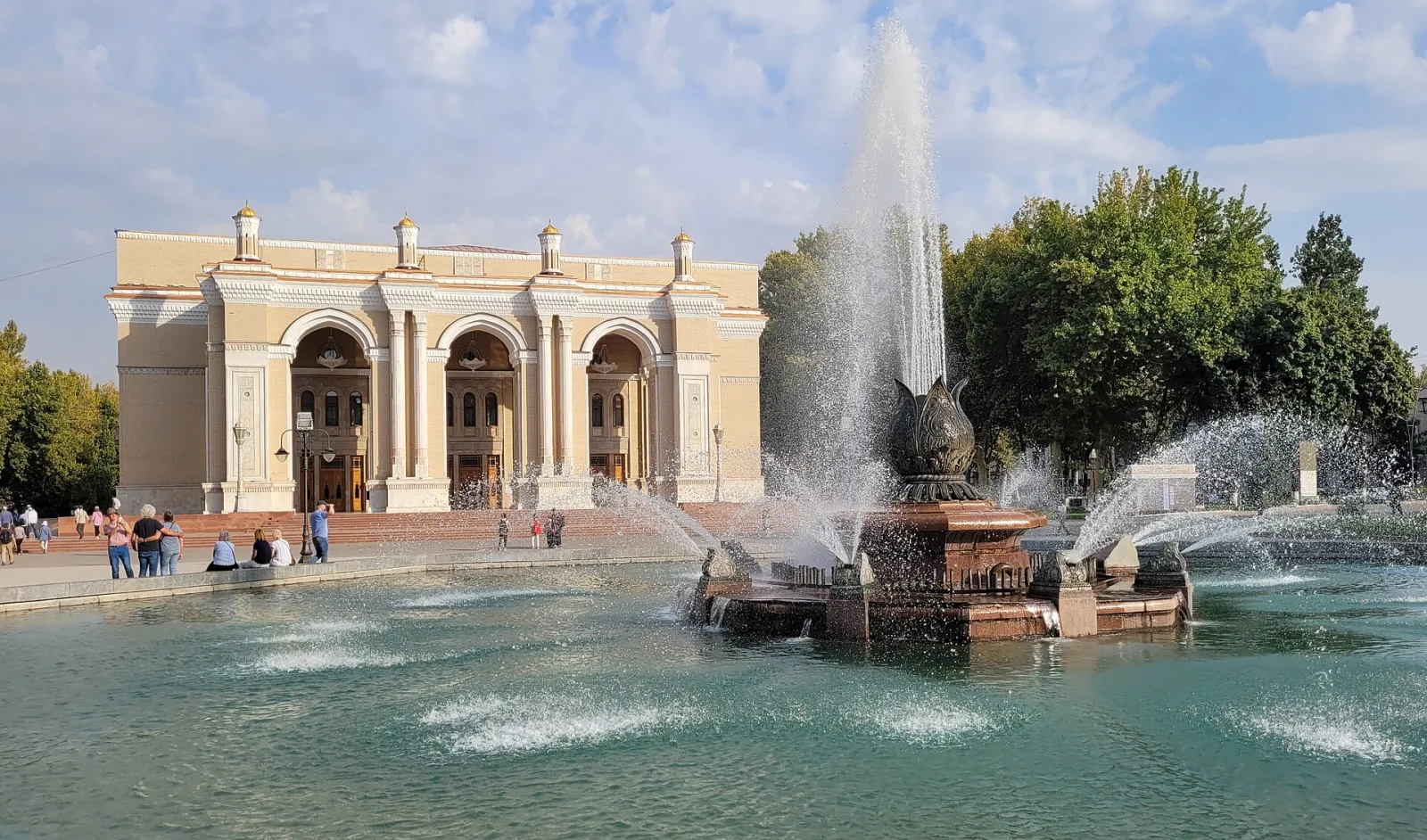
- Alisher Navoi Bolshoi Theatre — the opera and ballet house opened in 1947 and decorated with national ornament.
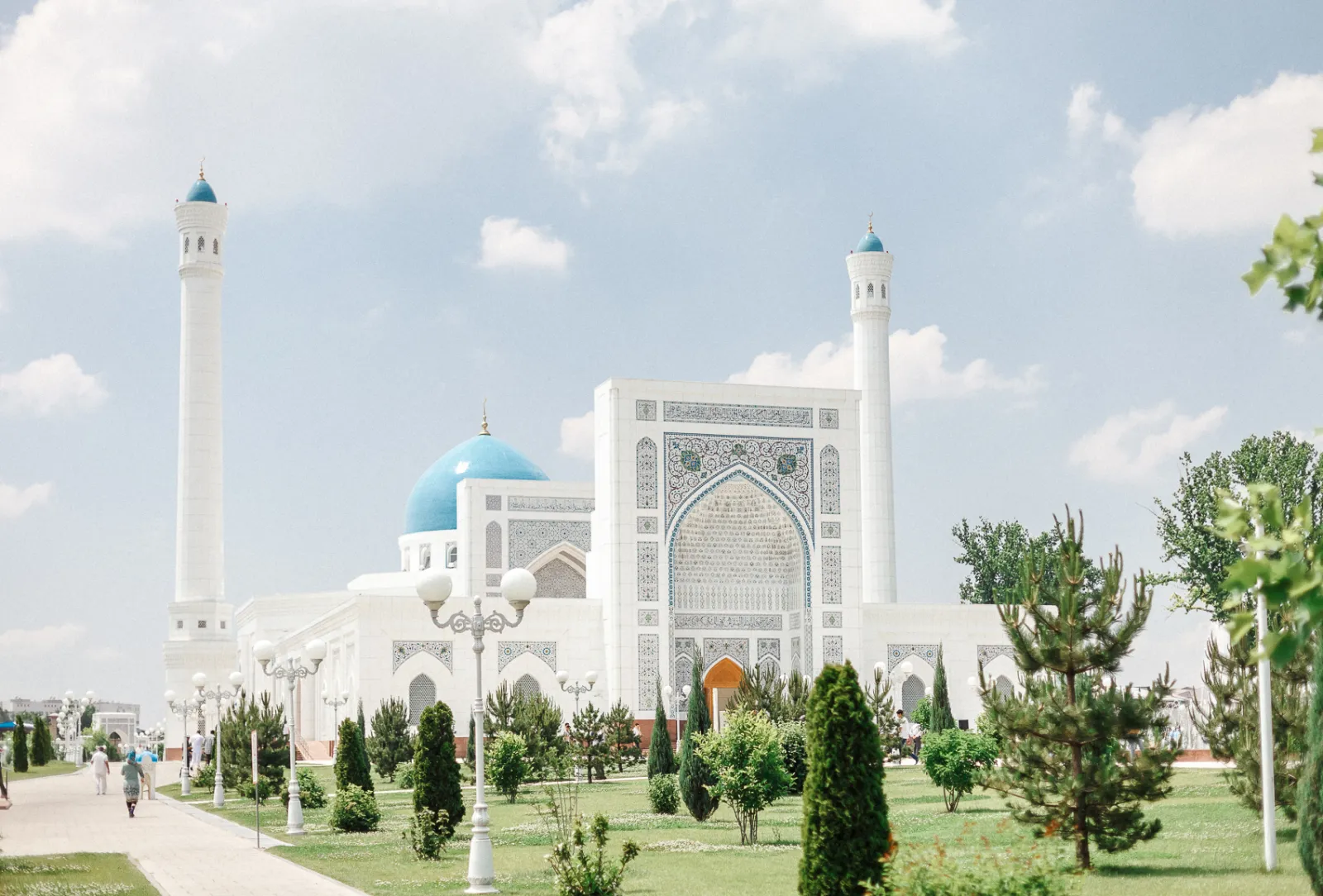
- Minor Mosque — a white-marble mosque on the bank of the Ankhor canal.
- Tashkent TV Tower — a 375 m tower with an observation deck and a revolving restaurant.
- Tashkent Metro — the first in Central Asia, with every station decorated in its own style.
- Independence Square — the main square for celebrations, with the parks around it.
- Sheikh Khovendi Tahur complex — 14th–15th-century mausoleums in the old town.
Borders: Tashkent Region
Sources: stat.uz · Wikidata · Wikipedia (uz) · Wikipedia (ru) · Wikipedia (en) · tashkent.uz