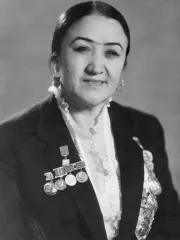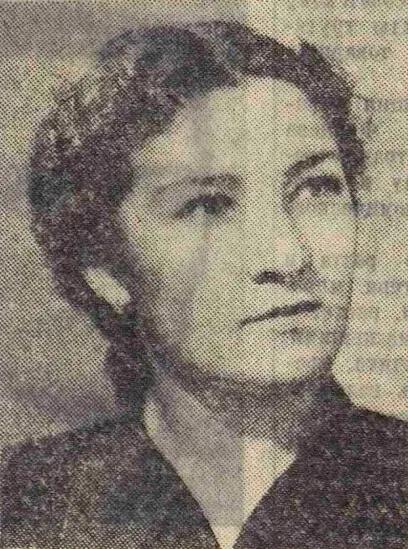
Biography
Galiya Izmaylova was born on 12 February 1923 in Tomsk into a Tatar family. After her father died in 1931 she moved to Tashkent with her mother. She started dancing at eleven: at an amateur contest she was noticed by professionals and invited to a ballet school that had just opened.
From 1935 to 1941 she studied at the Uzbek Republican Ballet School in Tashkent. In 1941, among the school's first graduates, she joined the company of the Uzbek Opera and Ballet Theatre (today the Alisher Navoi State Academic Bolshoi Theatre) and remained one of its leading soloists for many years. She danced 45 roles in all.
Her parts included Maria and Zarema in «The Fountain of Bakhchisarai», Kitri in «Don Quixote», Gulnara in «The Dancer», Tao Hoa in «The Red Poppy», Giselle, Carmen in Ravel's «Boléro», Aegina in «Spartacus» and Chundari in «Amulet of Love».
Izmaylova was also known as a performer of Uzbek folk dances — those of Fergana, Bukhara and Khorezm — and her repertoire included dances of other peoples of the East. In 1947 she won first prize for the Bukhara dance «Zang» at the World Festival of Youth and Students in Prague. In 1950 she received the Stalin Prize, second class, for her performance of Uzbek dances. According to Russian sources she toured 35 countries.
In 1958 she graduated from the directing faculty of the Tashkent Theatre and Art Institute and began working as a choreographer. She staged the dances for the operas «Dilorom» by M. Ashrafi (1958), «Prince Igor», «The Queen of Spades», «Eugene Onegin», «Faust», «Omar Khayyam» and «Zebunniso», and created dance miniatures such as «Munojot», «Tanovar» and «Dilkhiroj». She was chief choreographer of the Navoi Theatre in 1977–1985 and its choreographer from 1985. She staged about thirty productions and trained many pupils.
In the 1960s she was a deputy of the Supreme Soviet of the Uzbek SSR (6th and 7th convocations). She was named Honoured Artist of the Uzbek SSR in 1950, People's Artist of the Uzbek SSR in 1951 and People's Artist of the USSR in 1962, received two Orders of Lenin (1951, 1959) and the Hamza State Prize of the Uzbek SSR (1970). After independence she was awarded the Shukhrat Medal (1997) and the Orders of Dustlik (1998) and Mehnat Shuhrati (2003).
Galiya Izmaylova died in Tashkent on 2 October 2010, aged 87, and was buried at the Chigatay cemetery. A film, «Umrga teng raqs» («A Dance Equal to Life», 1984), was dedicated to her, and L. Avdeyeva published a book on her art in 1975.
Education
- Tamara Khanum Ballet SchoolSchool · Tashkent · 1935–1941 · Ballet dancer
- State Institute of Arts and Culture of UzbekistanUniversity · Tashkent · 1958 · Director
Career
- Supreme Soviet of the Uzbek SSRDeputy (6th and 7th convocations) · Tashkent · 1963–…
- Alisher Navoi State Academic Bolshoi TheatreLeading soloist (from 1941), chief choreographer (1977–1985), choreographer (from 1985) · Tashkent · 1941–…
Awards
 Order of Labor Glory2003 · Uzbekistan
 Order «Do'stlik» (Friendship)1998 · Uzbekistan
 Medal «Shuhrat» (Glory)1997 · Uzbekistan
 People's Artist of the Uzbek SSR1951 · Uzbek SSR
 Honoured Artist of the Uzbek SSR1950 · Uzbek SSR
 Hamza State Prize of the Uzbek SSR1970 · Uzbek SSR
 People's Artist of the USSR1962 · USSR
 Order of Lenin1951 · USSR
- Order of Lenin1959 · USSR

 Stalin Prize1950 · USSR
Life path
- 1923Born
In Tomsk, into a Tatar family.
- 1931Move to Tashkent
Moved to Tashkent with her mother after her father's death.
- 1935–1941Ballet school
Studied at the Uzbek Republican Ballet School.
- 1941Opera and Ballet Theatre
Joined the company and later became a leading soloist.
- 1947Prague festival
First prize for the Bukhara dance «Zang» at the World Festival of Youth and Students.
- 1950Stalin Prize
Second-class prize for her Uzbek dances; the same year she became Honoured Artist of the Uzbek SSR.
- 1951People's Artist of the Uzbek SSR
She also received her first Order of Lenin that year.
- 1958Directing faculty
Graduated from the Tashkent Theatre and Art Institute; staged the dances for the opera «Dilorom».
- 1962People's Artist of the USSR
The title was conferred in 1962.
- 1977–1985Chief choreographer
At the Navoi Theatre; from 1985 its choreographer.
- 1997–2003Awards of independence
The Shukhrat Medal (1997) and the Orders of Dustlik (1998) and Mehnat Shuhrati (2003).
- 2010Death
Died in Tashkent on 2 October; buried at the Chigatay cemetery.
Works
- «The Fountain of Bakhchisarai» (1945)Ballet role
Maria and Zarema (ballet by Boris Asafyev)
- «Don Quixote» (1948)Ballet role
Kitri (ballet by Ludwig Minkus); later productions in 1960 and 1970
- «The Dancer» (1949)Ballet role
Gulnara (ballet by Georgy Mushel)
- «The Red Poppy» (1949)Ballet role
Tao Hoa (ballet by Reinhold Glière)
- «Giselle» (1957)Ballet role
Title role (ballet by Adolphe Adam)
- «Boléro» (1960)Ballet role
Carmen (to Maurice Ravel's music)
- «Don Juan» (1964)Ballet role
Juanita (ballet by Leonid Feigin)
- «Spartacus» (1967)Ballet role
Aegina (ballet by Aram Khachaturian)
- «Amulet of Love» (1969)Ballet role
Chundari (ballet by Mukhtar Ashrafi)
Achievements
- 🥇Dance «Zang» (Bukhara dance)World Festival of Youth and Students, Prague (1947)