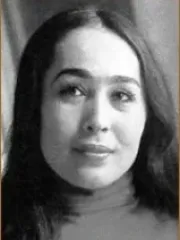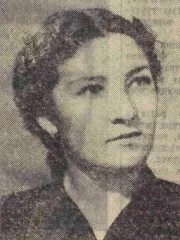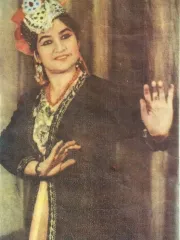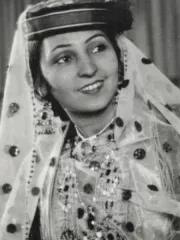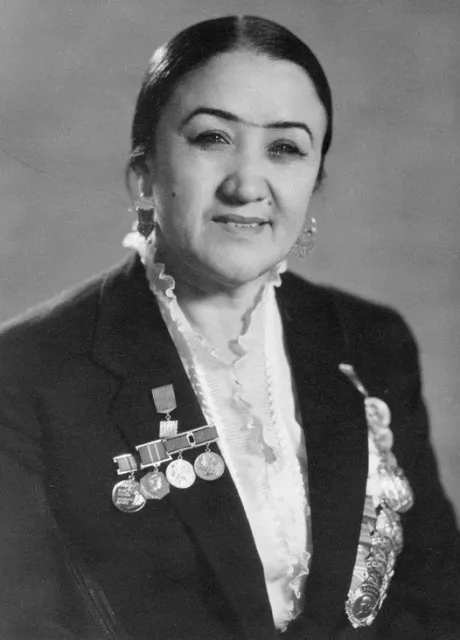
Mukarram Turgunbaeva
Uzbek dancer and choreographer, People's Artist of the USSR (1959), founder of the Bahor folk dance ensemble and one of the creators of Uzbek stage dance.
- Occupation:
- Dancer
- Born:
- 1913 — November 26, 1978
- Birthplace:
- Fergana
- Children:
- Telman Xoldorov
Biography
Mukarram Turgunbaeva was born in the spring of 1913 in Fergana, then called Skobelev. She did not know her exact birthday herself: the Great Soviet Encyclopedia gives 13 May (30 April Old Style), while for many years she celebrated her birthday on 31 May. Orphaned early, she was raised by relatives in Fergana.
After leaving school in 1927 she entered the Fergana Pedagogical Technical School and danced in an amateur circle. In 1928 she passed an audition for the concert and ethnographic ensemble led by Mukhitdin Qori-Yoqubov, and in 1929 she joined the company of the Uzbek Musical Theatre in Samarkand, which moved to Tashkent in 1931. Until 1933 she trained in the theatre's studio, learning Uzbek dance from Usta Olim Komilov, Yusufjon Qiziq Shakarjonov and Tamara Khanum and classical dance from Konstantin Bek, and also studied singing and acting. She played dramatic roles as well, among them Asiya and Zebo in Arshin Mal Alan and Asalkhon in Ichkarida. In 1929 she married the actor Nizom Kholdorov; their son Telman was born in 1934.
From 1931 she was a soloist and from 1937 ballet master of the theatre, which in 1939 became the Uzbek Opera and Ballet Theatre (today the Alisher Navoi Bolshoi Theatre). She staged the dances for the musical dramas Gulsara and Farhod and Shirin, performed at the Ten-Day Festival of Uzbek Art in Moscow in 1937 and that year became a People's Artist of the Uzbek SSR. Studying with the ballet masters Aleksandr Tomsky, Ilya Arbatov and Pavel Yorkin, she took part in creating the first Uzbek ballets: she danced the title role in F. Tal's Shakhida (1939), as well as Ak-Bilyak, Zarema in The Fountain of Bakhchisaray and Gulyandom, bringing techniques of classical ballet into national roles.
During the Second World War she performed with concert brigades on the Transcaucasian fronts and toured Iran in 1942. She received a Stalin Prize in 1946 for her performance of Uzbek dances and a second in 1951 for her part in staging Reinhold Glière and Talib Sodiqov's opera Gulsara. She created dozens of solo and group dances, including Tanovar, Jonon, Andijan Polka, Pilla, Waiting, The Brave Girl and Namangan Apples, and choreographed dances for operas. From 1945 to 1957 she taught at the Tashkent Choreographic School; her pupils included Galiya Izmaylova and Qunduz Mirkarimova.
In 1955 she selected twelve girls from the choreographic school where she taught, and in 1957 this group grew into the Bahor women's folk dance ensemble. That year it appeared at the 6th World Festival of Youth and Students in Moscow, and in 1960 it became a state ensemble. Turgunbaeva remained its artistic director and chief ballet master for the rest of her life and created fifteen concert programmes for it; as a soloist and with the ensemble she toured almost thirty countries in Asia, Africa and Europe. She was made a People's Artist of the USSR in 1959 and received the Hamza State Prize of the Uzbek SSR in 1967 and the USSR State Prize in 1973 for Bahor's concert programmes. She was a deputy of the Supreme Soviet of the Uzbek SSR for three convocations (1951–1963).
Mukarram Turgunbaeva died in Tashkent on 26 November 1978 and was buried in the Chigatai cemetery. Since 1979 the Bahor ensemble has borne her name, as do the Uzbekraqs dance association and a street in Tashkent. In 1993 a museum devoted to her opened and a competition for young dancers in her name was founded. In 2001 she was posthumously awarded the Order “For Outstanding Merit” (Buyuk xizmatlari uchun). The documentaries “Salom, Bahor!” (1962) and “Mukarram-opa and the Forty Beauties” (1977) are devoted to her life.
Education
- Fergana Pedagogical Technical SchoolCollege · Fergana · 1927–1929
- Studio of the Uzbek Musical TheatreOther · 1929–1933 · Dance, singing and acting
Career
- Supreme Soviet of the Uzbek SSRDeputy (3rd–5th convocations) · Tashkent · 1951–1963
- Alisher Navoi State Academic Bolshoi TheatreActress, soloist (from 1931), ballet master (from 1937) · Tashkent · 1929–1954
- Tashkent Choreographic SchoolTeacher · Tashkent · 1945–1957
- Bahor State Dance EnsembleFounder, artistic director and chief ballet master · Tashkent · 1957–1978Everyone who held this post →
Awards
 Order «For Outstanding Merit»2001, posthumously · Uzbekistan
 People's Artist of the Uzbek SSR1937 · Uzbek SSR
 Hamza State Prize of the Uzbek SSR1967 · Uzbek SSR
 People's Artist of the USSR1959 · USSR
 Order of Lenin1951 · USSR
 Order of the Red Banner of Labour1937 · USSR
- Order of the Red Banner of Labour1950 · USSR
 Order of the Badge of Honour1957 · USSR
- Order of the Badge of Honour1965 · USSR
 Medal «For Labour Valour»1941 · USSR
 Medal «For Labour Distinction»1945 · USSR
 Stalin Prize1946 · USSR
- Stalin Prize1951 · USSR
 USSR State Prize1973 · USSR
Life path
- 1927–1929Fergana Pedagogical Technical School
Studied there and danced in an amateur circle.
- 1928Qori-Yoqubov's ensemble
Joined the concert and ethnographic ensemble after an audition.
- 1929–1933Musical theatre and its studio
Actress in the company in Samarkand (in Tashkent from 1931) and student at the theatre studio.
- 1937People's Artist of the Uzbek SSR
Ballet master of the theatre; performed at the Festival of Uzbek Art in Moscow.
- 1939Shakhida
Took part in staging one of the first Uzbek ballets and danced the title role.
- 1945–1957Tashkent Choreographic School
Taught Uzbek dance.
- 1946, 1951Stalin Prizes
For her performance of Uzbek dances and for the opera Gulsara.
- 1957Bahor ensemble
Founded the women's folk dance ensemble and led it for the rest of her life.
- 1959People's Artist of the USSR
Received the honorary title.
- 1973USSR State Prize
For the concert programmes of the Bahor ensemble.
- 1978Death
Died in Tashkent on 26 November.
Works
- Pakhta (Cotton)Ballet
Staged with Usta Olim Komilov and Konstantin Bek.
- Shakhida (1939)Ballet
Took part in the staging and danced the title role.
- Ak-BilyakBallet
Title role; also took part in the staging.
- The Fountain of Bakhchisaray (1945)Ballet role
Zarema in Boris Asafyev's ballet.
- GulyandomBallet role
Title role in Yevgeny Brusilovsky's work.
- Gulsara (1949)Opera choreography
Dances for the opera by Reinhold Glière and Talib Sodiqov; Stalin Prize of 1951.
- TanovarDance
Solo dance, one of her best-known performances.
- Andijan PolkaDance
A dance in the Fergana style.
- Pilla (Cocoon)Dance suite
Group dance about the work of silk growers.
- WaitingDance composition
- The Brave GirlDance composition
- Namangan ApplesDance composition
A dance in the Bahor ensemble's repertoire.
Legacy
One of the creators of Uzbek stage dance, especially the group dance: her stage versions of Tanovar, Katta o'yin, Pilla and other dances became part of the classic repertoire of Uzbek choreography, and the Bahor ensemble she founded grew into one of the country's best-known dance companies.
Era: Uzbek SSR, 1930s–1970s- Bahor ensemble founded (1957)
- Bahor ensemble named after her (1979)
- Museum opened and a competition in her name founded (1993)
- Posthumously awarded the Order “For Outstanding Merit” (2001)
Filmography
| Title | Year |
|---|---|
| Asal | 1940 |