Biography
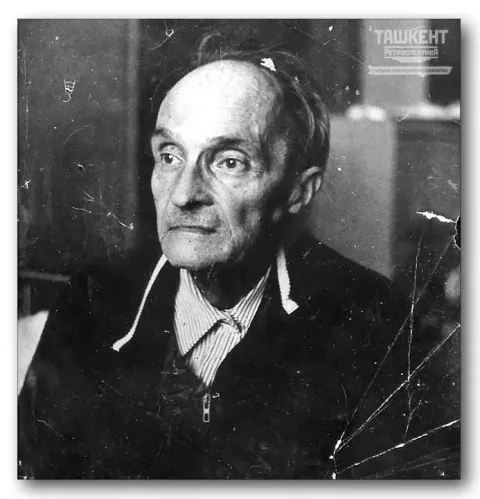
Igor Vitalyevich Savitsky was born on 4 (17) August 1915 in Kyiv into a lawyer’s family. His maternal grandfather, Timofey Florinsky, was a well-known Slavicist, a professor at Kyiv University and a corresponding member of the Russian Academy of Sciences. In the early 1920s the family moved to Moscow. Savitsky trained as an electrician at the factory school of the Serp i Molot plant and, alongside, took private drawing lessons from the Moscow artists R. Mazel and E. Sakhnovskaya.
From 1934 he studied in the graphics department of the Moscow Polygraphic Institute and then at the Moscow Art School in Memory of 1905. In 1938–1941 he worked in the studio of Lev Kramarenko at the Institute for the Advanced Training of Artists, travelling with him to sketch in Crimea and the Caucasus. In 1941 he entered the Surikov Moscow State Art Institute; unfit for the army because of illness, he spent 1942–1944 with the institute in evacuation in Samarkand, where he met Robert Falk and Konstantin Istomin and took painting lessons from Nikolay Ulyanov. He graduated in December 1946, specialising in etching.
In 1950, at the invitation of T. A. Zhdanko, Savitsky came to Karakalpakia as artist of the Khorezm Archaeological and Ethnographic Expedition of the USSR Academy of Sciences, led by Sergey Tolstov, and settled there the same year. On trips to Karakalpak villages he began collecting examples of folk applied art. From 1956 he was a researcher in the applied-art department of the Karakalpak Research Institute of Economics and Culture, from 1959 at the Institute of History, Language and Literature of the Karakalpak branch of the Academy of Sciences of the Uzbek SSR, and later at the Karakalpak Museum of History and Local Lore.
In the 1960s Savitsky began bringing to Nukus works by artists rejected by official Soviet art — masters of the avant-garde and post-avant-garde — buying them in Moscow and other cities from the artists or their heirs. In 1966 the State Museum of Arts of the Karakalpak ASSR opened in Nukus, and Savitsky became its first director. In time the USSR Ministry of Culture also began to support his acquisitions; in 1975 he was invited to select for the museum part of the works that Nadezhda Léger, the widow of Fernand Léger, had given to the USSR Ministry of Culture.
In 1964 Savitsky was named Honoured Art Worker of the Uzbek SSR, and he also held the title of People’s Artist of Karakalpakstan. He died in a Moscow hospital on 27 July 1984 after a long illness and was buried in the Russian cemetery in Nukus. The museum now bears his name, and its holdings run to tens of thousands of items: Karakalpak applied art, archaeological finds from Khorezm, and Russian and Central Asian avant-garde art of the twentieth century. In 2002 he was posthumously awarded the Order “For Outstanding Merit”.
Education
- Moscow Institute for the Advanced Training of ArtistsOther · 1938–1941 · Studio of Lev Kramarenko
- Moscow State Art Institute named after V. I. SurikovUniversity · 1941–1946 · Graphics faculty, specialising in etching
Career
- Khorezm Archaeological and Ethnographic Expedition of the USSR Academy of SciencesExpedition artist · 1950–1956
- Savitsky State Museum of Arts of KarakalpakstanFounder and first director · Nukus · 1966–1984Everyone who held this post →
Awards
 Order «For Outstanding Merit»2002, posthumously · Uzbekistan
- Honoured Art Worker of the Uzbek SSR1964 · Uzbek SSR
Life path
- 1915Born in Kyiv
Born into a lawyer’s family; in the early 1920s the family moved to Moscow.
- 1934Moscow Polygraphic Institute
Entered the graphics department, then continued at the Moscow Art School.
- 1938–1941Studio of Lev Kramarenko
Studied at the Institute for the Advanced Training of Artists and sketched in Crimea and the Caucasus.
- 1942–1944Evacuation to Samarkand
Lived in Samarkand with the evacuated Surikov Institute and first encountered the culture of Central Asia.
- 1946Graduated from the Surikov Institute
Received his diploma in etching.
- 1950–1956Khorezm expedition
Worked as artist of the Khorezm Archaeological and Ethnographic Expedition, moved to Karakalpakia and collected examples of folk applied art.
- 1956–1959Researcher
Worked at the Karakalpak Research Institute, then at the Institute of History, Language and Literature of the Academy’s branch.
- 1964Honoured Art Worker of the Uzbek SSR
Awarded the honorary title.
- 1966Museum opens
The State Museum of Arts of the Karakalpak ASSR opened in Nukus, with Savitsky as its first director.
- 1975Selection from the Léger gift
Invited to choose for the museum part of the works given by the widow of Fernand Léger.
- 1984Death
Died in Moscow on 27 July; buried in the Russian cemetery in Nukus.
- 2002Order “For Outstanding Merit”
Posthumously awarded the state order.
Legacy
The Nukus museum that Savitsky created now bears his name and holds one of the world’s largest collections of Russian and Central Asian avant-garde art of the twentieth century, together with Karakalpak applied art and archaeological finds from Khorezm. In 2010 Amanda Pope and Tchavdar Georgiev made the documentary “The Desert of Forbidden Art”, which tells his story.
Era: Soviet period, Karakalpakstan- Joined the Khorezm Archaeological and Ethnographic Expedition (1950)
- State Museum of Arts opened in Nukus (1966)
- Death of Savitsky (1984)
- Posthumously awarded the Order “For Outstanding Merit” (2002)
- Documentary “The Desert of Forbidden Art” released (2010)