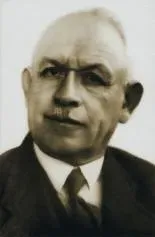
Moisey Slonim
Tashkent physician and internist, a founder of the medical faculty of Central Asian State University, professor and one of the first corresponding members of the Uzbek SSR Academy of Sciences.
Biography
Moisey Ilyich Slonim was born in Tashkent in 1875. In 1893 he graduated from the Tashkent gymnasium with a gold medal and that summer entered the medical faculty of Kazan University, finishing in 1898.
Returning to Tashkent, he began as a district physician, treating malaria patients in the village of Bardankul and in the Kitatyube and Jalaltyube rural districts of Tashkent county. He then worked until 1904 as a resident physician at the Tashkent city hospital, where he had to combine the duties of an internist, neurologist, infectious-disease doctor, paediatrician and surgeon.
In 1905 he studied at the Military Medical Academy in St Petersburg under Professor N. A. Velyaminov, and in May 1906 defended a dissertation on the fine structure of the normal and pathologically altered nerve cell. The academy sent him to clinics in Berlin, Vienna and Paris, where he trained until 1907.
In the summer of 1907 he came back to Tashkent and resumed work at the city hospital, becoming known as one of the best physicians in the region. He kept abreast of new medical technology and helped his brother Solomon Slonim acquire and learn to use X-ray equipment and physiotherapy apparatus. In July 1917 he was drafted and served as a resident and then a consultant at the Tashkent district military hospital.
After a university opened in Tashkent in 1920, he and his colleagues set up its medical faculty. In December 1920 he was elected associate professor and head of the department of propaedeutics of the therapeutic clinic, and in 1921 he became a professor. He served as deputy dean in 1921–1925 and as dean of the medical faculty in 1924–1926. From 1932 he headed the hospital therapy clinic and led it to the end of his life; in 1932 he also became director of the Central Asian Institute for the Advanced Training of Physicians, and in 1938–1941 served as its scientific director.
When the Academy of Sciences of the Uzbek SSR was founded in 1943, he was among its first corresponding members.
Slonim died in Tashkent in 1945 and was buried in the garden beside the old buildings of the Tashkent Medical Institute. A Tashkent street once bore his name; it was renamed Asalobod in 2011. His daughter Yudif Slonim became an astronomer and his son Yevsey an architect.
Education
- Kazan UniversityUniversity · 1893–1898 · Physician
- Military Medical Academy (Saint Petersburg)University · 1905–1906
Career
- Academy of Sciences of UzbekistanCorresponding member · Tashkent · 1943–1945
- Central Asian State UniversityProfessor and dean of the medical faculty · Tashkent · 1920–1931
- Central Asian Institute for the Advanced Training of PhysiciansDirector, then scientific director · Tashkent · 1932–1941Everyone who held this post →
Life path
- 1893Finishing the gymnasium
Graduated from the Tashkent gymnasium with a gold medal and entered the medical faculty of Kazan University.
- 1898Graduating from university
Finished at Kazan, returned to Tashkent and began work as a district physician.
- 1898–1904Resident at the city hospital
Worked at the Tashkent city hospital, treating patients across many specialties.
- 1905–1907St Petersburg and European clinics
Studied at the Military Medical Academy, defended his dissertation in 1906, then trained in clinics in Berlin, Vienna and Paris.
- 1907Return to Tashkent
Resumed work as a resident physician at the city hospital.
- 1917Military hospital
Drafted; served as resident and then consultant at the Tashkent district military hospital.
- 1920University medical faculty
Helped found the medical faculty; elected associate professor and head of the propaedeutics department of the therapeutic clinic.
- 1921Professor
Awarded the title of professor; deputy dean in 1921–1925.
- 1924–1926Dean of the medical faculty
Headed the university's medical faculty.
- 1932Hospital therapy clinic and institute
Became head of the hospital therapy clinic and director of the Central Asian Institute for the Advanced Training of Physicians.
- 1938–1941Scientific director of the institute
Left the post at his own request because of failing health.
- 1943Academy of Sciences
Elected a corresponding member of the Academy of Sciences of the Uzbek SSR in its first membership.
- 1945Death
Died in Tashkent.