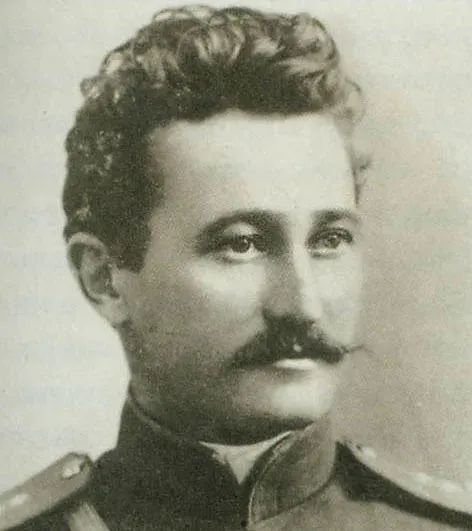
Nikolai Korzhenevsky
Russian and Soviet geographer, glaciologist and explorer of the Pamirs who compiled the first catalogue of Central Asian glaciers and was a professor in Tashkent.
- Occupation:
- Scientist, Educator, Military officer
- Lived:
- February 18 1879(79 years old) ♒ — October 31, 1958
- Father:
- Leopold
- Spouse:
- Evgeniya Sergeyevna Korjenevskaya (Topornina)
Biography
Nikolai Leopoldovich Korzhenevsky was born on 6 (18) February 1879 in the village of Zaverezhye in the Vitebsk Governorate (now Nevelsky District, Pskov Oblast). His father came from a noble family of the Kovno Governorate and his mother was Polish. His father’s illness and death ruined his plans to enter a university, and after a real school he graduated with distinction from the Kiev Military School in 1901.
He chose to serve in the district town of Osh in Turkestan, on the edge of the empire. Beside his army duties he taught himself astronomy, geodesy, meteorology, geology, glaciology and botany; in 1902 he built two heliotelegraph stations linking Osh with Jalal-Abad. In 1903 he was sent to the Pamirs with a military detachment and in a single summer covered about 1,500 kilometres across the Eastern Pamirs, Vakhan and Shughnan, collecting a large herbarium.
Between 1903 and 1928 Korzhenevsky made eleven journeys and expeditions to the Pamirs. In 1904 he found a large glacier in the Peter the Great Range and named it after his teacher Ivan Mushketov; in 1905 he made the first sketch and two photographs of the peak later known as Kaufmann, Lenin and, today, Abuali ibn Sina. In 1905 he married Evgenia Topornina, the daughter of a colonel, who helped him on expeditions and in processing the materials; he named after her a 7,000-metre peak he found in 1910 in the upper Muksu basin.
He combined research with military service. After finishing a military-intendant course in 1909 he served as intendant of the 2nd Turkestan Rifle Brigade at Skobelev (now Fergana), fought on the Western Front in the 1st Turkestan Corps in the First World War and returned in 1917 as a colonel. In the 1920s he headed supply for the Turkestan Front and then worked on military-pedagogical training of Red Army cadres. From 1921 he taught geography at the Turkestan (later Central Asian) State University in Tashkent, of which he is regarded as one of the founders.
In 1928 Korzhenevsky compiled a schematic map of the Pamirs that for the first time showed a meridional range, which he named the Academy of Sciences of the USSR Range. His “Catalogue of the Glaciers of Central Asia” appeared in 1930, and his own surveys brought some 70 large glaciers into the scientific record. He worked with the Central Asian Hydrometeorological Institute, received a doctorate in geographical sciences in 1937 without defending a dissertation and headed the chair of physical geography at the Central Asian University. In 1939 he was named Honoured Science Worker of the Uzbek SSR, and in 1947 he was elected a corresponding member of the Academy of Sciences of the Uzbek SSR.
Nikolai Korzhenevsky died in Tashkent on 31 October 1958 and was buried at the Botkin Cemetery. Three glaciers (in the Zaalai, Kokshaal-Too and Zailiysky Alatau ranges) and a peak in the Zaalai Range bear his name.
Education
- Kiev Military SchoolCollege · 1901
- Nicholas Academy of the General StaffUniversity · 1909 · Military intendant course
Career
- Turkestan State UniversityProfessor, head of the chair of physical geography · Tashkent · 1921–…now National University of Uzbekistan
- Imperial Russian ArmyOfficer, intendant · 1901–1917
- Workers’ and Peasants’ Red ArmyHead of supply of the Turkestan Front · 1920–1928
- Central Asian Hydrometeorological InstituteConsultant, head of the glaciology department · Tashkent · 1926–1958
- All-Union Geographical SocietyFull member · 1931–…
Awards
- Honoured Science Worker of the Uzbek SSR1939 · Uzbek SSR
Life path
- 1879Birth
Born in the village of Zaverezhye in the Vitebsk Governorate.
- 1901Kiev Military School
Graduated with distinction and chose to serve in Osh, Turkestan.
- 1903First Pamir expedition
Covered about 1,500 kilometres across the Eastern Pamirs, Vakhan and Shughnan and collected a herbarium.
- 1904Mushketov Glacier
Found a large glacier in the Peter the Great Range and named it after his teacher.
- 1909–1917Intendant service and war
Served as brigade intendant at Skobelev, fought on the Western Front and returned a colonel.
- 1921University in Tashkent
Began teaching geography at the Turkestan (Central Asian) State University.
- 1928Map of the Pamirs
Compiled a schematic map of the Pamirs showing the Academy of Sciences Range.
- 1930Glacier catalogue
Published the “Catalogue of the Glaciers of Central Asia”.
- 1937Doctor of sciences
Received a doctorate in geographical sciences without defence and headed the chair of physical geography.
- 1939Honoured Science Worker
Awarded the title of Honoured Science Worker of the Uzbek SSR.
- 1947Corresponding member
Elected a corresponding member of the Academy of Sciences of the Uzbek SSR.
- 1958Death
Died in Tashkent and was buried at the Botkin Cemetery.
Works
- “On the Alai Passes” (1905)Article
An account of a journey over the Alai passes, published in the yearbook of the Russian Mountain Society.
- “A Journey to the Pamirs, Vakhan and Shughnan” (1906)Expedition report
A report on the 1903 expedition, published in St Petersburg.
- “Across the Pamirs to the Hindu Kush (from Osh to the Pamir Post)” (1912)Essay
A travel essay printed in the Historical Herald.
- “Schematic Map of the Pamirs” (1928)Map
The map on which the Academy of Sciences Range first appeared.
- “Catalogue of the Glaciers of Central Asia” (1930)Scientific catalogue
The first compilation of data on the glaciers of the region.
- “Glaciers of the Northern Slope of the Alai Range” (1955)Monograph
A study of glaciation in the Alai Range, published in Tashkent.