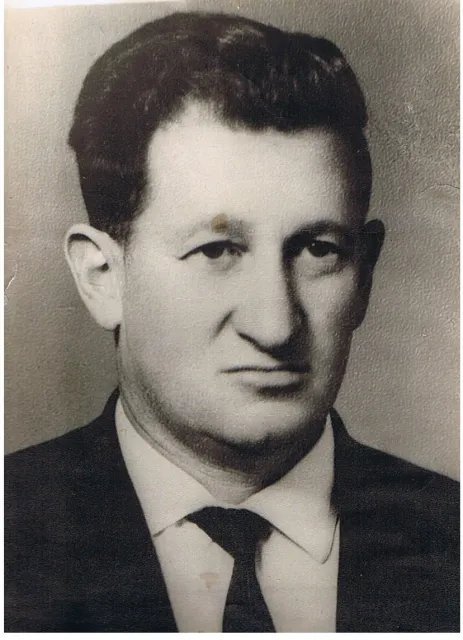
Pyotr Lerner
Epidemiologist from Samarkand, Doctor of Medical Sciences and professor; head of department, dean and vice-rector of the Samarkand Medical Institute, author of methods for combating helminth infections.
- Occupation:
- Scientist, Physician
- Born:
- February 23 1922(104 years old) ♓
Biography
Pyotr Mikhailovich Lerner was born on 23 February 1922 in Shepetivka (now in the Khmelnytskyi Region of Ukraine). After finishing school in Samarkand he entered the Samarkand State Medical Institute and graduated in 1944.
He began as an epidemiologist and then became chief physician of district and city sanitary-epidemiological stations; from 1946 he also taught at his alma mater. From 1954 to 1960 he was chief epidemiologist of Samarkand Region, which then included the present-day Jizzakh and Navoi regions.
At the institute he rose from assistant to docent and professor. He received the degree of Doctor of Medical Sciences in 1971 and the title of professor in 1972. He was dean of the paediatric faculty from 1970 to 1976, and from 1976 to 1985 vice-rector for research and chairman of the dissertation council. In 1978 he set up the first department of epidemiology at a medical faculty of a medical school in Central Asia and led it until 1994.
Lerner developed a new treatment for hymenolepiasis, approved by the World Health Organization in Geneva in 1975, and a method for diagnosing helminth infections; he was the first to establish how long Giardia and the dwarf tapeworm live in the human body. In Samarkand and Shahrisabz he carried out a long trial of mass bacteriophage prophylaxis and therapy of dysentery. He took part in stamping out outbreaks of cholera, smallpox, typhus, plague, typhoid, polio, diphtheria and other infections in the republic.
He is the author of 196 scientific papers and 16 monographs and took part in 11 international congresses. Since 1995, living in Israel, he has written essays on the history of epidemiology and its figures, memoirs and articles on medical subjects. He holds the titles Honoured Doctor of the Uzbek SSR (1966) and Honoured Scientist of the Uzbek SSR (1980).
Education
- Samarkand State Medical InstituteUniversity · Samarkand · 1944 · Physician
Career
- Samarkand State Medical InstituteAssistant, docent, professor, head of department, dean, vice-rector · Samarkand · 1946–1994
Awards
- Honoured Science Worker of the Uzbek SSR1980 · Uzbek SSR
 Medal «For Labour Distinction»1971 · USSR
 Medal «Veteran of Labour»1985 · USSR
Life path
- 1922Birth
Born in Shepetivka, Ukraine.
- 1944Graduation
Graduated from the Samarkand State Medical Institute and began work as an epidemiologist.
- 1946Start of teaching
Began teaching at the medical institute alongside his work at the sanitary-epidemiological station.
- 1954–1960Chief epidemiologist of Samarkand Region
At the time the region included the present-day Jizzakh and Navoi regions.
- 1970–1976Dean of the paediatric faculty
Headed the faculty at the Samarkand Medical Institute.
- 1971–1972Doctor of Sciences and professor
Received the degree of Doctor of Medical Sciences in 1971 and the title of professor in 1972.
- 1975Hymenolepiasis treatment approved
The World Health Organization approved his treatment method in Geneva.
- 1976–1985Vice-rector for research
Also chaired the institute's dissertation council.
- 1978–1994Head of the Department of Epidemiology
Organised the first epidemiology department at the general-medicine faculty of a Central Asian medical school.
- 1980Honoured Scientist
Awarded the title Honoured Scientist of the Uzbek SSR.
- From 1995Writing
Living in Israel, publishes essays and articles on the history of epidemiology and its figures.
Works
- “Hygienic Questions in the Design of Housing in a Hot Climate” (1961)Monograph
A study of the sanitary and hygienic aspects of house building in hot climates.
- “Prevention of Alimentary Toxicoses and Measures against Poisonous Weeds in Samarkand Region” (1967)Scientific work
Concerned with preventing food poisoning in the region.
- “A Programmed Manual of Epidemiology” (1978)Textbook
Written for teaching and testing students by the programmed-learning method.
- “A Guide to Intestinal Infections” (1980)Handbook
A guide to the epidemiology and prevention of intestinal infections.
- “Essays on the Development of Science at the Samarkand State Medical Institute over 50 Years” (1980)Historical essay
A half-century history of scientific work at the institute.
- “The Most Important Human Helminth Infections in Uzbekistan” (1989)Monograph
A monograph on helminth infections written with V. R. Lemelev.
- “Lectures on Epidemiology” (1990)Lecture course
A collection of lectures for medical students.
- Epidemiology textbook in Uzbek (1992)Textbook
A textbook for the republic's universities, written in Uzbek.