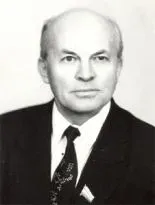
Sergey Zinin
Russian-language scholar and public figure: university department head in Tashkent, Oliy Majlis deputy, director of the Russian Cultural Center of Uzbekistan in 1994–2002 and a Yesenin researcher.
- Occupation:
- Scientist, Politician, Educator, Philologist
- Born:
- December 5 1935(77 years old) ♐ — April 4, 2013
- Birthplace:
- Chirchiq, Tashkent Region
Biography
Sergey Ivanovich Zinin was born on 5 December 1935 in Chirchiq, in the Tashkent region. He lost his parents early and was raised by his maternal grandfather, Aleksey Yefremovich Berkov.
In 1957, after army service, he entered the philology faculty of the Central Asian State University (later Tashkent State University). He graduated with distinction and stayed on to teach in the department of Russian linguistics. In 1970 he defended a candidate’s dissertation in historical onomastics and became a docent; he later headed the department of the history and dialectology of the Russian language and then the interfaculty department of Russian. He lectured at Ain Shams University in Egypt in 1975–1976 and at Tenri University in Japan in 1981–1982. From 1986 to 1990 he headed the Russian language department of the Institute of Language and Literature of the Academy of Sciences of Uzbekistan.
Zinin wrote several textbooks of Russian for the republic’s universities and schools, and more than a hundred articles on general and Russian linguistics, onomastics and bibliography; his subjects included Vladimir Dal, Yevgeny Polivanov and Vasily Reshetov. A doctoral dissertation on the poetic onomastics of Dostoevsky was left unfinished.
In 1990 he was elected a deputy of the Supreme Soviet of the Uzbek SSR, and in 1995 and 2000 a deputy of Uzbekistan’s Oliy Majlis. There he served as deputy chairman and then secretary of the committee on science, education and culture and took part in preparing the laws on state symbols, the state language and public organizations. By a presidential decree of 25 August 1994 he was awarded the Shuhrat Medal.
From 1994 to 2002 Zinin headed the Russian Cultural Center of Uzbekistan and helped set up Russian cultural centers in the country’s regions. He also led the Voluntary Society of Book Lovers of Uzbekistan, organized bookplate exhibitions and published the miniature book “Ex Libris of the Artists of Uzbekistan”.
A separate strand of his work was Yesenin studies. He collected a large body of editions of Sergey Yesenin’s works and gave much of it to the Yesenin Museum in Tashkent, of which he was one of the founders. Since 1992, at his initiative, special issues titled “The World of Yesenin” have been published in Tashkent, and he led the Uzbekistan branch of the international Yesenin society “Radunitsa”. His monograph “Sergey Yesenin’s Journey to Turkestan” appeared in 2003, followed by the books “Sergey Yesenin and Sofya Tolstaya” and “The Unknown Yesenin: In the Captivity of Benislavskaya”.
In 2012 Zinin moved to Yegoryevsk in the Moscow region, where he died on 4 April 2013. He asked that his ashes be buried in Tashkent beside his father’s grave at the Botkin Cemetery; Tashkent bade him farewell on 3 May 2013. His book “Aleksandr Shiryayevets, a Russian and Turkestan Poet” was published in Tashkent the same year.
Education
- Central Asian State UniversityUniversity · Tashkent · 1957 · Philologist
Career
- Oliy Majlis of the Republic of UzbekistanDeputy; deputy chairman, then secretary of the committee on science, education and culture · Tashkent · 1995–…
- Supreme Soviet of the Uzbek SSRDeputy · Tashkent · 1990–…
- National University of UzbekistanLecturer in Russian linguistics, docent, department head · Tashkent
- Institute of Language and LiteratureHead of the Russian language department · Tashkent · 1986–1990
- Sergey Yesenin Museum in TashkentOne of the founders · Tashkent
Awards
 Medal «Shuhrat» (Glory)1994 · Uzbekistan
Life path
- 1935Birth
Born on 5 December in Chirchiq, Tashkent region.
- 1957Entered university
After army service, entered the philology faculty of the Central Asian State University.
- 1970Candidate’s dissertation
Defended a dissertation in historical onomastics and became a docent; later headed Russian-language departments at Tashkent University.
- 1975–1976Lecturing in Egypt
Lectured at Ain Shams University.
- 1981–1982Lecturing in Japan
Lectured at Tenri University.
- 1986–1990Institute of Language and Literature
Headed the Russian language department of the Institute of Language and Literature of the Academy of Sciences of Uzbekistan.
- 1990Deputy of the Supreme Soviet
Elected a deputy of the Supreme Soviet of the Uzbek SSR.
- 1992“The World of Yesenin”
At his initiative, special issues titled “The World of Yesenin” began to appear in Tashkent.
- 1994Shuhrat Medal
Awarded the medal by presidential decree of 25 August.
- 1994–2002Russian Cultural Center
Headed the Russian Cultural Center of Uzbekistan and helped create centers in the regions.
- 1995–2000Deputy of the Oliy Majlis
Elected to the Oliy Majlis in 1995 and 2000; worked on the committee for science, education and culture.
- 2003Monograph on Yesenin’s journey
Wrote the monograph “Sergey Yesenin’s Journey to Turkestan”.
- 2013Death
Died on 4 April in Yegoryevsk, Moscow region; asked to be buried in Tashkent.
Works
- “Sergey Yesenin’s Journey to Turkestan” (2003)Monograph
A study of Sergey Yesenin’s stay in Tashkent and Samarkand in the spring of 1921.
- “Sergey Yesenin and Sofya Tolstaya”Book
A book about the poet’s relationship with Sofya Tolstaya, published in Moscow.
- “The Unknown Yesenin: In the Captivity of Benislavskaya”Book
A book about the poet and Galina Benislavskaya, published in Moscow.
- “Ex Libris of the Artists of Uzbekistan”Miniature book
A publication on bookplates made by artists of Uzbekistan.
- “The World of Yesenin” (1992)Series of issues
Special issues published in Tashkent since 1992 for the council of the Yesenin Museum, at Zinin’s initiative.
- “The Poet Aleksandr Vasilyevich Shiryayevets” (2008)Article
An article in the collection “Russians in Uzbekistan” (Tashkent).
- “Aleksandr Shiryayevets, a Russian and Turkestan Poet” (2013)Documentary biographical essay
A book about a friend of Yesenin who lived in Turkestan for many years; published in Tashkent after the author’s death.