Biography
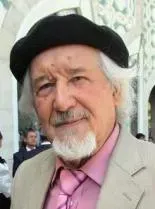
Vladimir Ivanovich Burmakin was born on 9 January 1938 in Sverdlovsk (now Yekaterinburg); soon after his birth the family moved to Tashkent. His father, Ivan Burmakin, a native of the Yaroslavl Governorate, painted and worked as a confectioner; he died shortly before the war began.
From 1952 Burmakin studied at the P. P. Benkov Republican Art School, graduating in 1957. Alongside it he learned ganch carving from the master Tashpulat Arslonqulov and painting from V. I. Zhmakin; biographical notes say he spent about eleven years improving his craft in the workshops of Arslonqulov and of Abdulhaq Abdullayev, People’s Artist of the Uzbek SSR.
After the school he briefly taught drawing in Samarkand schools and then worked as chief artist of the Tashkent House of Officers. From 1959 to 1965 he studied at the A. N. Ostrovsky Tashkent Theatre and Art Institute under Professor R. A. Akhmedov, People’s Artist of the Uzbek SSR.
He became known for portraits that convey a woman’s state of mind — “Baysun Madonna” (1968), “Elvira” (1983) — and for decorative compositions such as “Waiting Women” (1962). A large solo show held jointly with Ruzi Choriev in the House of Knowledge hall in 1969 was a notable event in Tashkent’s art life. In the 1970s he made more than twenty monumental panels and bas-reliefs, for the Palace of Friendship of Peoples, the Pakhtakor metro station, the Mehnat Zakhiralari sports complex, the Zarafshan restaurant and the Tashkent hippodrome.
In 1981, after another solo exhibition, Burmakin was named Honoured Art Worker of the Uzbek SSR. He was vice-president of the Union of Artists of Uzbekistan in 1994–1997, became a full member of the Academy of Arts of Uzbekistan in 1997 and its secretary in 2006. He taught for more than forty years, and his pupils include many well-known Uzbekistani artists.
In independent Uzbekistan Burmakin made mosaics for Tashkent airport, the hall of the Senate building and the Alisher Navoiy National Library. His works were shown in Russia, the United Kingdom, France, the USA and other countries; some two hundred of his paintings are held by a gallery in Gummersbach, Germany. The Academy of Arts awarded him its gold medal (2003), and in 2005 he received the Order “For Selfless Service”.
Vladimir Burmakin died in Tashkent on 31 August 2024.
Education
- Benkov Republican Art CollegeCollege · Tashkent · 1952–1957
- State Institute of Arts and Culture of UzbekistanUniversity · Tashkent · 1959–1965
Career
- Union of Artists of UzbekistanVice-president · Tashkent · 1994–1997
- Academy of Arts of UzbekistanFull member, secretary from 2006 · Tashkent · 1997–…
- Kamoliddin Behzod National Institute of Arts and DesignTeacher · Tashkent
Awards
 Order «For Selfless Service»2005 · Uzbekistan
- Honoured Art Worker of the Uzbek SSR1981 · Uzbek SSR
Life path
- 1938Birth
Born in Sverdlovsk; the family soon moved to Tashkent.
- 1952–1957Benkov Art School
Studied painting with V. I. Zhmakin and ganch carving with Tashpulat Arslonqulov.
- 1957–1959Samarkand and Tashkent
Taught drawing in Samarkand schools, then worked as chief artist of the Tashkent House of Officers.
- 1959–1965Theatre and Art Institute
Studied in the studio of Professor R. A. Akhmedov.
- 1969Exhibition at the House of Knowledge
A solo show with Ruzi Choriev that became an event in Tashkent’s art life.
- 1970sMonumental works
More than twenty panels and bas-reliefs, among them for the Palace of Friendship of Peoples and the Pakhtakor metro station.
- 1981Honoured Art Worker of the Uzbek SSR
The title followed a solo exhibition at the Tashkent Institute of Arts.
- 1994–1997Vice-president of the Union of Artists
Served as vice-president of the Union of Artists of Uzbekistan.
- 1997Academy of Arts
Elected a full member of the Academy of Arts of Uzbekistan; its secretary from 2006.
- 2003–2005Gold medal and order
Received the Academy’s gold medal in 2003 and the Order “For Selfless Service” in 2005.
- 2024Death
Died in Tashkent on 31 August.
Works
- “Waiting Women” (1962)Painting
A decorative composition of women waiting.
- “Baysun Madonna” (1968)Painting
A portrait shown in Moscow, France and Germany; one of the artist’s best-known works.
- “Father” (1973)Painting
A painting devoted to the image of the father.
- “Song of the Tree” (1975)Triptych
A painted triptych.
- “Whose Horse Is Better?” (1979)Painting
A narrative picture.
- “Elvira” (1983)Portrait
A portrait of a woman.
- “Present-Day Scientists of Uzbekistan” (1984)Group portrait
A multi-figure composition.
- Mosaics and panelsMonumental art
Works for the Pakhtakor metro station, the Palace of Friendship of Peoples, Tashkent airport, the Senate building and the Navoiy National Library.