Biography
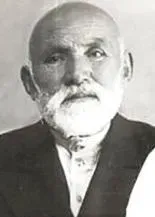
Tashpulat Arslankulov was born in Tashkent in 1882 into a family of ganch (carved plaster) masters, in which the craft passed from father to son. He learned carving from his father and began practising it as a small child; by the age of 12 or 13 he was already working with his father on important commissions.
Among the demanding techniques of ganch carving he favoured “choka-pardoz”, in which the edges of a raised pattern are cut away with two slanting strokes towards the centre, leaving a groove that plays with light and shadow. His work more often shows the plant ornament known as “islimi”, sometimes combined with the geometric “girikh”, and he drew the patterns for his carving himself.
He took part in decorating many buildings in Tashkent, among them the Polovtsev house, built in a European style (now the Museum of Applied Arts of Uzbekistan), the Hamza Uzbek Drama Theatre, the Muqimi Music and Drama Theatre, the meeting hall of the Presidium of the Supreme Soviet of the Uzbek SSR and the building of the regional executive committee.
His largest work was the decoration of the Tashkent Hall in the Alisher Navoi Opera and Ballet Theatre (opened in 1947), where, drawing on the folk traditions of decorating an Uzbek home, he covered the walls with a single ornamental composition. He was named People’s Artist of the Uzbek SSR in 1944, and in 1948 he received a Stalin Prize of the first degree, together with Alexey Shchusev and other masters, for the theatre building.
From 1952 he taught at the Benkov Republican Art College. On 18 March 1959 he was awarded the Order of the Badge of Honour. Arslankulov died in Tashkent in 1962; his works are held in museums in Moscow, St Petersburg and other cities. In 1982 the Union of Architects of Uzbekistan widely marked the centenary of his birth.
Career
- Benkov Republican Art CollegeTeacher · Tashkent · 1952–…
Awards
 People's Painter of the Uzbek SSR1944 · Uzbek SSR
 Order of the Badge of Honour1959 · USSR
 Stalin Prize1948 · USSR
Life path
- 1882Birth
Born in Tashkent into a family of ganch carvers.
- 1890sLearning the craft
Learned ganch carving from his father and by the age of 12–13 was working with him on serious commissions.
- 1929Decoration of a Tashkent theatre
Took part in decorating the building of what is now the Abror Hidoyatov Uzbek State Drama Theatre.
- 1939Navoi Museum
Took part in the decoration of the building of the Navoi Museum of the Academy of Sciences of Uzbekistan.
- 1944People’s Artist of the Uzbek SSR
Awarded the title People’s Artist of the Uzbek SSR.
- 1947Tashkent Hall of the Navoi Theatre
In the year the Alisher Navoi Opera and Ballet Theatre opened, he completed the carved decoration of its Tashkent Hall.
- 1948Stalin Prize
Received a Stalin Prize of the first degree for the theatre building, together with Alexey Shchusev and other masters.
- 1952Teaching at the art college
Began teaching at the Benkov Republican Art College.
- 1959Order of the Badge of Honour
Awarded the Order of the Badge of Honour on 18 March 1959.
- 1962Death
Died in Tashkent.
- 1982Centenary
The Union of Architects of Uzbekistan widely marked the 100th anniversary of his birth.
Works
- Tashkent Hall of the Navoi Theatre (1947)Ganch carving
A single ornamental composition covering the hall of the Alisher Navoi Opera and Ballet Theatre; the building won a Stalin Prize of the first degree.
- Carved decoration of the Polovtsev houseGanch carving
A building in a European style, now the Museum of Applied Arts of Uzbekistan, decorated with national patterns together with masters from Bukhara and Tashkent.
- Decoration of the Hidoyatov theatre building (1929)Ganch decoration
Patterned decoration of the Uzbek State Drama Theatre building in Tashkent.
- Decoration of the Navoi Museum building (1939)Ganch decoration
Carved decoration of the building of the Navoi Museum of the Academy of Sciences of Uzbekistan.
- Hamza and Muqimi theatresGanch decoration
Patterned decoration of the Uzbek Drama Theatre and the Music and Drama Theatre in Tashkent.
- Meeting hall of the Presidium of the Supreme Soviet of the Uzbek SSRGanch decoration
Carved decoration of a state hall in Tashkent.