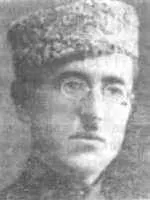
Abdulla Alaviy
Poet and literary scholar of Cho‘lpon’s circle, one of the pioneers of free verse in Uzbek poetry, who wrote down the Berdi Baxshi version of the epic “Alpomish”.
- Occupation:
- Writer, Poet
- Born:
- 1903 — January 7, 1931
- Birthplace:
- Piskent District, Tashkent Region
Biography
Abdulla Alaviy was born in 1903 in Pskent (Piskent), near Tashkent, into a family close to the educated milieu. From childhood he was drawn to history and literature: besides the madrasa he read widely on his own, learned Russian and German and got to know writing in those languages.
After 1917 he studied at a new-method school, first in Pskent and then in Tashkent, taught for a time and then went to Leningrad. In 1924–1927 he studied at the Leningrad Oriental Institute, where he also taught Uzbek language and literature.
In 1926, in the village of Evalak in the Pskent district, he wrote down a version of the epic “Alpomish” from the bard Berdi Baxshi. From 1927 to 1930 he taught at the Uzbek Pedagogical Academy in Samarkand, then the republic’s capital, working alongside the scholars and writers gathered there. According to his contemporaries he knew Arabic, Persian, Turkish, French and Latin.
Alaviy’s literary legacy is small: a few articles on classical literature, literary theory and the new alphabet, and no more than about ten poems. In poems such as “Yo‘lovchi” (“The Traveller”), “Erkin sahob” (“The Free Cloud”), “Arslonbobga” (“To Arslanbob”) and “Dengizga” (“To the Sea”) new lyrical tones were heard. He widened the possibilities of Uzbek syllabic verse and was one of the pioneers of free verse in Uzbek poetry, writing in Uzbek and Persian. The poet Rauf Parfi carried his lines of search forward in the next generation.
A serious illness cut short his life at a time of creative growth: he died in Samarkand on 7 January 1931. His death deeply affected Cho‘lpon and other poets, who wrote elegies in his memory.
Education
- Leningrad Oriental InstituteUniversity · 1924–1927
Career
- Uzbek Pedagogical AcademyLecturer · Samarkand · 1927–1930
Works
- “Yo‘lovchi” (“The Traveller”)Poem
A lyric poem carrying new tones into Uzbek poetry of the 1920s and 1930s.
- “Erkin sahob” (“The Free Cloud”)Poem
A lyric poem counted among his principal poems.
- “Arslonbobga” (“To Arslanbob”)Poem
A poem addressed to the mountain village of Arslanbob.
- “Dengizga” (“To the Sea”)Poem
A lyric address to the sea.
- “Alpomish” (version of Berdi Baxshi) (1926)Recording of an epic
A version of the epic written down in 1926 in the village of Evalak, Pskent district.
Life path
- 1903Birth
Born in Pskent near Tashkent.
- After 1917New-method schools
Studied first in Pskent, then in Tashkent; later taught for a time.
- 1924–1927Leningrad Oriental Institute
Studied at the institute and taught Uzbek language and literature there.
- 1926Recording “Alpomish”
In the village of Evalak, Pskent district, wrote down a version of the epic from Berdi Baxshi.
- 1927–1930Uzbek Pedagogical Academy
Taught in Samarkand, then the republic’s capital.
- 1931Death
Died in Samarkand on 7 January; Cho‘lpon and other poets dedicated elegies to him.