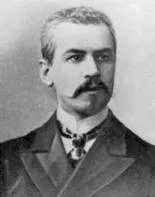
Aleksandr Schmidt
Russian and Soviet orientalist, Arabist and scholar of Islam, a founder of Turkestan University and the Oriental Institute in Tashkent who helped build oriental studies and manuscript research in Central Asia.
Biography
Aleksandr Eduardovich Schmidt was born on 12 (24) March 1871 in Astrakhan into the family of a military doctor; his father was a hereditary nobleman of Russified German descent. In 1889 he graduated with a gold medal from the First Tiflis Classical Gymnasium, and in 1894 from the Arabic-Persian-Turkish section of the Faculty of Oriental Languages of St Petersburg University with a first-class diploma. His scholarly interests were shaped by the orientalist Viktor Rosen; Schmidt read Arabic, Persian, Turkish and Uzbek, as well as a number of European and ancient languages.
Kept on at the university to prepare for a professorship, he passed the master’s examination in 1896 and spent about two years in Europe studying under leading orientalists, among them Ignác Goldziher, Joseph Karabacek and Michael Jan de Goeje. He published his first substantial article on Arabic studies in 1897 and from 1898 taught Arabic and Islamic studies at St Petersburg University as a privatdozent. He also served as inspector of the Alexander Lyceum and as secretary of the editorial board of the newspaper “Sankt-Peterburgskie vedomosti”, and from the late 1900s until 1920 worked at the Imperial Public Library, becoming assistant director in 1919.
From 1912 Schmidt contributed to the journal “Mir Islama” (“The World of Islam”), publishing essays on the history of Islam. On 19 April 1914 he defended his master’s thesis on al-Sha‘rani and his “Book of Scattered Pearls”. He became an extraordinary professor at Petrograd University in 1917 and an ordinary professor in 1918, and from October 1918 taught Islamic law and Islamic studies at the Lazarev Institute of Oriental Languages in Moscow.
From late 1917 Schmidt took part in the organizing committee for a university in Tashkent. On 31 August 1919 he was elected deputy rector of Turkestan University, and in February 1920 he set out for Tashkent at the head of the first group of professors, arriving on 10 April. He was professor and dean of the historical-philological faculty, and from December 1920 to mid-1921 rector of the Oriental Institute established there, where he taught Islamic studies, Islamic law, Arabic literature and the Arabic language. In 1920–1922 he chaired the university’s Society of Historical-Philological and Socio-Economic Sciences.
Schmidt also took part in expeditions: in September 1920 he travelled with a group of orientalists to Bukhara to inspect historic monuments and arrange for their protection, in 1922 he joined the survey of the Ahmad Yasawi mausoleum in the town of Turkestan, and in the mid-1920s he made research trips to Kyrgyzstan and Turkmenistan. In July 1923, on the instructions of the Turkestan authorities, he helped bring the Uthman Quran from Ufa to Tashkent.
In 1924 the Oriental Institute became the Oriental Faculty of the university; Schmidt headed it as dean and then, until September 1928, was vice-rector for academic affairs of Central Asian State University. In 1925 he was elected a corresponding member of the USSR Academy of Sciences in oriental letters, and in 1926 his book “Shari‘a and Water Rights in Central Asia” appeared. In 1929 he was granted a personal pension for his contribution to the university. The Oriental Faculty was closed in 1930, teaching of Arabic at the university stopped in March 1931, and in those years Schmidt, like other teachers of the faculty, was subjected to persecution.
From June 1934 he worked in the Oriental Department of the State Public Library of the Uzbek SSR, describing oriental manuscripts. In his last years, on commission from the Institute of Oriental Studies of the USSR Academy of Sciences, he prepared a critical annotated text of the “Book of Taxation” (Kitab al-Kharaj) by Abu Yusuf, a judge in the age of Harun al-Rashid. Schmidt was arrested in 1938; he died in Tashkent on 9 August 1939 (according to several sources, in custody) and was buried in the cemetery on the former Botkin Street.
Education
- First Tiflis Classical GymnasiumSchool · 1889
- Imperial St Petersburg UniversityUniversity · 1894 · Faculty of Oriental Languages, Arabic-Persian-Turkish section; first-class diploma
Career
- National University of UzbekistanDeputy rector of Turkestan University, dean of the historical-philological faculty · Tashkent · 1919–1921
- Central Asian State UniversityDean of the Oriental Faculty, vice-rector, professor · Tashkent · 1924–1930
- USSR Academy of SciencesCorresponding member (oriental letters) · 1925–1939
- Imperial St Petersburg UniversityPrivatdozent, professor · 1898–1919
- Imperial Public Library (St Petersburg)Librarian, assistant director · 1909–1920
- Lazarev Institute of Oriental Languages (Moscow)Professor · 1918–1919
- State Public Library of the Uzbek SSRStaff member of the Oriental Department · Tashkent · 1934–1938
Works
- “Arabic Grammar” (1911)Textbook
Notes of the author’s university lectures on Arabic grammar.
- “Essays on the History of Islam as a Religion” (1912)Scholarly essays
Essays on the history of the Islamic religion published in the journal “Mir Islama”.
- “Abd al-Wahhab al-Sha‘rani and His ‘Book of Scattered Pearls’” (1914)Dissertation
Master’s thesis on the Arab theologian al-Sha‘rani and his work.
- “Shari‘a and Water Rights in Central Asia” (1926)Monograph
A study of how the norms of the shari‘a regulated the use of water in Central Asia.
- “From the History of Sunni-Shi‘a Relations” (1927)Article
A work on the relations between the two main branches of Islam.
- “Materials on the History of Central Asia and Iran” (1958)Collection of materials
A collection of the scholar’s materials published after his death.
Life path
- 1871Birth
Born in Astrakhan into the family of a military doctor.
- 1894Graduation
Graduated from St Petersburg University in the Arabic-Persian-Turkish section; in 1889 he had finished the First Tiflis Gymnasium with a gold medal.
- 1896–1898Study in Europe
Passed the master’s examination and spent about two years studying under Goldziher, Karabacek and de Goeje.
- 1898Privatdozent
Began teaching Arabic and Islamic studies at St Petersburg University.
- 1914Master’s thesis
Defended a thesis on al-Sha‘rani and his “Book of Scattered Pearls”.
- 1917–1919Professor in Petrograd and Moscow
Became a professor at Petrograd University; from 1918 also taught at the Lazarev Institute of Oriental Languages in Moscow.
- 1919–1921Turkestan University
Elected deputy rector, came to Tashkent in 1920 at the head of the first group of professors and served as dean of the historical-philological faculty.
- 1920–1921Rector of the Oriental Institute
From December 1920 headed the Oriental Institute in Tashkent.
- 1923The Uthman Quran
Took part in bringing the Uthman Quran from Ufa to Tashkent.
- 1924–1928Dean and vice-rector at SAGU
Headed the Oriental Faculty and then served as vice-rector for academic affairs; elected a corresponding member of the USSR Academy of Sciences in 1925.
- 1934–1938Work on manuscripts
Described oriental manuscripts in the Oriental Department of the State Public Library of the Uzbek SSR.
- 1938–1939Arrest and death
Arrested in 1938; died in Tashkent on 9 August 1939.
Legacy
Schmidt stood at the origins of university oriental studies in Tashkent: he organized teaching of Islamic studies, Arabic and Islamic law at Turkestan University and the Oriental Institute, and took part in building up the university library and describing oriental manuscripts. The university he helped found is today the National University of Uzbekistan.
Era: Early 20th century — the first years of Soviet rule, the formation of higher education in Turkestan- The Uthman Quran brought from Ufa to Tashkent (1923)
- The Oriental Faculty of Central Asian State University closed (1930)