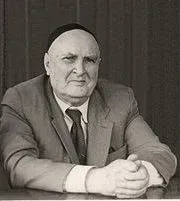
Alexander Uklonskiy
Russian and Soviet mineralogist and geochemist, academician of the Academy of Sciences of the Uzbek SSR, who built up mineralogy teaching and a mineralogical museum in Tashkent and studied the paragenesis of sulphur and oil.
- Occupation:
- Scientist, Geographer or geologist
- Born:
- November 4 1888(83 years old) ♏ — February 16, 1972
Biography
Alexander Sergeyevich Uklonskiy was born on 23 October (4 November in the new style) 1888 in Gomel, in the family of an Orthodox priest. In 1901 the family moved to Tashkent, where his father taught at a gymnasium. In 1908 Uklonskiy finished the First Men’s Gymnasium in Tashkent and entered the natural sciences department of the Faculty of Physics and Mathematics at Moscow University, choosing geology.
At the university he studied under Vladimir Vernadsky and then worked in the laboratory of Andrey Arkhangelsky, who studied loess. His first paper, “On the Petrography of the Chimgan Tract”, grew out of material collected during summer holidays in Tashkent. In 1914 he graduated in petrography with a first-class diploma and was kept on to prepare for a professorship. In 1915 he took part in the work of a group of Vernadsky’s young students that searched for mineral raw materials, and began to study sulphur deposits.
From January 1917 he was a senior assistant at the Warsaw Polytechnic, which had been evacuated to Nizhny Novgorod; when it became Nizhny Novgorod University he headed its cabinet of crystallography and mineralogy and taught courses. In 1920 he came to Tashkent with a group of scholars and teachers to help set up Turkestan University, and from then on worked at the Central Asian State University. There, and at the Central Asian Polytechnic Institute, where he taught from 1930, he founded departments of mineralogy, and at the university the largest mineralogical museum in Central Asia. In 1926 he spent nine months in Afghanistan as a geological consultant to the Soviet–Afghan commission, and in 1927 he was given the title of professor.
One of his main fields was the geochemistry of natural waters: he proposed a graphic way to show the composition of water and a method of judging a water’s origin from its chemistry. From 1928 he studied the paragenesis of sulphur and oil; young geologists he led discovered the Shorsu and Changyrtash sulphur deposits, and marble and emery deposits were found in the Nurata area. He was confirmed as a candidate of sciences in 1937 and as a doctor of geological and mineralogical sciences in 1938. In his monograph “The Paragenesis of Sulphur and Oil” (1940) he argued that oil and gas might be found near Gazli, where large gas fields were found later; his textbook “Mineralogy” appeared the same year. He proposed a geochemical classification of minerals and introduced the concepts of the “protocrystal” and “paraelements”.
In November 1943, when the Academy of Sciences of the Uzbek SSR was founded, he became one of its academicians, and that year he was named Honoured Science Worker of the Uzbek SSR. He received the Order of the Red Banner of Labour (1944), the Order of Lenin and the medal “For Valiant Labour in the Great Patriotic War of 1941–1945” (1946). Under his direction more than 400 minerals were studied in detail and several new ones were discovered; one of them, uklonskovite, is named after him. He supervised two doctoral and more than twenty candidate dissertations, and in 1964 he was elected an honorary member of the mineralogical society.
Uklonskiy went on lecturing at the university and polytechnic institute in Tashkent until the end of his life. He died in Tashkent on 16 February 1972 and was buried at the Botkin cemetery. The departments of mineralogy, geochemistry and petrography of the National University of Uzbekistan trace their history to the departments he founded.
Education
- Moscow State UniversityUniversity · 1908–1914 · Petrography, first-class diploma
- First Men’s Gymnasium of TashkentSchool · Tashkent · 1908
Career
- Academy of Sciences of UzbekistanAcademician of the Academy of Sciences of the Uzbek SSR · Tashkent · 1943–1972
- Central Asian Polytechnic InstituteProfessor, head of the mineralogy department · Tashkent · 1930–…
- Central Asian State UniversityProfessor, head of the mineralogy department · Tashkent · 1920–…
Awards
- Honoured Science Worker of the Uzbek SSR1943 · Uzbek SSR
 Order of Lenin1946 · USSR
 Order of the Red Banner of Labour1944 · USSR
Life path
- 1888Birth
Born in Gomel, the son of an Orthodox priest.
- 1901Move to Tashkent
The family moved to Tashkent, where his father taught at a gymnasium.
- 1908–1914Moscow University
Studied geology under Vladimir Vernadsky and graduated in petrography with a first-class diploma.
- 1917–1920Nizhny Novgorod
Senior assistant at the Warsaw Polytechnic, then head of the cabinet of crystallography and mineralogy at Nizhny Novgorod University.
- 1920Arrival in Tashkent
Came with a group of scholars and teachers to organise Turkestan University and began work at the Central Asian State University.
- 1926Afghanistan
Spent nine months as a geological consultant to the Soviet–Afghan commission.
- 1927Professor
Given the title of professor for his work on the geochemistry of water; headed the university’s mineralogy department.
- 1930Polytechnic Institute
Became professor and head of mineralogy at the Central Asian Polytechnic Institute.
- 1938Doctor of sciences
Confirmed as doctor of geological and mineralogical sciences.
- 1940“The Paragenesis of Sulphur and Oil” and “Mineralogy”
Published a monograph on the paragenesis of sulphur and oil and a mineralogy textbook.
- 1943Academician and Honoured Science Worker
Elected academician of the Academy of Sciences of the Uzbek SSR and named Honoured Science Worker of the Uzbek SSR.
- 1944–1946State awards
Received the Order of the Red Banner of Labour, the Order of Lenin and a medal for valiant labour in the Great Patriotic War.
- 1972Death
Died in Tashkent on 16 February; buried at the Botkin cemetery.
Works
- “On the Petrography of the Chimgan Tract” (1915)Scientific article
His first scientific work, based on material from summer trips; printed in the proceedings of the geological section of the Society of Friends of Natural Science, Anthropology and Ethnography.
- “We Need Our Own Sulphur” (1916)Article
An article on sulphur deposits published in the journal “Rudny Vestnik”.
- “Mineralogy” (1940)Textbook
A textbook from which generations of geology students learned; published in Moscow.
- “The Paragenesis of Sulphur and Oil” (1940)Monograph
Argued that oil and gas could be found near Gazli.
- “Geochemical Classification of the Minerals of the Earth’s Crust” (1949)Article
Proposed a geochemical classification of natural minerals; printed in the reports of the Academy of Sciences of the Uzbek SSR.
- “Classification of Natural Silicon Minerals” (1949)Article
A paper in the jubilee volume marking the 25th anniversary of the Uzbek SSR.