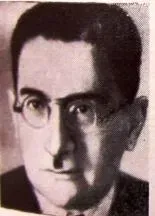
Biography
Armais Aristagesovich Akovbyan was born on 2 March 1900 in Tabriz, Persia, into the family of an office employee. Early in the century the family moved to Ashgabat, where he spent his childhood and youth; at the boys’ classical gymnasium his classmates included a future composer, a surgeon, a haematologist and an orientalist. He played the trumpet in the school orchestra, took part in amateur stage productions and knew Latin and German well.
After finishing the gymnasium in 1919 he volunteered for the Red Army, and in 1920 entered the newly opened medical faculty of Turkestan State University in Tashkent. Among his first teachers were P. F. Borovsky, V. F. Voino-Yasenetsky and A. N. Kryukov. After graduating in 1926 he won a competition for a residency at the skin and venereal diseases clinic, and from 1930 he was an assistant at the department of dermatovenereology. He developed as a specialist under Professors I. S. Milman and A. I. Kartamyshev.
In 1935 he was awarded the degree of candidate of medical sciences without a defence, and in 1937 he defended his doctoral dissertation on the immunodiagnosis and immunotherapy of chancroid. In May 1938, on his return from a work trip to Moscow, he was arrested on a denunciation. The investigation lasted about twenty months; his cellmate was Professor V. F. Voino-Yasenetsky, later Archbishop Luka. Having fallen ill with tuberculosis, Akovbyan was released for lack of evidence and was later fully rehabilitated.
In 1940 he became professor at the department of dermatovenereology of the Tashkent State Medical Institute, and from 1945 to 1971 he headed its department of skin and venereal diseases. He was among the first in the country to treat vitiligo with furanocoumarin extracts from fig leaves, and eczema, neurodermatitis and other skin diseases with preparations of glycyrrhetic acid from liquorice root; in some cases he also used hypnosis. His main contribution was in venereology: his department tested penicillin and other drugs against syphilis, and his monographs dealt with chancroid, with complications of treating syphilis with arsenic compounds, and with the organization of the fight against syphilis in Uzbekistan.
For about twenty years Akovbyan was chief dermatovenereologist of the Ministry of Health of the Uzbek SSR, for many years he chaired the republic’s scientific society of dermatovenereologists, and for more than fifteen years he led the student scientific society. He published about a hundred scientific papers and three monographs; doctoral and candidate dissertations were completed under his supervision, and he is regarded as the founder of the Uzbek school of dermatovenereology.
In 1960 he was named Honoured Scientist of the Uzbek SSR; he also received the Orders of the Red Banner of Labour and the Badge of Honour and a number of medals. From 1971 he was the department’s scientific consultant. Armais Akovbyan died in Tashkent in 1974 and was buried in the city’s Botkin (old Christian) cemetery.
Education
- Turkestan State UniversityUniversity · Tashkent · 1920–1926 · Physician (medical faculty)
Career
- Tashkent State Medical InstituteAssistant, professor, head of the department of skin and venereal diseases · Tashkent · 1930–1974
Awards
- Honoured Science Worker of the Uzbek SSR1960 · Uzbek SSR


Life path
- 1900Born in Tabriz
Born on 2 March to an office employee; the family later moved to Ashgabat.
- 1919Gymnasium graduation, Red Army service
Finished the boys’ gymnasium in Ashgabat and volunteered for the Red Army.
- 1920–1926Studies at Turkestan State University
Studied at the medical faculty in Tashkent under scholars who had come from Russia.
- 1926Resident at the skin and venereal diseases clinic
Obtained the residency through a competition.
- 1930Assistant at the department of dermatovenereology
Worked at the department for 44 years.
- 1935–1937Academic degrees
Became a candidate of medical sciences without a defence in 1935 and defended his doctoral dissertation on chancroid in 1937.
- 1938–1940Arrest and release
Arrested in May 1938 on a denunciation, released after about 20 months for lack of evidence and later rehabilitated.
- 1940Professor of dermatovenereology
Elected professor at the Tashkent State Medical Institute.
- 1945–1971Head of the department of skin and venereal diseases
The department became a national centre for testing penicillin and other new drugs against syphilis.
- 1960Honoured Scientist of the Uzbek SSR
Awarded the republic’s honorary title.
- 1971Scientific consultant of the department
Left the chair and became the department’s consultant.
- 1974Died in Tashkent
Died after a long illness and was buried in the Botkin cemetery.