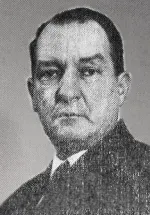
Biography
Boris Fyodorovich Gienko was born on 8 August 1917 in Vladikavkaz (the city was later renamed Ordzhonikidze), into the family of a leather craftsman. He began piano lessons at the age of six. In 1935 he moved to Tashkent and completed a course for leaders of amateur string orchestras at the Central House of Children's Art Education; his first attempts at composing date from the same time.
In 1936, the year the Tashkent State Conservatory opened, he became one of its first students and studied composition in the class of Boris Nadezhdin. While still a student he wrote songs and romances to poems by various poets and arranged Uzbek folk melodies for an orchestra of dutars. From 1938 he taught music theory at the children's music school attached to the Lenin Palace of Pioneers. He graduated in 1941, presenting his First Symphony as his diploma work.
During the Second World War he served in a cultural and propaganda brigade attached to the political directorate of the Turkestan Military District, writing patriotic songs, romances and orchestral pieces. He joined the Union of Composers of Uzbekistan in 1939 and was elected deputy chairman of its board in 1960. From 1945 to 1949 he conducted the orchestra of folk instruments of the Uzbek State Philharmonic.
From 1948 he taught instrumentation and score reading at the Tashkent Conservatory, from 1960 he ran a composition class, from 1972 to 1980 he headed the composition department, and from 1980 he was a professor. Among his pupils were the composers R. Abdullayev, M. Bafoyev, U. Musayev and Sayfi Jalil.
Chamber music holds a prominent place in his output: the string quartets and the piano quintet “Triptych” draw on the Uzbek musical tradition and on the composer's own material. His symphonic works include the “Khorezm Suite” (1951), the suite “Lyrical Pictures of Uzbekistan” (1954) and a symphony-ballad in memory of the 14 Turkestan commissars. He also wrote extensively for the orchestra of Uzbek folk instruments, drawing on the folk music of Uzbekistan, Central Asia, Azerbaijan and Ukraine.
In the theatre he created several music dramas in collaboration with G. Sabitov, D. Zakirov, F. Sadikov and D. Saatkulov, and with Zakirov wrote the ballet “Oynisa” (1956); he also composed music for plays and films.
Gienko was Honoured Art Worker of the Uzbek SSR (1968) and People's Artist of the Uzbek SSR (1988), a holder of the Order of the Red Banner of Labour and the Order of the Badge of Honour, and was awarded several medals; in 1996 he received the Shuhrat medal. He died in Tashkent on 18 September 2000 and was buried at the Botkin Cemetery.
Education
- State Conservatory of UzbekistanUniversity · 1936–1941 · Composition, class of Boris Nadezhdin
Career
- Uzbek State PhilharmonicConductor of the folk instruments orchestra · Tashkent · 1945–1949
- Union of Composers of UzbekistanMember and, from 1960, deputy chairman of the board · Tashkent · 1939–…
- State Conservatory of UzbekistanTeacher, head of the composition department in 1972–1980, professor from 1980 · Tashkent · 1948–…
Awards
 Medal «Shuhrat» (Glory)1996 · Uzbekistan
 People's Artist of the Uzbek SSR1988 · Uzbek SSR
- Honoured Art Worker of the Uzbek SSR1968 · Uzbek SSR

 Order of the Badge of Honour1959 · USSR
 Medal «For Labour Distinction»1951 · USSR

Life path
- 1917Birth
Born in Vladikavkaz into the family of a leather craftsman.
- 1935Move to Tashkent
Completed a course for leaders of amateur string orchestras at the Central House of Children's Art Education.
- 1936–1941Studies at the Tashkent Conservatory
Studied composition in the class of Boris Nadezhdin; his diploma work was the First Symphony.
- 1939Joins the Union of Composers
Became a member of the Union of Composers of Uzbekistan.
- 1941–1945Wartime service
Served in a cultural and propaganda brigade attached to the political directorate of the Turkestan Military District.
- 1945–1949Conductor of the Philharmonic orchestra
Conducted the orchestra of folk instruments of the Uzbek State Philharmonic.
- 1948Teaching at the Conservatory
Began teaching instrumentation and score reading at the Tashkent Conservatory; from 1960 also a composition class.
- 1951–1956Major works
Wrote the “Khorezm Suite” (1951), “Lyrical Pictures of Uzbekistan” (1954) and the ballet “Oynisa” (1956).
- 1960Deputy chairman of the Union of Composers
Elected deputy chairman of the board of the Union of Composers of Uzbekistan.
- 1968Honoured Art Worker of the Uzbek SSR
Received the title of Honoured Art Worker of the Uzbek SSR.
- 1972–1980Head of the composition department
Headed the composition department of the Conservatory; professor from 1980.
- 1988People's Artist of the Uzbek SSR
Received the title of People's Artist of the Uzbek SSR.
- 2000Death
Died in Tashkent on 18 September and was buried at the Botkin Cemetery.
Works
- “Khorezm Suite” (1951)Symphonic suite
A suite for symphony orchestra, one of Gienko's better-known symphonic works.
- “Lyrical Pictures of Uzbekistan” (1954)Symphonic suite
A suite for symphony orchestra.
- “Welcome” (1952)Music drama
After a play by the Azerbaijani dramatist S. Rahman, written with G. Sabitov.
- “Tahir and Zuhra” (1953)Music drama
After a play by S. Abdulla, written with G. Sabitov.
- “Unquenchable Lights” (1953)Music drama
A music drama written with D. Zakirov.
- “Oynisa” (1956)Ballet
A ballet created with D. Zakirov.
- Piano quintet “Triptych” (1964)Chamber work
A chamber work grounded in the Uzbek musical tradition.
- “Ota o'g'li” (“His Father's Son”) (1966)Music drama
After a play by Kh. Sharipov, written with F. Sadikov.
- “Makhtumkuli” (1966)Music drama
After a play by B. Kerbabayev, devoted to the Turkmen poet; written with D. Saatkulov.
- Symphony-ballad in memory of the 14 Turkestan commissars (1966)Symphony
A large-scale work for symphony orchestra.
- Suite “Guldasta” (1970)Suite
For the orchestra of Uzbek folk instruments, on themes of the peoples of Central Asia.
- Concerto for voice and orchestra in memory of R. M. Glière (1971)Vocal-symphonic work
Dedicated to the memory of the composer Reinhold Glière.