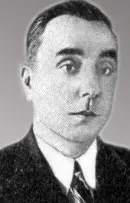
Boris Lunin
Soviet and Uzbek historian of scholarship, source specialist and bibliographer, author of more than 600 works on the history of Central Asian Oriental studies; Honoured Science Worker of the Uzbek SSR.
Biography
Boris Vladimirovich Lunin was a historian of scholarship, source specialist and bibliographer who wrote on the history of Oriental studies and archaeology in Central Asia. He was born on 18 July 1906 in Geneva into a family of Russian political émigrés (his father was a lawyer). After his grandfather V. I. Lunin was elected to the First State Duma, the family returned to Russia.
He attended a gymnasium in Pyatigorsk, lived in Rostov-on-Don from 1921, and in 1922–1925 was an auditor at the Don Archaeological Institute. From 1923 he belonged to the Don Society of Archaeology and Art History (later the North Caucasus Society of Archaeology, History and Ethnography), served as scientific secretary of its board and worked at the Don regional museum. His first publication was “The Dolmens of the Black Sea Coast” (1924), on an expedition of 1923. In February 1931 he was arrested with other board members of the society and in September of that year released with a suspended sentence. In 1935–1941 he taught at Rostov colleges, and in 1937 he headed the pre-Soviet history department of the newly founded Rostov museum of local lore.
In 1941 he was with the active army on the Southern Front; from 1942 to 1953 he served in the Turkestan Military District as senior lecturer and head of the socio-economic cycle at its military schools, retiring as a lieutenant colonel. From 1953 he was scientific secretary and then senior researcher at the Institute of History and Archaeology of the Academy of Sciences of the Uzbek SSR, and afterwards scientific secretary of the Academy’s Department of Social Sciences. In 1956 he defended his candidate’s dissertation on the Turkestan Circle of Amateurs of Archaeology (1895–1917).
He defended his doctoral dissertation, based on the monograph “Central Asia in Pre-Revolutionary and Soviet Oriental Studies” (1965), in 1966–1967 — reference works usually date the degree of Doctor of Historical Sciences to 1966 — and was made professor in 1970. From 1968 he headed the historiography sector of the Institute of History of the Uzbek SSR and was the institute’s chief researcher. He was named Honoured Science Worker of the Uzbek SSR in 1973 and received the Order of Friendship of Peoples in 1981.
Lunin wrote 25 monographs, 50 booklets and more than 600 scholarly works. They include “The Scholarly Societies of Turkestan and Their Progressive Activity” (1962) and “Central Asia in the Scholarly Heritage of Russian Oriental Studies” (1979); he also compiled the annual bibliographic indexes of literature on the archaeology, history, ethnography, philosophy and law of Uzbekistan. He sat on the editorial board of the journal Social Sciences in Uzbekistan for forty years, was a member of the main editorial board of the 14-volume Uzbek encyclopedia, an academician of the Russian Academy of Natural Sciences and a member of the Russian Archaeological Society.
Boris Lunin died in Tashkent on 18 October 2001 and was buried in the Dombrabad cemetery. A lane in Rostov-on-Don bears his name.
Education
- Don Archaeological Institute (Rostov-on-Don)University · 1922–1925
Career
- Institute of History and Archaeology of the Uzbek SSR Academy of SciencesScientific secretary, senior researcher · Tashkent · 1953–1968
- Social Sciences in Uzbekistan journalEditorial board member (forty years) · Tashkent
- Soviet ArmySenior lecturer and head of the socio-economic cycle at military schools of the Turkestan Military District (lieutenant colonel) · 1941–1953
- Institute of History of the Academy of Sciences of UzbekistanHead of the historiography sector, chief researcher · Tashkent · 1968–…
Awards
- Honoured Science Worker of the Uzbek SSR1973 · Uzbek SSR
 Order of Friendship of Peoples1981 · USSR
Life path
- 1906Birth
Born on 18 July in Geneva into a family of Russian political émigrés.
- 1922–1925Don Archaeological Institute
Studied in Rostov-on-Don as an auditor; from 1923 a member of the Don Society of Archaeology and Art History.
- 1925–1931North Caucasus society
Scientific secretary of the board of the society of archaeology, history and ethnography and a local-lore bureau and museum worker; arrested in 1931 and released with a suspended sentence.
- 1935–1941Teaching and museum in Rostov
Taught at Rostov colleges; from 1937 head of the pre-Soviet history department of the local-lore museum.
- 1941–1953Military service
On the Southern Front and, from 1942, in the Turkestan Military District as a senior lecturer at military schools; retired as a lieutenant colonel.
- 1953At the Academy of Sciences
Joined the Institute of History and Archaeology of the Uzbek SSR Academy of Sciences as scientific secretary, then senior researcher.
- 1956Candidate's dissertation
On 26 June defended a dissertation on the Turkestan Circle of Amateurs of Archaeology (1895–1917).
- 1966–1967Doctorate
Doctoral dissertation on a monograph about the history of Central Asian Oriental studies (defence dated 14 January 1967); made professor in 1970.
- 1968Historiography sector
Became head of the historiography sector of the Institute of History of the Uzbek SSR and the institute's chief researcher.
- 1973Honoured Science Worker
Named Honoured Science Worker of the Uzbek SSR.
- 1981Order of Friendship of Peoples
Awarded the Order of Friendship of Peoples on 13 May.
- 2001Death
Died in Tashkent on 18 October and was buried in the Dombrabad cemetery.
Books
- “The Dolmens of the Black Sea Coast”1924 · Expedition report
Results of the archaeological expedition of June 1923; the author's first publication.
- “The Siege of Azov”1939 · Popular history
Pages from the history of the Don Cossacks, issued in a school library series.
- “From the History of Russian Oriental Studies and Archaeology in Turkestan: The Turkestan Circle of Amateurs of Archaeology (1895–1917)”1958 · Monograph
Book based on the subject of his candidate's dissertation (Tashkent, 1958).
- “The Scholarly Societies of Turkestan and Their Progressive Activity”1962 · Monograph
On the scholarly societies of the late 19th and early 20th century (Tashkent, 1962).
- “Central Asia in Pre-Revolutionary and Soviet Oriental Studies”1965 · Monograph
His main study, 408 pages long, on which the doctoral dissertation was based (Tashkent, 1965).
- “Central Asia in the Scholarly Heritage of Russian Oriental Studies”1979 · Historiographic essay
A historiographic essay (Tashkent, Fan, 1979).
- “The History of Uzbekistan in Sources”· Source collection
A three-volume collection of sources.
- “Historiography of the Social Sciences in Uzbekistan”· Historiography
A history of the development of the social sciences in Uzbekistan.
- “Bio-Bibliographic Essays on Social Scientists of Uzbekistan”· Bibliography
Bio-bibliographic essays in two parts.