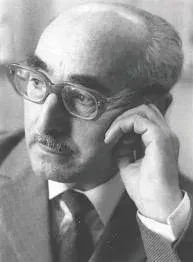
Biography
Chingiz Akhmarov was born on 18 August 1912 (5 August in the old style) in Troitsk, in what is now the Chelyabinsk region, into an educated Tatar family. He was one of eleven children, and the household kept a large library inherited from his grandfather. From childhood he copied illustrations from books and magazines.
From 1927 to 1931 he studied at the Perm art college. In 1927 his family moved to Uzbekistan because of his father's health, first to Qarshi and then to Samarkand. After finishing college he too lived in Samarkand, taught drawing, and made illustrations for the magazines Mushtum and Mash'al. In 1934 he moved to Tashkent and worked for publishers, illustrating books by writers such as Shokir Sulaymon's Li Chu.
In 1935 Akhmarov entered the Surikov Art Institute in Moscow, where his teachers were first Vladimir Favorsky and then Igor Grabar and Nikolai Chernyshev. During the war the institute was temporarily in Samarkand, and Akhmarov graduated there in 1942 with the triptych The Sword of Uzbekistan as his diploma work. From 1943 to 1949 he did postgraduate studies at the institute and became a candidate of art studies.
His best-known work is the set of murals in the foyer of the Navoi Opera and Ballet Theatre in Tashkent (1944–1947), based on themes from Navoi's Khamsa and painted in a building designed by Alexey Shchusev. For it he received the Stalin Prize, first class, in 1948. In the 1950s he took part in the mosaic Friendship of Peoples for Moscow's Kievskaya metro station on the Circle line, and in 1955–1956 he decorated the foyer of the Musa Jalil Opera and Ballet Theatre in Kazan.
From the 1960s he lived in Tashkent and brought the tradition of the Eastern miniature into monumental painting. He painted murals for the Ulugh Beg museum in Samarkand (1963–1964), the Biruni Institute of Oriental Studies in Tashkent (1968–1969), the Navoi literary museum and the Yulduz restaurant in Samarkand, and decorated the Alisher Navoi station of the Tashkent metro. He also worked as a book illustrator and portraitist and designed for stage and film, including Sharaf Rashidov's Kashmir Legend, Maqsud Shaykhzoda's tragedy Mirzo Ulugh Beg (1964) and the film The Star of Ulugh Beg.
On 13 November 1964 he was named People's Artist of the Uzbek SSR, in 1968 he received the Hamza State Prize of the Uzbek SSR, and in 1992 he was recognised as People's Artist of Tatarstan. He taught at the Tashkent Theatre and Art Institute and at the Benkov art college, and was a professor. In his last years he painted several works on the theme of Amir Temur (1992–1995).
Chingiz Akhmarov died in Tashkent on 13 March 1995 and was buried at the Chigatai cemetery. In 2001 he was posthumously awarded the Order «For Outstanding Merit»; a memorial plaque was placed on his house in 2006, and a book of his memoirs appeared in 2007. His works are held by the Museum of Arts of Uzbekistan, the Museum of Applied Arts, the Navoi State Museum of Literature and other collections.
Education
- Perm Art CollegeCollege · 1927–1931 · Artist
- Moscow State Art Institute named after V. I. SurikovUniversity · 1935–1942 · Artist; teachers Vladimir Favorsky, Igor Grabar, Nikolai Chernyshev
Career
- Benkov Republican Art CollegeTeacher · Tashkent
- Ostrovsky Tashkent Theatre and Art InstituteProfessor · Tashkent
Awards
 Order «For Outstanding Merit»2001, posthumously · Uzbekistan
 People's Painter of the Uzbek SSR1964 · Uzbek SSR
 Hamza State Prize of the Uzbek SSR1968 · Uzbek SSR
 Order of the Red Banner of Labour1950 · USSR
 Order of Friendship of Peoples1982 · USSR
 Order of the Badge of Honour1951 · USSR
 Stalin Prize1948 · USSR
Life path
- 1927–1931Perm art college
Studied at the Perm art college; in 1927 his family moved to Uzbekistan.
- 1931–1934In Samarkand
Taught drawing and made illustrations for the magazines Mushtum and Mash'al.
- 1934Move to Tashkent
Began working for publishers, illustrating books by writers, among them Li Chu.
- 1935–1942Surikov Institute
Studied at the Surikov Art Institute in Moscow; graduated in Samarkand in 1942.
- 1944–1947Navoi theatre foyer
Painted the foyer of the Navoi Opera and Ballet Theatre in Tashkent; received the Stalin Prize, first class, in 1948.
- 1953Moscow metro
Took part in the Friendship of Peoples mosaic for Kievskaya station on the Circle line.
- 1955–1956Kazan theatre
Decorated the foyer of the Musa Jalil Opera and Ballet Theatre in Kazan.
- 1963–1964Ulugh Beg museum
Created murals for the Ulugh Beg museum in Samarkand.
- 1964People's Artist
Named People's Artist of the Uzbek SSR on 13 November 1964.
- 1968–1969Institute of Oriental Studies
Painted murals for the Biruni Institute of Oriental Studies in Tashkent; received the Hamza State Prize in 1968.
- 1992–1995Amir Temur series
Created a series of works on episodes from the life of Amir Temur.
- 1995Death
Died in Tashkent on 13 March.
Works
- The Sword of Uzbekistan (1942)Triptych
A patriotic work of the war years; his diploma work at the institute.
- Murals in the Navoi theatre foyer (1947)Mural
Murals on themes from the Khamsa for the foyer of the Navoi Opera and Ballet Theatre in Tashkent (1944–1947).
- Friendship of Peoples (1953)Mosaic
For Kievskaya station of the Moscow metro, Circle line.
- Foyer of the Kazan opera and ballet theatre (1956)Mural
Compositions Dance, Music and Art for the foyer and walls of the Musa Jalil theatre.
- Murals of the Ulugh Beg museum (1964)Mural
Wall paintings for the Ulugh Beg museum in Samarkand (1963–1964).
- Designs for the play Mirzo Ulugh Beg (1964)Stage design
For the Hamza Theatre production of Maqsud Shaykhzoda's tragedy.
- Illustrations for the Kashmir Legend (1964)Book illustration
Decoration and drawings for Sharaf Rashidov's book.
- Murals of the Biruni Institute of Oriental Studies (1969)Mural
Wall paintings in the vestibule of the Tashkent institute (1968–1969).
- Murals of the Yulduz restaurant (1970)Mural
For the banquet hall of the restaurant in Samarkand.
- Amir Temur and Bayezid (1995)Painting
From the series on Amir Temur (1992–1995).