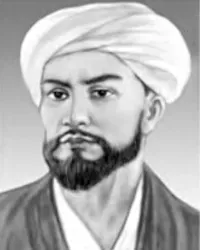
Gulkhani
Poet of the Kokand literary scene and author of Zarbulmasal, a landmark of Uzbek prose, which he wrote at Umar Khan's request.
- Occupation:
- Writer, Poet, Prose writer
- Lived:
- c. 1775 — c. 1827
Biography
Muhammad Sharif Gulkhani (Gulxaniy) was a poet and prose writer active in Kokand from the late 18th century into the first half of the 19th. His best-known work, Zarbulmasal, holds a special place in the history of Uzbek literary prose. Little is known of his life, so the dates are approximate.
According to the sources he came from the mountains of Qorategin to Kokand and married there; he was probably born in the 1770s or 1780s and is said to have studied for a time at a Namangan madrasa (the sources give different places of birth: Kokand, Tog'li Darvoz or Namangan). He worked for some years as a bathhouse stoker (go'loh), which gave rise to his pen name, and also served as a soldier. Later he also wrote under the name Jur'at.
The date of his death is uncertain: the Uzbek article places it in the 1830s or 1840s, English Wikipedia gives 1827, so about 1827 is entered here. When Umar Khan took the Kokand throne in 1811 and gathered poets at court, Gulkhani was among them. Fazliy Namangoniy's anthology Majmuat ush-shuaro quotes his Uzbek ghazals and Persian ghazals with the refrains Az chashmi man, Ey to'ti and Birun.
By its preface, Gulkhani wrote Zarbulmasal on Umar Khan's recommendation. It is a moral and satirical book in which birds and animals speak about the layers of society, their dealings, customs and rites. The story is set in an old town of the Ferghana land: the owl Yapaloqqush wants to marry off his son Kulangirsultan and sends Ko'rqush as matchmaker to Kunushbonu, daughter of Boyo'g'li and Boyqush; the bride-price is fixed at a thousand chordevars and the wedding takes place.
The frame holds over ten prose and verse fables, tales and anecdotes praising honesty, loyalty and nobility and condemning stinginess, conceit and ignorance. The fables The Monkey and the Carpenter and The Tortoise and the Scorpion are counted among the best, while The Camel and the Foal has a purely social theme. Scholars disagree on the book's intent: some read it as ironic criticism, others as praise of the country's prosperity. Manuscripts are kept at the Institute of Oriental Studies of the Uzbek Academy of Sciences; it was published in 1958, and F. Ishoqov's study appeared in 1972.
Career
- Court of the Kokand KhanateCourt poet · Kokand · 1811–…
Life path
- 1770–1780-yillarBirth (approximate)
Born to a family that had moved from Qorategin to Kokand.
- 1811Court circle
Joined Umar Khan's court poets after his accession.
- XIX asr boshlariZarbulmasal
Wrote the prose-and-verse work on Umar Khan's recommendation.
- 1958Edition
An edition of Zarbulmasal was published.
Works
- «Zarbulmasal»
Work in prose and verse
- «Az chashmai man» radifli g'azal
Persian ghazal
- «Ey to'ti» radifli g'azal
Persian ghazal
- «Birun» radifli g'azal
Persian ghazal
- «Angushtam» radifli g'azal (Jur'at taxallusi bilan)
Persian ghazal