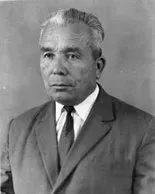
Ishoq Musaboyev
Infectious-disease physician and academician; headed the infectious diseases department of the Tashkent Institute for Advanced Training of Physicians for 37 years, laureate of the Beruni State Prize.
- Occupation:
- Scientist, Physician
- Born:
- October 22 1910(93 years old) ♎ — December 28, 2003
- Birthplace:
- Fergana
Biography
Ishoq (Isak) Qurbonovich Musaboyev was born on 22 October 1910 in the village of Naukent (Novkat), in what is now Fergana Region. He entered the Samarkand Medical Institute in 1930, graduated in 1935 and stayed on at its department of infectious diseases, first as a postgraduate and then as an assistant.
When the Second World War reached the Soviet Union, he was called up in December 1941. He served as an epidemiologist and then head of the sanitary service of the 92nd Separate Rifle Brigade, formed from natives of Central Asia, and later ran the infectious-disease ward of a military hospital. In 1942 he defended his candidate dissertation on blood transfusion in typhoid and paratyphoid fevers. In 1944, at the request of the Uzbek government, he was demobilised and returned to the Samarkand Medical Institute; that year he received the title Honoured Physician of the Uzbek SSR.
In Samarkand he was a docent in 1944–1949 and from 1949 to 1951 headed the department of infectious diseases while also serving as chief physician of the city infectious-disease hospital. In 1951 he defended his doctoral dissertation on liver function in typhoid and paratyphoid fevers, and in 1952 he became a professor.
In 1951 Musaboyev moved to Tashkent and took charge of the department of infectious diseases at the Institute for Advanced Training of Physicians, which he led until 1988 and where he then remained a scientific consultant. From 1962 to 1970 he was deputy director for research of the Uzbek Research Institute of Epidemiology, Microbiology and Infectious Diseases, and is counted among its principal organisers.
His research dealt with the course, clinical picture, treatment and prevention of intestinal infections. He proposed classifications of the clinical forms of dysentery, cholera and viral hepatitis, and also worked on diphtheria, typhoid-paratyphoid diseases and Q fever. In 1965 he took part in the response to a cholera outbreak in Karakalpakstan, and that year he was given the title Honoured Worker of Science and Technology of the Karakalpak ASSR.
He was named Honoured Scientist of the Uzbek SSR in 1955, was elected a corresponding member of the USSR Academy of Medical Sciences in 1961 and a full member of the Academy of Sciences of the Uzbek SSR in 1966, and in 1990 became a laureate of the Beruni State Prize. His decorations include the Order of Lenin (1966), the Order of the October Revolution (1980), three Orders of the Red Banner of Labour, the Order of the Patriotic War, 2nd class, and the Badge of Honour.
He died in Tashkent on 28 December 2003 and was buried at the Yalangach-2 cemetery.
Education
- Samarkand State Medical InstituteUniversity · Samarkand · 1930–1935 · Physician; candidate of medical sciences (1942), doctor of medical sciences (1951)
Career
- Academy of Sciences of UzbekistanAcademician · Tashkent · 1966–…
- Samarkand State Medical InstitutePostgraduate, assistant, docent, head of the department of infectious diseases · Samarkand · 1935–1951
- Tashkent Institute for the Advanced Training of DoctorsHead of the department of infectious diseases, from 1988 scientific consultant · Tashkent · 1951–…
- Uzbek Research Institute of Epidemiology, Microbiology and Infectious DiseasesDeputy director for research · Tashkent · 1962–1970
Awards
- Honoured Science Worker of the Uzbek SSR1955 · Uzbek SSR
 Beruni State Prize of the Uzbek SSR1990 · Uzbek SSR
 Order of Lenin1966 · USSR
 Order of the October Revolution1980 · USSR
 Order of the Patriotic War, 2nd class1985 · USSR
 Order of the Red Banner of Labour1950 · USSR
- Order of the Red Banner of Labour1961 · USSR
- Order of the Red Banner of Labour1972 · USSR
 Order of the Badge of Honour1953 · USSR
Life path
- 1910Birth
Born in the village of Naukent (Novkat), in what is now Fergana Region.
- 1930–1935Studies at the Samarkand Medical Institute
Graduated in 1935 and stayed at the department of infectious diseases as a postgraduate and assistant.
- 1941–1944Military service
Epidemiologist and head of the sanitary service of the 92nd Separate Rifle Brigade, then head of the infectious-disease ward of a military hospital.
- 1942Candidate dissertation
Defended a dissertation on blood transfusion in typhoid and paratyphoid fevers.
- 1944Honoured Physician
Received the title Honoured Physician of the Uzbek SSR; demobilised and returned to Samarkand.
- 1949–1951Head of department
Led the department of infectious diseases of the Samarkand Medical Institute and was chief physician of the city infectious-disease hospital.
- 1951–1952Doctoral dissertation and professorship
Defended his doctoral dissertation on liver function in typhoid and paratyphoid fevers; became a professor in 1952.
- 1951–1988Tashkent Institute for Advanced Training of Physicians
Head of the department of infectious diseases; scientific consultant from 1988.
- 1962–1970Research institute
Deputy director for research of the Uzbek Research Institute of Epidemiology, Microbiology and Infectious Diseases.
- 1966Academician
Elected a full member of the Academy of Sciences of the Uzbek SSR (corresponding member of the USSR Academy of Medical Sciences since 1961).
- 1990Beruni State Prize
Became a laureate of the prize for his work on infectious diseases.
- 2003Death
Died in Tashkent on 28 December and was buried at the Yalangach-2 cemetery.
Works
- “Prevention, Clinical Picture, Diagnosis and Treatment of Diphtheria” (1984)Monograph
A book on the prevention, clinical picture, diagnosis and treatment of diphtheria.
- “Measures against Cholera in the Republic of Uzbekistan” (1984)Co-authored book
On the measures taken against cholera in the republic.
- “Differential Diagnosis of Hepatitis A, B, C, D, E” (1999)Handbook
Differential diagnosis of the viral hepatitides.
- “The Art and Methods of Healing and Differential Diagnosis” (1999)Book
A work on methods of treatment and differential diagnosis.
- “Hepatitis C” (2000)Monograph
Aetiology, epidemiology, pathogenesis, clinical picture, treatment and prevention of hepatitis C.