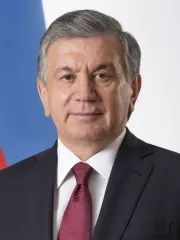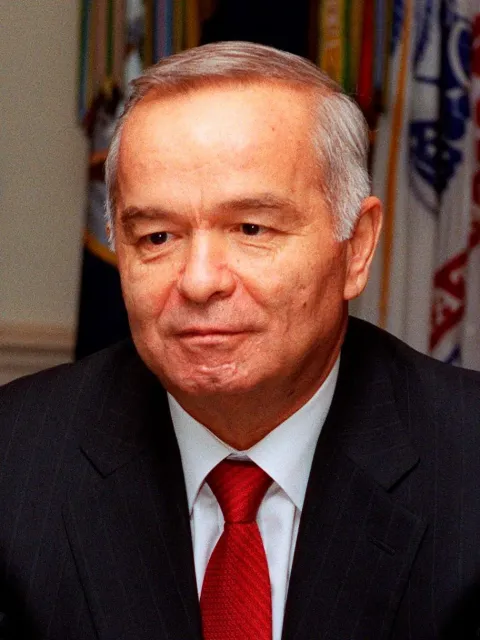
Islam Karimov
First President of Uzbekistan (1991–2016).
- Occupation:
- Politician, Head of state
- Lived:
- January 30 1938(78 years old) ♒ — September 2, 2016
- Birthplace:
- Samarkand
- Father:
- Abdug'ani Karimov
- Mother:
- Sanobar Karimova
- Spouse:
- Tatyana Karimova
- Children:
- Petr Karimov
Biography
Islam Abduganievich Karimov was born on 30 January 1938 in Samarkand into a family of office workers; as a child he spent several years in an orphanage. In 1960 he graduated from the Central Asian Polytechnic Institute (now Tashkent State Technical University) as a mechanical engineer, and in 1967 he completed a degree in economics at the Tashkent Institute of National Economy. He worked as an engineer and then held various posts in the State Planning Committee of the Uzbek SSR; in 1983 he became the republic’s Minister of Finance, and later chairman of the State Planning Committee and deputy chairman of the Council of Ministers.
In 1986 he became head of the Kashkadarya regional committee of the Communist Party, and in 1989 of the Central Committee of the Communist Party of the Uzbek SSR, succeeding Rafiq Nishanov after the interethnic clashes in the Fergana Valley. On 24 March 1990 the Supreme Soviet elected him the first President of the Uzbek SSR. On 31 August 1991, shortly after the attempted coup in Moscow, Karimov proclaimed Uzbekistan’s independence; 1 September was declared Independence Day. On 29 December 1991 he was elected president in a nationwide election with, according to official figures, 86% of the vote.
In 1995 a referendum extended Karimov’s term to 2000; according to official figures, 99.6% of those who took part voted in favour. Karimov was then re-elected in 2000, 2007 and 2015, each time with more than 90% of the vote.
In foreign policy Karimov balanced between Russia, China and the West, avoiding close alignment with any of them. After 2001 Uzbekistan took part in counter-terrorism cooperation with the United States, providing an air base for operations in Afghanistan until 2005.
Karimov’s first marriage, in the 1960s, was to Natalya Kuchmi; they had a son, Pyotr. His second wife was Tatyana Karimova, an economist by training; they had two daughters, Gulnara and Lola. In the 2000s Gulnara Karimova held a prominent position in the country’s business and cultural circles.
Islam Karimov died of a stroke in Tashkent on 2 September 2016, after 25 years in power. He was buried in Samarkand; delegations from dozens of countries attended the farewell ceremony on Registan Square. Prime Minister Shavkat Mirziyoyev became acting president and then president, and launched the “New Uzbekistan” reform programme.
Education
- Central Asian Polytechnic InstituteUniversity
- Tashkent State University of EconomicsUniversity · Tashkent
Career
- Liberal Democratic Party of UzbekistanЧлен партии · 2007–2016
Awards
 Hero of Uzbekistan1994 · Uzbekistan
 Order «Mustaqillik» (Independence)1996 · Uzbekistan
 Order of Amir Temur1997 · Uzbekistan
 Order of the Red Banner of Labour1981 · USSR
 Order of Friendship of Peoples1988 · USSR
Life path
- 1960Start of his career
Graduated from the polytechnic institute as a mechanical engineer and began his working life.
- 1986First Secretary of the Kashkadarya regional committee
Became head of the regional committee of the Communist Party.
- 1989First Secretary of the Central Committee of the Communist Party of the Uzbek SSR
Became head of the republic’s party organisation.
- 1990President of the Uzbek SSR
Elected the republic’s first president by the Supreme Soviet.
- 1991Independence and election as president
Proclaimed Uzbekistan’s independence; elected president in a nationwide election.
- 1995Referendum extending his term
His presidency was extended to 2000.
- 2007Re-elected for a third term
Won the presidential election.
- 2015Re-elected for a fourth term
Won a presidential election for the last time.
- 2016Death
Died in Tashkent after 25 years in power.
Legacy
Karimov went from party leader of the Uzbek SSR to founder of an independent state, building a rigidly centralised political system over a quarter of a century. His rule is credited with economic and infrastructure achievements and with preserving regional stability.
Era: Independent Uzbekistan, 1991–2016- Awarded the title Hero of Uzbekistan (1994)
- Died; Shavkat Mirziyoyev became president (2016)