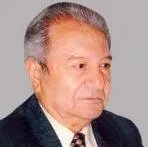
Jumaniyoz Jabborov
Uzbek poet, playwright and translator, People’s Poet of Uzbekistan (1997); he worked at the journals Sharq yulduzi and Gulxan and directed the Ghafur Ghulam publishing house.
- Occupation:
- Writer, Poet, Playwright
- Born:
- October 25 1930(80 years old) ♏ — December 13, 2010
- Birthplace:
- Koson District, Kashkadarya
Biography
Jumaniyoz Jabborov was born on 25 October 1930 in the village of Po‘loti in the Koson district of the Qashqadaryo region, into a white-collar family. He began to publish in 1950. In 1952 he graduated from the philology faculty of Tashkent State University and in 1952–1953 attended the Higher Literary Courses in Moscow.
He started work in 1953 at the journal Sharq yulduzi, first as head of a department and then as executive secretary (1953–1962). From 1962 to 1964 he was editor-in-chief of the journal Gulxan, and from 1964 to 1976 head of a department and deputy editor-in-chief of the newspaper Sovet O‘zbekistoni (today O‘zbekiston ovozi). In 1976–1981 he headed a department in an administrative body, and in 1981–1985 he directed the Ghafur Ghulam Publishing House of Literature and Art.
His first collection, “Bahor nafasi” (“Breath of Spring”), appeared in 1956. Later came poetry books such as “Maqsad yo‘lida”, “Ilhom daqiqalari”, “E‘tiqod” and “Ajab dunyo – sevgi dunyosi”, and long poems including “Gulshan”, “Tog‘lar sadosi” and “Tallimarjon dostoni”. His plays “O‘jarlar”, “Yillar o‘tib…” and “To‘ydan oldin tomosha” were staged at the Muqimiy Music Theatre and in regional theatres. In 1998 he wrote the libretto of the opera “Al-Farg‘oniy”.
As a translator Jabborov rendered into Uzbek poems by Hafez, Ubayd Zakani, Byron, Lermontov and Blok, and Rabindranath Tagore’s play “Sacrifice”. In 1985–1990 he was an adviser to the translation council of the Writers’ Union of Uzbekistan, and from 1990 to 2005 executive secretary of the State Prizes Committee for literature, art and architecture under the Cabinet of Ministers.
He was named Honoured Art Worker of the Uzbek SSR in 1980 and People’s Poet of Uzbekistan in 1997, and received the Shuhrat Medal. He died in Tashkent on 13 December 2010, in his eighty-first year. In August 2021 he was posthumously awarded the Order of Mehnat Shuhrati. In 2020 the Alisher Navoi National Library held an evening for the 90th anniversary of his birth.
Education
- Higher Literary Courses in MoscowOther · 1952–1953
- National University of UzbekistanUniversity · Tashkent · 1952 · Faculty of philology (then Tashkent State University)
Career
- «Sharq yulduzi» magazineHead of department, executive secretary · Tashkent · 1953–1962
- Writers' Union of UzbekistanAdviser to the translation council · Tashkent · 1985–1990
- Ghafur Ghulam Publishing House of Literature and ArtDirector · Tashkent · 1981–1985Everyone who held this post →
- Ozbekiston Ovozi newspaperHead of department, deputy editor-in-chief (then called Sovet O‘zbekistoni) · Tashkent · 1964–1976
- Committee for State Prizes in Literature, Art and ArchitectureExecutive secretary · Tashkent · 1990–2005
Awards
 People's Poet of Uzbekistan1997 · Uzbekistan
 Order of Labor Glory2021, posthumously · Uzbekistan
 Medal «Shuhrat» (Glory)Uzbekistan
- Honoured Art Worker of the Uzbek SSR1980 · Uzbek SSR
Life path
- 1952Graduates from Tashkent State University
Finished the philology faculty, then studied at the Higher Literary Courses in Moscow (1952–1953).
- 1953–1962Journal Sharq yulduzi
Head of a department, then executive secretary.
- 1956First collection
The poetry collection “Bahor nafasi” was published.
- 1962–1964Journal Gulxan
Editor-in-chief of the journal.
- 1964–1976Newspaper Sovet O‘zbekistoni
Head of a department, then deputy editor-in-chief (the paper now appears as O‘zbekiston ovozi).
- 1981–1985Publishing house director
Directed the Ghafur Ghulam Publishing House of Literature and Art.
- 1985–1990Writers’ Union
Adviser to the translation council.
- 1990–2005State Prizes Committee
Executive secretary of the State Prizes Committee for literature, art and architecture.
- 1997People’s Poet of Uzbekistan
Awarded the title of People’s Poet.
- 2010Death
Died in Tashkent on 13 December.
Works
- “Bahor nafasi” (“Breath of Spring”) (1956)Poetry collection
The poet’s first book.
- “Maqsad yo‘lida” (“On the Way to the Goal”) (1958)Poetry collection
His second poetry collection.
- “Tog‘lar sadosi” (“Echo of the Mountains”) (1961)Long poem
A long poem about the struggle between good and evil.
- “20 kun daftari” (“Notebook of Twenty Days”) (1967)Prose
A work in prose.
- “Ilhom daqiqalari” (“Moments of Inspiration”) (1971)Poetry collection
A collection of poems.
- “O‘jarlar” (“The Stubborn Ones”) (1973)Play
A drama about personal freedom and family life.
- “Tallimarjon dostoni” (“The Tale of Tallimarjon”) (1976)Long poem
A poem about the Qarshi steppe and the homeland.
- “E‘tiqod” (“Faith”) (1978)Poetry collection
A collection of poems and long poems.
- “Ajab dunyo – sevgi dunyosi” (“A Strange World, a World of Love”) (1996)Ghazal collection
Includes more than a hundred ghazals.
- Libretto of “Al-Farg‘oniy” (1998)Opera libretto
The text of an opera about the astronomer Ahmad al-Farghani.