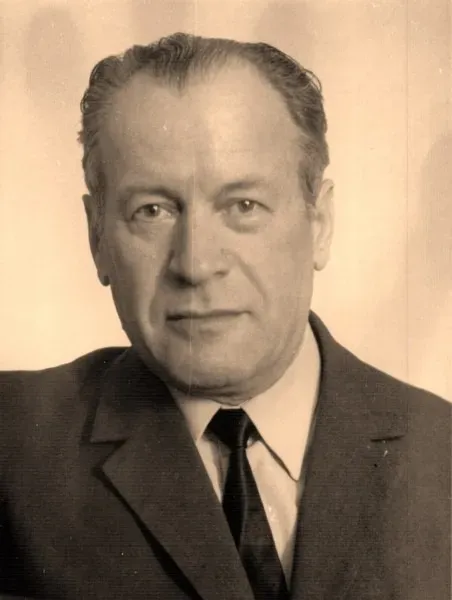
Lazar Rempel
Uzbek Soviet art historian and orientalist, Doctor of Art Studies and professor, who studied the architecture and applied arts of Uzbekistan and Central Asia; winner of the Hamza State Prize.
- Occupation:
- Scientist, Educator, Orientalist
- Born:
- November 19 1907(84 years old) ♏ — April 27, 1992
Biography
Lazar Izrailevich Rempel was born in Kishinev on 6 November 1907 in the old style (19 November in the new). In 1914 the family followed his father to Bykhov, in 1917 they fled the war to Feodosia, and after his father’s death in 1923 they settled in Simferopol.
From 1924 he worked at the Central Museum of Taurida in Simferopol, rising from trainee to head of a department. In 1928 he went to Moscow and graduated from the university in 1931; in 1931–1933 he was a postgraduate student at the State Academy of Art Studies, and he worked at the Museum of Oriental Cultures, at the Institute of Literature and Art of the Communist Academy and, in 1934–1937, at the All-Union Academy of Architecture, while also teaching at the Moscow Institute of Philosophy, Literature and History. He became interested in the art of Central Asia as a student and published his first piece on it in 1930; a book on the painting of Soviet Transcaucasia followed in 1932 and one on the architecture of postwar Italy in 1935.
In 1937 his second wife, the art historian T. V. Vyaznikovtseva, was arrested, and Rempel, as a member of her family, was exiled to Old Bukhara. There he first worked as a photographer and then as a researcher at the Bukhara museum; in 1939–1948 he was on the staff of the Samarkand regional museum, and in 1948 he was sent to Dzhambul (Kazakhstan), where he taught drawing at a school and later worked at the regional museum. He was rehabilitated in 1954.
From 1954 Rempel lived in Tashkent, working at the Institute of Art Studies of the Academy of Sciences of the Uzbek SSR and, from 1955, heading its department of architecture, fine and applied arts. In 1957–1961 he led the chair of art history and theory at the Ostrovsky Tashkent Theatre and Art Institute. He received the degree of Doctor of Art Studies in 1963 and the title of professor in 1966.
Together with G. A. Pugachenkova he organised expeditions to study the early architecture of Bukhara, Fergana, Samarkand and other places in the republic, including all of its surviving mosques. His main works include “Panjara”, “Architectural Ornament of Uzbekistan”, “The History of the Arts of Uzbekistan from Ancient Times to the Mid-19th Century”, “Far and Near” and “The Chain of Times”. In 1966 he and Pugachenkova received the Hamza State Prize of the Uzbek SSR for the history of the arts of Uzbekistan; the same year he was named Honoured Science Worker of the Uzbek SSR.
In 1990 Rempel settled in Moscow. He died there on 27 April 1992 and is buried in the Vostryakovo cemetery. His memoirs “My Contemporaries”, written in Moscow, were published in Tashkent that same year.
Education
- Moscow State UniversityUniversity · 1928–1931
Career
- Hamza Institute of Art StudiesHead of the department of architecture, fine and applied arts · Tashkent · 1954–1984
Awards
- Honoured Science Worker of the Uzbek SSR1966 · Uzbek SSR
 Hamza State Prize of the Uzbek SSR1966 · Uzbek SSR
Life path
- 1924–1928Central Museum of Taurida
Worked at the Simferopol museum, from trainee and researcher to head of a department.
- 1928–1937Study and work in Moscow
Graduated from the university, did postgraduate work and worked at the Museum of Oriental Cultures, the Communist Academy and the All-Union Academy of Architecture.
- 1937Exile to Old Bukhara
Sent away as a member of his arrested wife’s family; worked at a museum.
- 1939–1948Samarkand regional museum
Researcher at the museum.
- 1948–1954Dzhambul
Taught drawing at a school and later worked at the regional museum; rehabilitated in 1954.
- 1954Move to Tashkent
Became a researcher at the Institute of Art Studies.
- 1955Head of department
Took charge of the department of architecture, fine and applied arts.
- 1957–1961Theatre and Art Institute
Professor and head of the chair of art history and theory.
- 1963Doctor of Art Studies
Received his doctorate; made a professor in 1966.
- 1966State Prize and honorary title
Awarded the Hamza State Prize of the Uzbek SSR and the title of Honoured Science Worker of the Uzbek SSR.
- 1990Move to Moscow
Spent his last years in Moscow.
- 1992Death
Died in Moscow on 27 April.
Works
- “The Sogdian Horseman” (1948)Monograph
Co-written with N. N. Zabelina and published in Tashkent.
- “Bukhara” (1949)Monograph
Written with G. A. Pugachenkova for the series on architectural treasures of the peoples of the USSR.
- “Panjara: Architectural Lattices and How They Are Constructed” (1957)Monograph
A study of architectural lattices and the methods of building them.
- “Architectural Ornament of Uzbekistan” (1961)Monograph
The history of architectural ornament and the theory of its construction.
- “The History of the Arts of Uzbekistan from Ancient Times to the Mid-19th Century” (1965)Monograph
Written with G. A. Pugachenkova; the 1966 State Prize was awarded for it.
- “Carved Stucco of Afrasiab” (1971)Monograph
Co-written with I. A. Akhrarov.
- “The Art of the Middle East” (1978)Collection
Selected works on the history and theory of art.
- “Far and Near” (1982)Book
Pages on the life, daily routine, building, crafts and art of Old Bukhara.
- “The Chain of Times” (1987)Book
On age-old images and wandering subjects in the traditional art of Central Asia.
- “My Contemporaries” (1992)Memoirs
Written in Moscow and published in Tashkent.