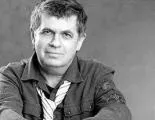
Mark Weil
Soviet and Uzbekistani theatre director, founder and artistic director of the Ilkhom Theatre in Tashkent, the first independent theatre in the USSR.
- Occupation:
- Director, Educator, Theatre director
- Born:
- January 25 1952(55 years old) ♒ — September 7, 2007
- Birthplace:
- Tashkent
Biography
Mark Yakovlevich Weil (Vayl) was born on 25 January 1952 in Tashkent, in a military family. His parents had come to Uzbekistan in the late 1930s, and his mother had studied at the theatre institute in Kyiv. He graduated from the directing department of the Tashkent Theatre and Art Institute.
In 1976, together with a group of the institute's graduates, Weil founded Ilkhom, the first independent theatre in the USSR. The company began with Maskharabaz-76, a show in the spirit of street theatre. A 1982 tour to Moscow, on the small stage of the Mossovet Theatre, made the theatre widely known.
The productions Weil directed include Ragtime for Clowns and Clomadeus (the perestroika years), Gozzi's Happy Beggars (1992), Steinbeck's Tortilla Flat (1995), White White Black Stork, drawn from the writings of Abdulla Qodiriy (1998), and, after Pushkin, A Free Novel (1999) and Imitations of the Quran (2002), then Pomegranate Zikr and Flights of Mashrab (2006). The theatre appeared at festivals in Europe, the United States and Japan.
He also directed in Moscow at the Mossovet Theatre (Twelfth Night, The Ladies' War), in Bulgaria and Yugoslavia, and in the United States, including Seattle and California. He made several television films; his last major work, the documentary End of the Century. Tashkent, was shown at international festivals.
In 1995 Weil opened the School of Dramatic Art at Ilkhom and lectured at other drama schools and universities in several countries. In 2005 he headed the Laboratory of Young Directors of Central Asia and Kazakhstan, for which he received the Aktsiya prize of the Russian Presidential Council for Culture and Arts in 2006. In 1989 he was given the title Honoured Art Worker of the Uzbek SSR.
On the evening of 6 September 2007, after the last rehearsal of Aeschylus' Oresteia, Weil was stabbed in the entrance of his Tashkent home and died of his wounds; the premiere took place on the scheduled day, 7 September. On 17 February 2010 three men were convicted of the crime; they linked the attack to the production Imitations of the Quran. His ashes were sent to Seattle, where his family lives.
The theatre is now officially called the Mark Weil Ilkhom Theatre, and since 2007 the Ilkhom Prize has also carried his name.
Education
- State Institute of Arts and Culture of UzbekistanUniversity · Tashkent · Directing
Career
Awards
- Honoured Art Worker of the Uzbek SSR1989 · Uzbek SSR
Life path
- 1952Birth
Born in Tashkent into a military family.
- 1976Founding of Ilkhom
With graduates of the Tashkent Theatre and Art Institute he created the first independent theatre in the USSR.
- 1982Tour to Moscow
Ilkhom played on the small stage of the Mossovet Theatre.
- 1989Honorary title
Given the title Honoured Art Worker of the Uzbek SSR.
- 1992Happy Beggars
Premiere of the production based on Gozzi's play.
- 1993Festival “Theatre: East–West”
An international theatre festival held under Weil's direction.
- 1995School of Dramatic Art
Opened the school at Ilkhom.
- 1998White White Black Stork
Premiere of the production based on the writings of Abdulla Qodiriy.
- 2002Imitations of the Quran
World premiere of the Pushkin-based production at the festival in Recklinghausen.
- 2005–2006Laboratory of Young Directors
Headed the Laboratory of Young Directors of Central Asia and Kazakhstan; received the Aktsiya prize in 2006.
- 2007Death
Killed on the eve of the premiere of Aeschylus' Oresteia.
Works
- “Ragtime for Clowns”Production
A wordless clowning piece from the perestroika years.
- “Clomadeus”Production
An Ilkhom production shown at international festivals.
- “Happy Beggars” (1992)Production
A fantasy on Gozzi's play moved to Samarkand, joining commedia dell'arte with the Uzbek maskharabaz tradition.
- “Tortilla Flat” (1995)Production
After Steinbeck's novel; won the prize for best direction at the Uzbekistan theatre festival in 1996.
- “White White Black Stork” (1998)Production
Based on Abdulla Qodiriy's unfinished novella and scenes from Days Gone By (with Yolqin Tuychiyev).
- “A Free Novel” (1999)Production
After Pushkin.
- “Love's Labour's Lost” (2001)Production
An international project based on Shakespeare's play.
- “Imitations of the Quran” (2002)Production
After Pushkin; premiered at the festival in Recklinghausen.
- “Flights of Mashrab” (2006)Production
A production about the poet Mashrab.
- “The Oresteia” (2007)Production
After Aeschylus' trilogy; the director's last work.
Filmography
| Title | Year |
|---|---|
| “End of the Century. Tashkent” | — |