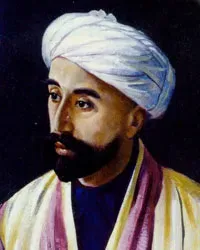
Biography
Muso Saidjonov was a Bukharan Jadid, historian and professor (1935) who held several ministerial posts in the Bukhara People's Soviet Republic. He was arrested in Samarkand on 13 April 1937 and shot the same year (some sources give 25 October as the date of death); he was rehabilitated on 2 December 1965.
He was born in 1893 in the city of Bukhara to a merchant family. He completed the Mir-i Arab madrasa, attended the Russian-native school in New Bukhara (finishing in 1908) and later graduated from the teachers' institute in Tashkent. From youth he studied Arabic, Persian and Turkic languages, literature, history and geography in depth.
Saidjonov joined the Jadid movement in 1913. In 1917 he was among the founders of the Young Bukharans party and was elected to its central committee. Yet he disliked revolutionary upheaval by nature and preferred reforms to be carried out step by step, which is why in 1920 he stayed out of the communist-leaning group of the Young Bukharans. He also took part in the negotiations between the emir and the Jadids.
Once the Bukhara People's Soviet Republic was established he served in turn as commissar of food (1920–1921), deputy commissar of the economy, commissar of state control, head of the Cheka (1921), commissar of finance (1922), deputy chairman of the Supreme Economic Council (1922–1923) and commissar of education (1923–1924). He was among those who put forward the idea of educating young Bukharans in Germany; in 1921 he was active in forming the Bukhara Scientific Society and in preserving historical monuments and gathering manuscripts and folklore.
Between 1925 and 1936 he chaired the Committee for the Protection of Historical Monuments of Uzbekistan and worked as a researcher in its Samarkand branch. In 1935 he was one of the first Uzbek scholars to attend the 3rd Congress of Orientalists in Leningrad, where he read a paper on the mausoleum of Kuchkunchikhan; the title of professor was conferred on him that year. His writings include «The History of the Architectural Monuments of Shahrisabz», «The Architectural Monuments of Samarkand» and a study of the waqf deed of Shaykh Sayfiddin Bokharziy.
His arrest was justified by involvement in the «Milliy Ittihod» organisation and by his impartial study of the history of Uzbek statehood.
Education
- Mir-i Arab MadrasaMadrasa · Bukhara
Career
- Ministry of Education of the Bukharan People’s Soviet RepublicPeople's Commissar of Education · Bukhara · 1923–1924
- Young Bukharans partyMember of the Central Committee · Bukhara · 1917–…
- Uzbekistan Committee for the Protection of Antiquities and Art (Uzkomstaris)Chairman of the Committee for the Protection of Historical Monuments · Tashkent · 1925–1936
- Bukharan Scientific SocietyCo-founder · Bukhara · 1921–…
Life path
- 1893Born in Bukhara
- 1913Joined the Jadid movement
- 1917Member of the Young Bukharans' central committee
- 1920–1924Commissar and deputy commissar in the Bukhara People's Soviet Republic
- 1921Helped found the Bukhara Scientific Society
- 1925–1936Chair of the monuments protection committee; researcher in its Samarkand branch
- 1935Title of professor; paper at the Orientalists' congress in Leningrad
- 1937Arrested on 13 April, shot the same year
- 1965Rehabilitated on 2 December
Works
- «Shahrisabz me'moriy yodgorliklari tarixi»Scholarly work
- «Samarqandning me'moriy obidalari»Scholarly work
- «Shayx Sayfiddin Boharziyning vaqfnomasi»Scholarly work