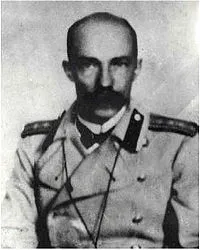
Nikolai Mallitsky
Russian and Soviet geographer, head of Tashkent’s city government from 1907 to 1917, editor of “Turkestanskie vedomosti” and a university professor who studied Central Asia’s rivers, glaciers and peoples.
- Occupation:
- Scientist, Politician, Educator, Orientalist, Geographer or geologist
- Born:
- September 30 1873(74 years old) ♎ — October 30, 1947
- Father:
- Guriy Aleksandrovich Mallitskiy
- Mother:
- Yelizaveta Petrovna Molchanova
- Spouse:
- Olga Nikolayevna Ostroumova
Biography
Nikolai Gurevich Mallitsky was born on 18 September (30 September, New Style) 1873 in the village of Dedovo in the Orenburg Governorate. His father, Gury Alexandrovich, came from a priest’s family and was a village schoolteacher; his mother, Elizaveta Petrovna (née Molchanova), was also a teacher. Nikolai was the eldest of three children. When his father was dismissed in 1884 the family moved to Khabarovsk, but Nikolai stayed in Orenburg with his grandparents, attended the gymnasium, earned money as a tutor and graduated in 1891 with a gold medal.
He entered the history department of the St Petersburg Historical-Philological Institute, where he heard lectures by Kedrov, Mushketov and others, and graduated with distinction in 1895. Although he could have stayed at the institute, he went to Tashkent, a city he had dreamed of since childhood. He taught history and geography, first at the teachers’ seminary and from 1898 at the men’s gymnasium, learned Uzbek, Arabic and later Tajik, and married Olga Nikolaevna, the daughter of the gymnasium’s director, Nikolai Ostroumov.
In 1901, after a conflict with his superiors, he left the gymnasium and until 1906 edited the official newspaper “Turkestanskie vedomosti”. As a speaker of Tajik he was sent by the governor-general to the Emirate of Bukhara to study the life of the population; the emir’s protest became one of the reasons for the governor-general’s dismissal, and Mallitsky lost his editorship. From 1897 he belonged to the Turkestan Branch of the Russian Geographical Society, serving as scientific secretary and deputy chairman, and from 1918 as its chairman.
From January 1907 Mallitsky headed the city self-government of Tashkent. Under him the city’s finances were cleared of debt, the irrigation network was improved, an electric tramway was built, and plans for a hydroelectric station on the Chirchiq, a sewer system and a modern slaughterhouse were prepared; the war prevented their completion. He campaigned for a university in Tashkent and for a railway to Siberia, travelling to St Petersburg on these matters in 1910. After the February Revolution of 1917 he was elected city head again but declined and remained his deputy.
After the October Revolution Mallitsky returned to teaching: first at a school, from 1918 at the university and in the 1920s also at the Higher Military School of Oriental Studies; in 1926 he received the title of “Red Professor”. He spent 16 days under arrest in 1919; arrested again in 1931, he was cleared after seven and a half months but in 1932 was sentenced to three years of “free exile” and worked as an economist in Chimkent. In May 1934 he returned to Tashkent as a professor of the university’s geography faculty.
At the start of the war he proposed that the staff of the Turkestan Military District compile a description of Central Asia’s physical-geographic regions for pilots, and he flew over them in a small aircraft, refusing payment. For his work “The Dynamics of Central Asia’s Water Resources” he was awarded the degree of Doctor of Sciences without a defence on 8 March 1945; the same year his fifty years of scientific and teaching work were marked and he was given the title of Honoured Science Worker of the Uzbek SSR. He died of a heart attack in Tashkent on 30 October 1947.
Education
- St Petersburg Historical-Philological InstituteUniversity · 1891–1895 · History department
- Orenburg GymnasiumSchool · 1891
Career
- Central Asian State UniversityProfessor, geography faculty · Tashkent · 1918–…
- Tashkent City Duma and CouncilCity head · Tashkent · 1907–1917
- Turkestan Branch of the Russian Geographical SocietyScientific secretary, deputy chairman, chairman · Tashkent · 1897–…
Awards
- Honoured Science Worker of the Uzbek SSR1945 · Uzbek SSR
Life path
- 1873Birth
Born in the village of Dedovo in the Orenburg Governorate into a teacher’s family.
- 1891Finished gymnasium
Graduated from the Orenburg gymnasium with a gold medal.
- 1895Arrival in Tashkent
Graduated with distinction from the St Petersburg Historical-Philological Institute and came to Tashkent as a teacher.
- 1897Geographical Society
Joined the Turkestan Branch of the Russian Geographical Society; later its scientific secretary, deputy chairman and, from 1918, chairman.
- 1901–1906“Turkestanskie vedomosti”
Chief editor of the newspaper.
- 1907–1917Head of Tashkent
Led the city’s self-government; an electric tramway was built.
- 1918At the university
Began teaching at the university in Tashkent.
- 1926“Red Professor”
Received the title of “Red Professor”.
- 1932–1934Exile
Served “free exile” as an economist in Chimkent and returned to Tashkent in 1934.
- 1945Doctor of Sciences
Awarded the degree of Doctor of Sciences without a defence and the title of Honoured Science Worker of the Uzbek SSR.
- 1947Death
Died in Tashkent on 30 October.
Works
- “The Muslim Dream Book” (1902)Book
A book published in Kazan.
- “Report on the Activities of the Tashkent City Public Administration” (1909)Report
A report on the work of the city government.
- “The Flooding of the Amu Darya in August 1921” (1922)Scientific article
Published in the proceedings of the Turkestan Branch of the Russian Geographical Society.
- “The Yaghnobis” (1924)Scientific article
An ethnographic article on the people of the Yaghnob valley.
- “Glaciers in the Basin of the Issyk-Ata River” (1925)Scientific work
Published in Tashkent.
- “Tashkent’s Mahallas and Mauzas” (1927)Article
Published in a collection in honour of V. V. Barthold.
- “A Textbook on the Geography of Tajikistan” (1929)Textbook
A two-volume textbook (1929–1930).
- “The Dynamics of Central Asia’s Water Resources” (1945)Scientific work
Written during the war; it earned him a doctorate without a defence.