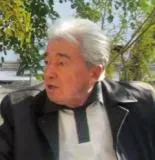
Omon Matjon
Uzbek poet and translator, author of the verse novella “Time to Talk”, of poems based on Khorezm legends and of dramatic poems, and People's Poet of Uzbekistan (1993).
- Occupation:
- Writer, Poet
- Born:
- February 14 1943(77 years old) ♒ — October 29, 2020
- Birthplace:
- Yangibozor District, Khorezm
Biography
Omon Matjon (born Omon Matchonov) was born on 14 February 1943 in the village of Bog'olon in the Khorezm Region, now part of Yangibozor District. He wrote verse from his first school years, and his first poem appeared in the district newspaper in 1958. In 1969 he graduated from the philology faculty of Samarkand State University.
He then moved to Tashkent and from 1969 to 1985 worked at the Ghafur Ghulam Publishing House of Literature and Art, first as an editor and later as head of a department. From 1985 to 1991 he was editor-in-chief of the magazine Yoshlik. After independence he served as a senior official in the Office of the President of Uzbekistan (1991–1994) and as deputy chairman of the State Press Committee (1994–1999), and directed the Cho'lpon publishing house (1999–2001). From 2001 he was editor-in-chief of the children's magazine Gulxan.
His poems appeared regularly in print from the mid-1960s, and his first collection, “Open Windows”, came out in 1970. It was followed by “The Caravan Bell” (1973), “The Sundial” (1974), “The Burning Tree”, “The Wounded Lightning”, “I Love You” (1981), “The Book of Trees and Herbs” (1984), “Just One Apple Between Us” (1990), “A Man's Shadow Fell on the Sun” (1991), “The Birds' Way” (1993) and “The Light of Faith” (1994). He brought the vocabulary and melody of the Khorezm dialect into Uzbek poetry and readily used epic devices in his lyric verse.
Longer forms hold a notable place in his work. “The Cry of the Haqqush” (1979) is made up of forty poems based on Khorezm folk legends. He devoted the dramatic poems “Pahlavon Mahmud” (1975) and “Beruni” (1977) to famous natives of Khorezm, and wrote “A Thousand and One Rays” (1982) after the model of Alisher Navoi's Khamsa. His verse novella “Time to Talk” (1986), which portrays the contradictions of Soviet life in the years before independence, won him the Hamza State Prize of the Uzbek SSR in 1989.
In 2000 he published “Ardakhiva”, written for the 2,700th anniversary of the Avesta, and in 2002 a book on the Sufi sheikh Khoja Ahrar; later books dealt with Najm al-Din Kubra and Turabek Khanum. He translated Schiller, Baudelaire, Petőfi, Yevgeny Yevtushenko, Rasul Gamzatov, Justinas Marcinkevičius and Berdi Kerbabayev into Uzbek. In 1980 the singer Ortiq Otajonov set his poem “Umr o'tar” (“Life Passes”) to music, and it became one of the singer's best-known songs.
Omon Matjon was named People's Poet of Uzbekistan in 1993. He died in Tashkent on the night of 28–29 October 2020, aged 77. In 2021, for the 30th anniversary of independence, he was posthumously awarded the Order of Labour Glory (Mehnat shuhrati).
Education
- Samarkand State UniversityUniversity · Samarkand · 1969 · Faculty of Philology
Career
- Ghafur Ghulam Publishing House of Literature and ArtEditor, head of department · Tashkent · 1969–1985
- Office of the President of UzbekistanSenior official · Tashkent · 1991–1994
- State Press Committee of UzbekistanDeputy chairman · Tashkent · 1994–1999
Awards
 People's Poet of Uzbekistan1993 · Uzbekistan
 Order of Labor Glory2021, posthumously · Uzbekistan
 Hamza State Prize of the Uzbek SSR1989 · Uzbek SSR
Life path
- 1958First publication
His first poem was printed in the district newspaper.
- 1969Samarkand State University
Graduated from the philology faculty.
- 1969–1985Publishing House of Literature and Art
Editor, then head of a department at the Ghafur Ghulam publishing house.
- 1970“Open Windows”
His first book of poems came out.
- 1985–1991Yoshlik magazine
Editor-in-chief.
- 1989Hamza State Prize
Awarded the State Prize of the Uzbek SSR for the verse novella “Time to Talk”.
- 1991–1994Office of the President
Senior official in the Office of the President of Uzbekistan.
- 1993People's Poet of Uzbekistan
Received the honorary title.
- 1994–1999State Press Committee
Deputy chairman of the committee.
- 1999–2001Cho'lpon publishing house
Director.
- 2001Gulxan magazine
Became editor-in-chief of the children's magazine.
- 2021Order of Labour Glory
Awarded posthumously for the 30th anniversary of independence.
Books
- “Open Windows”1970 · Poetry collection
The poet's first book.
- “The Caravan Bell”1973 · Poetry collection
- “The Sundial”1974 · Poetry collection
- “Pahlavon Mahmud”1975 · Dramatic poem
About the Khorezm poet and wrestler Pahlavon Mahmud.
- “Beruni”1977 · Dramatic poem
About the Khorezm scholar Abu Rayhan al-Biruni.
- “The Cry of the Haqqush”1979 · Book of poems
Forty poems based on Khorezm folk legends.
- “I Love You”1981 · Poetry collection
- “A Thousand and One Rays”1982
Written after the model of Alisher Navoi's Khamsa.
- “Time to Talk”1986 · Verse novella
About Soviet life on the eve of independence; Hamza State Prize of the Uzbek SSR (1989).
- “The Light of Faith”1994 · Poetry collection
- “Ardakhiva”2000
Written for the 2,700th anniversary of the Avesta.
- “Pilgrimages to Khoja Ahrar”2002
About the life of the Sufi sheikh Khoja Ahrar.