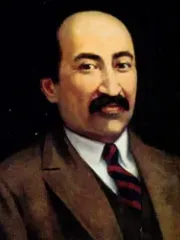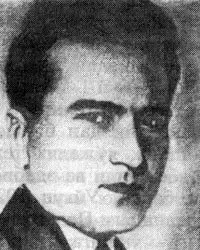
Uzbek literary scholar and critic, director of the Institute of Language and Literature in the 1930s and a leader of the Committee of Sciences; arrested in 1937 and executed in 1938.
- Occupation:
- Scientist, Philologist
- Lived:
- 1905 — October 4, 1938
- Birthplace:
- Tashkent
Biography
Otajon Hoshim (Hoshimov) was among the founders of Uzbek literary studies and a prominent critic. He was born in 1905 in Tashkent to a peasant family. He received his early education at old-style schools, madrasas and a Russian-native school, then attended a teacher-training college. From 1922 he studied at a workers' faculty in Moscow and later at the Institute of Red Professors.
After returning home he led, in 1926–1929, Qizil qalam («Red Pen»), the first literary association of Uzbek writers, and prepared its first two collections (1928, 1929) for publication. In January 1927, at his initiative, the Uzbek Pedagogical Academy, a higher pedagogical school, opened in Samarkand; Fitrat and other leading scholars lectured there. He also chaired the Scientific Council attached to the People's Commissariat of Education and afterwards the Committee of Sciences.
From 1929 to 1933 Hoshim was a postgraduate at the Institute of Oriental Studies of the USSR Academy of Sciences in Leningrad and remained there as scientific secretary once he had finished. Summoned to Tashkent at the close of 1933, he served as director of the Institute of Language and Literature in 1934–1937. From 1934 he ran the section for criticism and literary studies at the Writers' Union.
The articles he wrote in 1929–1935 — “Scholarly Work in Uzbekistan”, “On the Translation of Pushkin's Eugene Onegin”, “Dialectics and Dialectical Thinking”, “On Uzbek Folklore”, “Literary Heritage” and “The Uzbek Language and Orthography” — added to the formation of the humanities. Thanks to his initiative, folklore samples, the epics Alpomish and Malikai Ayyor, works on classical and contemporary literature and several terminological dictionaries came out.
Otajon Hoshim was arrested on 2 August 1937 as an “enemy of the people” and shot in Tashkent on 4 October 1938.
Education
- Institute of Oriental Studies of the USSR Academy of SciencesOther · 1929–1933 · Postgraduate studies
Career
- Writers' Union of UzbekistanHead of the criticism and literary studies section · Tashkent · 1934–1937
- Institute of Language and LiteratureDirector · Tashkent · 1934–1937
Life path
- 1905Born
In Tashkent, in a peasant family.
- 1922–1924Workers' faculty in Moscow
He later studied at the Institute of Red Professors.
- 1926–1929Head of Qizil qalam
The first literary association of Uzbek writers; two of its collections were published in 1928 and 1929.
- 1927Pedagogical academy in Samarkand
At his initiative a higher pedagogical school was opened.
- 1929–1933Postgraduate studies in Leningrad
Institute of Oriental Studies of the USSR Academy of Sciences; afterwards stayed on as scientific secretary.
- 1934–1937Director of the Institute of Language and Literature
In those years he also held leading duties in the Committee of Sciences.
- 1934Criticism section of the Writers' Union
Led the section for criticism and literary studies.
- 1937Arrested
On 2 August, as an “enemy of the people”.
- 1938Executed
On 4 October in Tashkent.
Works
- “Scholarly Work in Uzbekistan”Article
- “On the Translation of Pushkin's Eugene Onegin”Article
- “Dialectics and Dialectical Thinking”Article
- “On Uzbek Folklore”Article
- “Literary Heritage”Article
- “The Uzbek Language and Orthography”Article