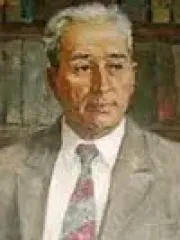
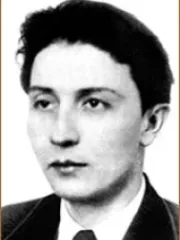
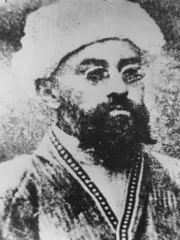
Abdurauf Fitrat
Uzbek scholar, writer and playwright, a leader of the Jadid movement and minister of the Bukharan People’s Soviet Republic; executed in 1938.
- Occupation:
- Scientist, Writer, Philologist
- Born:
- 1886 — 1938
- Birthplace:
- Bukhara
Biography
Abdurauf Abdurahim o‘g‘li Fitrat was born in Bukhara in 1886 (some sources give 1885). His father Abdurahimboy was a merchant and money-changer; his mother, Mustafo (Bibijon), was an educated woman who raised him for the most part. He studied at an old-method school and then at the Mir-i Arab Madrasa in Bukhara; after the hajj he travelled through Arabia, Anatolia, Transcaucasia, Iran, Afghanistan and India, and in 1906–1908 visited Kazan, Nizhny Novgorod, Moscow and Saint Petersburg.
In 1909–1913 he studied in Istanbul, where he helped found a society of Bukharan students, “Buxoro ta’mimi maorif”, and wrote his first works in Persian: “Munozara” (“The Debate”), “Sayha” and “Sayyohi hindi” (“Tales of an Indian Traveller”). “Munozara” and “Sayyohi hindi” later served as an unofficial programme of the national awakening in Turkestan. Back in Bukhara he fought for new-method schools and from 1915 led the left wing of the Young Bukharans; he wrote “Oila” (“The Family”) and “Rahbari najot” (“The Guide to Salvation”).
In 1917 he moved to Samarkand, where from April 1917 to March 1918 he edited the newspaper “Hurriyat” and invited Mahmudxo‘ja Behbudiy to write for it. In 1918 he came to Tashkent, worked as a translator at the Afghan mission (1919–1920), founded the literary society Chig‘atoy gurungi and in 1920 published the magazine “Tong” (“Dawn”), whose motto was “Nothing else will change until the mind changes!”.
After the Bukharan People’s Soviet Republic was formed he was invited to Bukhara in 1921 as nazir (minister) of education, in 1922 became nazir of foreign affairs, and later deputy chairman of the Council of People’s Nazirs. On his initiative the Turkic (Uzbek) language was declared the state language, a school of Eastern music was set up, 70 young Turkestanis were sent to study in Germany, and the collecting of rare manuscripts was organised. He was removed from his posts in 1923.
In 1923–1927 he worked at the Institute of Oriental Studies in Moscow and taught at Leningrad State University. He returned in 1927 and until 1937 worked at the Higher Pedagogical Institute in Samarkand and the Institute of Language and Literature in Tashkent. In these years he wrote the plays “Abulfayzxon” and “Shaytonning Tangriga isyoni” (“The Devil’s Revolt against God”), the story “Qiyomat”, the textbooks “An Attempt at the Rules of the Uzbek Language” (Sarf, 1924; Nahv, 1925) and studies of the history of Uzbek literature. Fitrat is regarded as one of the founders of the scholarly study of Uzbek grammar, literary studies, musicology and historiography in Uzbekistan.
Together with Cho‘lpon, Fitrat brought syllabic (barmoq) verse into written literature, and at his initiative the anthology “O‘zbek yosh shoirlari” (“Young Uzbek Poets”) appeared in 1922. In drama he is credited with founding the tragedy as a genre in Uzbek literature; “Abulfayzxon” is its main example.
From 1930 political accusations were levelled against him. In 1937 he was arrested by the NKVD, was named on the “list of those to be shot” of 28 March 1938, and was executed in Tashkent in October 1938. He was later rehabilitated and his works are published again.
In 1991 Fitrat was awarded the Alisher Navoi State Prize and later the Order of Independence (Mustaqillik). In 1996 a house museum and garden were opened in Bukhara and a monument was erected; his 110th anniversary was widely marked and postage stamps issued; streets and schools in Tashkent and Bukhara bear his name.
Education
- Mir-i Arab MadrasaMadrasa · Bukhara
Career
- Ministry of Education of the Bukharan People’s Soviet RepublicNazir of education · Bukhara · 1921–1923
- Young Bukharans partyLeader of the left wing · Bukhara · 1915–…
- Council of People’s Nazirs of the Bukharan People’s Soviet RepublicDeputy chairman · Bukhara · 1922–1923
- Institute of Language and LiteratureProfessor · Tashkent · 1927–1937
Awards
 Order «Mustaqillik» (Independence)posthumously · Uzbekistan
- Alisher Navoi State Prize of Uzbekistan1991, posthumously · Uzbekistan
Life path
- 1886Born in Bukhara
Born into an educated family; studied at the Mir-i Arab Madrasa.
- 1906–1908Journey through Russian cities
Visited Kazan, Nizhny Novgorod, Yaroslavl, Moscow and Saint Petersburg.
- 1909–1913Studies in Istanbul
Helped found the society “Buxoro ta'mimi maorif”; wrote “Munozara”, “Sayha” and “Sayyohi hindi”.
- 1915Left wing of the Young Bukharans
Led the movement's left wing; the treatise “Oila” was published.
- 1917–1918The newspaper “Hurriyat” in Samarkand
Editor of the paper; invited Mahmudxo'ja Behbudiy to contribute.
- 1918–1920Chig'atoy gurungi and “Tong” in Tashkent
Founded a literary society, published the magazine “Tong” and worked as a translator at the Afghan mission.
- 1921–1923Nazir in the Bukharan People's Soviet Republic
Nazir of education and of foreign affairs, deputy chairman of the Council of People's Nazirs.
- 1923–1927Scholarly work in Moscow and Leningrad
Worked at the Institute of Oriental Studies and taught at Leningrad State University.
- 1927–1937Scholarly and teaching work in Samarkand and Tashkent
Worked at the Higher Pedagogical Institute in Samarkand and the Institute of Language and Literature in Tashkent.
- 1937Arrest
Arrested by the NKVD.
- 1938Execution
Shot in Tashkent in October.
- 1991Alisher Navoi State Prize
Awarded posthumously.
- 1996House museum in Bukhara
His 110th anniversary was marked and postage stamps issued.
Works
- «Munozara» (1911)Treatise
A work in the form of a debate on new-method schools; written in 1905–1907.
- «Sayha»Poem
- «Sayyohi hindi»Story
Also known as “Bayonoti sayyohi hindi”.
- «Oila» (1915)Treatise
- «Rahbari najot»Treatise
A philosophical treatise in Persian.
- «Mavludi Sharif»Treatise
- «O'qu» (1917)Textbook
- «Ona tili» (1918)Textbook
Co-written with Shokirjon Rahimiy and Qayum Ramazon.
- «Sharq siyosati» (1919)Treatise
- «She'r va shoirliq» (1919)Scholarly work
- «Chin sevish» (1920)Play
- «Temur sag'anasi» (1918)Play
- «Begijon»Play
- «Qon»Play
- «Abo Muslim»Play
- «O'g'izxon»Play
- «Hind ixtilolchilari» (1923)Play
- «Bedil» (1923)Scholarly work
- «Abulfayzxon»Play
A historical tragedy on a Shakespearean scale.
- «Shaytonning Tangriga isyoni» (1924)Play
- «O'zbek tili qoidalari to'g'risida bir tajriba: Sarf» (1924)Textbook
- «O'zbek tili qoidalari to'g'risida bir tajriba: Nahv» (1925)Textbook
- «Qutadg'u bilig» (1925)Scholarly work
- «Muxtasar Islom tarixi» (1925)Scholarly work
- «Qiyomat»Story
Revised in 1930; one of the first examples of fantasy in Uzbek literature.
- «Me'roj»Story
- «Oq mozor»Story
- «Zayd va Zaynab»Story
- «Zahroning imoni»Story
- «Adabiyot qoidalari» (1926)Scholarly work
- «Eng eski turk adabiyoti namunalari» (1927)Scholarly work
- «O'zbek adabiyoti namunalari» (1-jild) (1928)Scholarly work
- «O'zbek klassik musiqasi va uning tarixi» (1927)Scholarly work
- «San'atning manshai» (1927)Scholarly work
- «Ahmad Yasaviy» (1927)Scholarly work
- «Vose qo'zg'oloni» (1927)Play
- «O'zbek shoiri Turdi» (1928)Scholarly work
- «Fors shoiri Umar Xayyom» (1929)Scholarly work
- «Muhammad Solih» (1929)Scholarly work
- «Mashrab»Scholarly work
- «Farhodu Shirin dostoni to'g'risida» (1930)Scholarly work
- «Amir Olimxonning hukmronlik davri» (1930)Scholarly work
- «To'lqin» (1934)Opera libretto
- «Aruz haqida» (1936)Scholarly work
- «Qoziylik hujjatlari, XVI asr» (1937)Scholarly work
With B. S. Sergeyev, published in Russian.