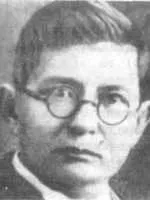
Parda Tursun
Uzbek writer and translator, author of the novella “Haq yo‘l” and the novel “The Teacher”, which follow the path of an Uzbek intellectual in the Soviet era.
- Occupation:
- Writer, Prose writer
- Real name:
- Parda Tursunov
- Born:
- November 7 1909(47 years old) ♏ — September 28, 1957
- Birthplace:
- Pop District, Namangan
Biography
Parda Tursun (born Parda Tursunov) was born on 7 November 1909 in the village of Chorkesar, in what is now the Pop district of the Namangan region, into a peasant family. Orphaned early, he grew up drifting from place to place; in 1918 he moved to Tashkent, where he first worked as a household servant. He then attended the regional Uzbek model school (1923–1927) and the Tashkent teacher-training college (1927–1928).
Until the early 1930s he taught in schools in the Piskent district of the Tashkent region, and it was then that his interest in literature awoke: his first stories, reports and sketches appeared in print in 1929–1930. He served as executive secretary of the newspaper “Batrak” (1930–1931) and as a literary staff member of “Qizil O‘zbekiston” (1931–1934 and 1939–1940); in 1935–1936 he studied for a time at the Central Asian Planning and Economic Institute, and in 1937–1938 he worked as secretary to the chairman of the Central Executive Committee of Uzbekistan.
In those years he wrote the story collections “Alvasti” (1929) and “Zo‘rlik” (1932) and sketches such as “Dadajon rais”, “Yangi raislar” and “Traktorchi”. The story “Domla” (“The Teacher”, 1937) holds a special place in his work: the fate of its schoolteacher hero became the basis for his later major books.
From 1940 to 1945 he was a literary staff member and editor at the Uzbek Telegraph Agency, and from 1948 to 1950 a researcher at the Institute of Party History. During these years he built on “Domla” to write the autobiographical novella “Haq yo‘l” (1947), reworked it as “O‘qituvchining yo‘li” (1949) and finally produced the novel “O‘qituvchi” (“The Teacher”, 1951). The fate of its protagonist, Kholmurod Dustmatov, reflects the hard path of an Uzbek intellectual.
He also translated from Russian and other European literatures into Uzbek, among them works by Saltykov-Shchedrin, A. K. Tolstoy, Émile Zola and Guy de Maupassant. Parda Tursun died in Tashkent on 28 September 1957. Several schools and streets in Tashkent and Namangan bear his name.
Education
- Almaiy Model Labour SchoolSchool · Tashkent · 1923–1927
- Tashkent Teacher-Training CollegeCollege · Tashkent · 1927–1928
Career
- Qizil O'zbekiston newspaperLiterary staff member · Tashkent · 1931–1934
- Batrak newspaperExecutive secretary · Tashkent · 1930–1931
- Uzbek Telegraph AgencyLiterary staff member and editor · Tashkent · 1940–1945
- Institute of Party HistoryResearcher · Tashkent · 1948–1950
Life path
- 1909Birth
Born in the village of Chorkesar, in what is now the Pop district of the Namangan region, into a peasant family.
- 1918Move to Tashkent
Orphaned early, he moved from Chorkesar to Tashkent.
- 1923–1928Education
Studied at the regional Uzbek model school (1923–1927) and the Tashkent teacher-training college (1927–1928).
- 1930–1934First steps in print
Executive secretary of “Batrak”, then literary staff member of “Qizil O‘zbekiston”; his first stories (“Zo‘rlik”) appeared in these years.
- 1937The story “Domla”
Wrote the story that became the basis of his major books; in 1937–1938 he was secretary to the chairman of the Central Executive Committee of Uzbekistan.
- 1940–1945At the Uzbek Telegraph Agency
Worked as literary staff member and editor.
- 1947The novella “Haq yo‘l”
Published his first major work, an autobiographical novella built on “Domla”.
- 1948–1950At the Institute of Party History
Worked as a researcher.
- 1951The novel “O‘qituvchi”
“Haq yo‘l” and “O‘qituvchining yo‘li” (1949) were reworked and published as the novel “The Teacher”.
- 1957Death
Died in Tashkent on 28 September.
Books
- “Alvasti”1929 · Story collection
A collection containing the writer’s first stories.
- “Zo‘rlik” (“Violence”)1932 · Story collection
A collection named after an early story published in 1930.
- “Dadajon rais”1932 · Sketch
One of his sketches of village life in the 1930s.
- “Domla” (“The Teacher”)1937 · Short story
A story about a teacher’s fate that became the basis of his later major works.
- “Haq yo‘l” (“The Path of Truth”)1947 · Novella
An autobiographical novella built on “Domla”; the protagonist is Kholmurod Dustmatov.
- “O‘qituvchining yo‘li” (“The Teacher’s Path”)1949 · Novella
A reworked edition of “Haq yo‘l”.
- “O‘qituvchi” (“The Teacher”)1951 · Novel
The final version, expanded into a novel; it follows the path of an Uzbek intellectual.