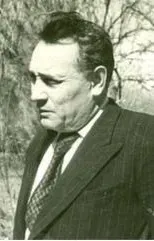
Kurban Babaev
Geologist, Doctor of Sciences and professor who studied the pegmatites and ore deposits of Central Asia and was the first director of the SAIGIMS research institute.
- Occupation:
- Scientist, Geographer or geologist
- Born:
- December 26 1910(89 years old) ♑ — August 5, 2000
Biography
Kurban Latypovich Babaev (Qurbon Babayev) was a geologist, Doctor of Geological and Mineralogical Sciences and professor who studied the pegmatites, skarns and ore deposits of Central Asia. He was born on 26 December 1910 in Akmolinsk (now Astana, Kazakhstan) into a white-collar family. He received his early schooling in his home town, including a teaching-oriented boarding school.
In 1929 he came to Tashkent, finished the workers' preparatory faculty of the Central Asian Industrial Institute and in 1931 entered its mining faculty, graduating in 1936. While still a student he worked as a field collector and foreman and served as deputy head of the Uchimchak prospecting party; on Professor T. N. Qori-Niyoziy's recommendation he also taught mathematics to the national group of the geophysics department at Central Asian State University. In 1933 he accompanied Academician A. E. Fersman around deposits of the Chatkal mountains; Babaev regarded himself as Fersman's pupil and later developed his ideas on pegmatites.
From 1938 he led prospecting and exploration parties and served as chief geologist in the geological administrations of Uzbekistan and Kyrgyzstan, searching for tungsten, cobalt and gold. In 1940 in Frunze he reported to Fersman on the discovery of a cobalt deposit, which according to biographical accounts remains the only one in Central Asia. In 1942 he went to the front with the 5th Separate Guards Sapper Battalion; demobilised after a concussion in 1943, he became chief geologist of the Meliksu mine, where tungsten output rose several times over in a short time, for which he received a certificate of honour from the Presidium of the Supreme Soviet of the Uzbek SSR.
From 1946 he worked at the Institute of Geology of the Academy of Sciences of the Uzbek SSR, rising from senior researcher and laboratory head to deputy director for science and then director. He studied the skarns of the Koytash tungsten deposit and in 1949 defended his candidate's dissertation on the Koytash skarn field. He then turned to the granitoid massifs of western Uzbekistan (a monograph on the Altyntau massif, 1954) and to granite pegmatites (the monograph "Granite Pegmatites of Central Asia", 1960). In 1962 he defended his doctoral dissertation at the All-Union Institute of Mineral Resources in Moscow and in 1963 received the title of professor. From 1946 to 1965 he also taught at the Tashkent Polytechnic Institute.
On 27 July 1957 Babaev was appointed the first director of the newly created Central Asian Research Institute of Geology and Mineral Resources (SAIGIMS) of the USSR Ministry of Geology, and in 1958 he was elected chairman of the council of directors of the ministry's institutes. In 1959 the institute under his leadership completed the first large survey of the region's mineral wealth, the "Map of Mineral Resources of Central Asia" at 1:500,000 with a 70-sheet monographic description, which later exploration work relied on.
He represented Uzbek science at the International Geological Congresses in Mexico (1956), Delhi (1964, where he was elected chairman of a section) and Moscow (1984), and from 1983 was a member of the International Association on the Genesis of Ore Deposits. He published 168 scientific works and 75 further specialised ones, supervised 18 candidate's dissertations, edited the "Bulletin of Research Works of SAIGIMS" and the institute's "Scientific Notes", and sat for four terms as a deputy of the Leninsky district council of Tashkent. In 1976 he was named Honoured Science Worker of the Uzbek SSR and in 1981 "Honorary Prospector of the USSR"; he held the Order of the Red Banner of Labour, the Order of the Patriotic War and a number of medals.
Babaev died in Tashkent on 5 August 2000 and was buried at the city's Teshik-kapkak cemetery.
Education
- Central Asian Industrial InstituteUniversity · Tashkent · 1929–1936 · Mining faculty
Career
- Institute of Geology of the Academy of Sciences of the Uzbek SSRSenior researcher, laboratory head, director · Tashkent · 1946–1957Everyone who held this post →
- Central Asian Research Institute of Geology and Mineral Resources (SAIGIMS)First director · Tashkent · 1957–…Everyone who held this post →
Awards
- Honoured Science Worker of the Uzbek SSR1976 · Uzbek SSR


Life path
- 1910Birth
Born in Akmolinsk (now Astana, Kazakhstan) into a white-collar family.
- 1929–1936Central Asian Industrial Institute
Finished the workers' faculty and then the mining faculty in Tashkent, working in geological exploration parties alongside.
- 1933Meeting A. E. Fersman
Accompanied the academician around deposits in the Chatkal mountains.
- 1938–1941Prospecting in Uzbekistan and Kyrgyzstan
Led parties searching for tungsten, cobalt and gold; reported a cobalt discovery in 1940.
- 1942–1943The front
Fought with the 5th Separate Guards Sapper Battalion; demobilised after a concussion.
- 1943–1946Meliksu mine
Chief geologist; tungsten output rose several times over.
- 1946–1957Institute of Geology, Academy of Sciences of the Uzbek SSR
Rose from senior researcher to director; defended his candidate's dissertation in 1949.
- 1957First director of SAIGIMS
On 27 July took charge of the new institute of geology and mineral resources of the USSR Ministry of Geology.
- 1959"Map of Mineral Resources of Central Asia"
The institute completed the first survey of the region's mineral wealth.
- 1962–1963Doctorate and professorship
Defended his doctoral dissertation at the All-Union Institute of Mineral Resources in Moscow; became professor in 1963.
- 1964International Geological Congress in Delhi
Elected chairman of a section.
- 1976Honoured Science Worker of the Uzbek SSR
In 1981 he also received the badge "Honorary Prospector of the USSR".
- 2000Death
Died in Tashkent on 5 August.
Works
- "Petrography of the Altyntau Granitoid Massif" (1954)Monograph
A description of a granitoid massif in western Uzbekistan; a 55-page book with a map.
- "Granite Pegmatites of Central Asia (Internal Structure and Morphology)" (1960)Monograph
The result of many years of work on pegmatites; his doctoral dissertation was based on it.
- "Map of Mineral Resources of Central Asia" (1959)Cartographic work
The first survey of the region's mineral resources at 1:500,000, prepared by the institute under Babaev's leadership.
- "Quantitative Characterisation of Magmatism in Central Asia" (1963)Article
Published in the Uzbek Geological Journal.
- "Genetic Classification of Endogenic Ore Deposits" (1965)Article
Published in the journal Sovetskaya Geologiya.
- "Zoning as the Main Form in the Development of Natural Processes" (1975)Scientific paper
Included in a SAIGIMS collection on the distribution of endogenic deposits in Central Asia.
- "The Genesis of Gold Ore Deposits" (1983)Article
Published in a SAIGIMS collection on the geology, mineralogy and geochemistry of gold and silver in Central Asia.
- "Tectonic and Structural Factors and Their Ore-Controlling Significance" (1995)Monograph
A 69-page work published in Tashkent.