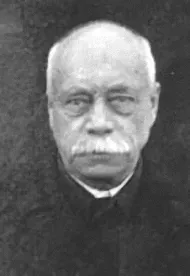
Richard Schröder
Agronomist and plant breeder who for 42 years ran the Turkestan Agricultural Experiment Station near Tashkent, bred the “Shreder” cotton variety and founded scientific agriculture in Uzbekistan.
Biography
Richard Richardovich Shreder was born in Moscow on 15 October 1867. His father, Richard Ivanovich Shreder, was a well-known horticulturist and a professor at the Petrovsky Agricultural and Forestry Academy. After gymnasium Richard entered the natural sciences department of the physics and mathematics faculty of Moscow University in 1887 and graduated in 1891 with a first-class diploma; in the mid-1890s he also finished the Petrovsky Agricultural Academy.
From 1895 to 1900 he was an assistant in the department of private agriculture headed by D. I. Pryanishnikov and wrote articles for an agricultural encyclopedia. In 1900 he passed his master’s examinations, became a privat-docent of agronomy and was sent abroad, where he studied plant physiology under Professor Pfeffer in Leipzig and the physiological chemistry of plants under Professor Schulze in Zurich.
At the end of 1902 the Ministry of Agriculture appointed him head of the Turkestan Agricultural Experiment Station, opened in 1898 in the village of Achchi, sixteen kilometres from Tashkent. He ran it until his death, for 42 years. His first task was to master Uzbek and learn the local farming methods. The station began by testing cotton varieties and in time took up grain crops, fruit growing, viticulture and climate observation.
Shreder collected and tested more than a thousand local wheat samples from Central Asia and introduced a high-yielding irrigated winter wheat, variety no. 584. Material gathered at the station in the early 1920s led to the early-ripening cotton variety no. 1306, named “Shreder”, which carried cotton growing north into Uzbekistan, Kyrgyzstan, Kazakhstan and Transcaucasia. The station tested over two hundred varieties of apple, pear and other fruit and studied grapes.
He also worked to spread knowledge: he founded the first farming journal in Uzbek, “Dehqon”, edited the Russian-language journals “Turkestanskoye selskoye khozyaystvo” and “Turkestanskiy zemledelets”, and published about 250 works, nine of them books and booklets. In 1904–1918 he presided over the Turkestan Agricultural Society, visited the United States in 1911 and in 1912 gave a report on Californian fruit growing. In 1918 he took part in founding the People’s University in Tashkent and became the first dean of its agricultural faculty; in 1921–1928 he headed the department of private agriculture at Central Asian State University.
In 1927 (by some sources 1924) he was given the title Hero of Labour of the Uzbek SSR; he received the Order of the Red Banner of Labour of the Uzbek SSR (1928) and of the USSR (1939), and in 1940 the large gold medal of the All-Union Agricultural Exhibition. In 1935 he was elected a full member of the All-Union Academy of Agricultural Sciences and became a Doctor of Agricultural Sciences, and in 1943 a member of the Academy of Sciences of the Uzbek SSR. In 1938 he was elected a deputy of the Supreme Soviet of the Uzbek SSR.
Richard Shreder died in Tashkent on 27 April 1944 and was buried in the Botkin Cemetery. The experiment station was named after him in his lifetime, in 1939, on the 35th anniversary of his work in Central Asia; in 1947 a fruit and berry institute named for him was formed from it. Some grape and apple varieties bred at the institute bear his name, and in 2003 he was posthumously awarded the Order «For Outstanding Merit» (Buyuk xizmatlari uchun).
Education
- Moscow State UniversityUniversity · 1887 · Faculty of Physics and Mathematics, natural sciences department
Career
- Academy of Sciences of UzbekistanAcademician of the Academy of Sciences of the Uzbek SSR · Tashkent · 1943–1944
- Supreme Soviet of the Uzbek SSRDeputy · Tashkent · 1938–1944
- Central Asian State UniversityProfessor, head of the department of private agriculture · Tashkent · 1921–1928
- Moscow Agricultural Institute (Timiryazev Academy)Assistant, department of private agriculture · 1895–1900
- Research Institute of Horticulture, Viticulture and WinemakingHead and director of the Turkestan Agricultural Experiment Station (the institute’s predecessor) · Tashkent Region · 1902–1944Everyone who held this post →
- Lenin All-Union Academy of Agricultural SciencesAcademician · 1935–1944
Awards
 Order «For Outstanding Merit»posthumously · Uzbekistan
 Order of the Red Banner of Labour1939 · USSR
Life path
- 1867Born in Moscow
Born into the family of a professor of horticulture.
- 1887–1891Studied at Moscow University
Finished the natural sciences department of the physics and mathematics faculty with a first-class diploma.
- 1895–1902Assistant, study abroad
Assistant in Pryanishnikov’s department; became a privat-docent in 1900 and studied plant physiology and chemistry in Leipzig and Zurich.
- 1902Head of the Turkestan experiment station
Appointed to run the Turkestan Agricultural Experiment Station near Tashkent, a post he held until 1944.
- 1904–1918Head of the Turkestan Agricultural Society
Presided over the society; visited the United States in 1911.
- 1918–1928Teaching at the university
First dean of the agricultural faculty of the People’s University, then head of a department at Central Asian State University (1921–1928).
- 1920sCotton variety no. 1306
An early-ripening variety named “Shreder” was bred from the station’s material.
- 1927–1928First state honours
The title Hero of Labour of the Uzbek SSR and the Order of the Red Banner of Labour of the Uzbek SSR.
- 1935–1943Academician
Elected to the All-Union Academy of Agricultural Sciences in 1935 and to the Academy of Sciences of the Uzbek SSR in 1943.
- 1939Station named after him
On the 35th anniversary of his work the station took his name; he received the Order of the Red Banner of Labour of the USSR.
- 1944Death
Died in Tashkent on 27 April and was buried in the Botkin Cemetery.
Works
- “On Dry Farming” (1910)Book
A work on rain-fed agriculture, published in Tashkent by Turkestan Agriculture.
- “Cotton Culture in Central Asia” (1925)Book
The first original work on cotton growing published in the USSR.
- “The Climate of the Cotton-Growing Regions of Central Asia”Monograph
A study of the climate of Central Asia’s cotton districts, based on the station’s weather observations.
- “Periodicity of Yields in Pome Orchards” (1937)Book
A work on alternate bearing in apple and other pome fruit trees.
- “Dehqon”Journal
The first farming journal in Uzbek, founded and edited by Shreder.
- “Selected Works”, volume 1 (1956)Collection
A posthumous selection of his writings issued by the Academy of Sciences of the Uzbek SSR.