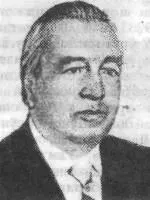
Sulton Akbariy
Uzbek poet, journalist and translator; author of verse in the bakhshi manner and of the dastans “Girdob”, “Ustod” and “Qatag‘on”, and translator of the third book of the Kyrgyz epic “Manas” into Uzbek.
Biography
Sulton Akbariy (his real surname was Akbarov) was born on 12 March 1923 in Tashkent. He began to write in 1940, and his verse gradually took a manner close to the songs of the bakhshi, the Uzbek folk minstrels.
In 1942 Akbariy graduated from the Tashkent Pedagogical Institute; from 1942 to 1945 he took part in the Second World War.
After the war he turned to journalism. He worked on the newspaper “Lenin uchquni” in 1946–1947, on “Yosh leninchi” in 1952–1953 and on “Qizil O‘zbekiston” from 1953 to 1959.
From 1960 to 1963 Akbariy was chief editor of the “Badiiy adabiyot” publishing house. He then served as executive secretary and deputy editor of the newspapers “Toshkent haqiqati” and “Sirdaryo haqiqati” (1963–1964), as head of a department and executive secretary of the magazine “Sharq yulduzi” (1964–1966), worked at the magazine “Guliston” (1968) and from 1968 was deputy editor of “O‘qituvchilar gazetasi”.
His poems are collected in “Imonim, e’tiqodim”, “Yaralangan qo‘shiqlar”, “Suluv suluv emas, suygan suluv”, “Shukrona”, “Mehrigiyo” (1956), “Dovon va devon” and “Ko‘ngil ohanglari” (1968). He also wrote the dastans “Girdob” (1964), “Ustod” (1970) and “Qatag‘on” (1992).
Akbariy translated into Uzbek, among other works the third book of the Kyrgyz epic “Manas”. He held the honorary title of Honoured Culture Worker. Sulton Akbariy died on 6 March 1997 in Tashkent.
Education
- Nizami Tashkent State Pedagogical UniversityUniversity · Tashkent · 1942
Career
- Qizil O'zbekiston newspaperStaff member · Tashkent · 1953–1959
- Toshkent haqiqati newspaperExecutive secretary and deputy editor · Tashkent · 1963–1964
- Guliston magazineStaff member · Tashkent · 1968–1968
- «Sharq yulduzi» magazineHead of department and executive secretary · Tashkent · 1964–1966
- Yosh Leninchi newspaperStaff member · Tashkent · 1952–1953
- Lenin uchquni newspaperStaff member · Tashkent · 1946–1947
- Sirdaryo haqiqati newspaperExecutive secretary and deputy editor · Gulistan · 1963–1964
- O'qituvchilar gazetasi (Teachers' Newspaper)Deputy editor · Tashkent · 1968–…
Awards
 Honoured Worker of Culture of UzbekistanUzbekistan
Life path
- 1923Born in Tashkent
Born on 12 March.
- 1940First literary attempts
Began to write.
- 1942Graduated from the pedagogical institute
Finished his studies at the Tashkent Pedagogical Institute.
- 1942–1945Second World War
Served in the army during the war.
- 1946–1947“Lenin uchquni”
Worked on the newspaper’s staff.
- 1953–1959“Qizil O‘zbekiston”
Before that, in 1952–1953, he worked on “Yosh leninchi”.
- 1960–1963Chief editor of a publishing house
Headed the editorial office of the “Badiiy adabiyot” publishing house.
- 1964The dastan “Girdob”
One of his dastans was published.
- 1964–1968“Sharq yulduzi” and “Guliston”
Head of a department and executive secretary of “Sharq yulduzi” (1964–1966), then at “Guliston” (1968).
- 1968“O‘qituvchilar gazetasi”
Became deputy editor of the newspaper.
- 1992The dastan “Qatag‘on”
A dastan turning to the years of repression was published.
- 1997Death
Died on 6 March in Tashkent.
Books
- “My Faith, My Conviction”· Poetry collection
One of the poet’s verse collections.
- “Wounded Songs”· Poetry collection
One of the poet’s verse collections.
- “A Beauty Is Not the Beautiful One; the Beloved Is”· Poetry collection
One of the poet’s verse collections.
- “Shukrona”· Poetry collection
One of the poet’s verse collections.
- “Mehrigiyo”1956 · Poetry collection
A verse collection published in 1956.
- “The Pass and the Divan”· Poetry collection
One of the poet’s verse collections.
- “Melodies of the Heart”1968 · Poetry collection
A verse collection published in 1968.
- “Girdob” (“The Whirlpool”)1964 · Dastan (narrative poem)
A dastan by the poet, dated 1964.
- “Ustod” (“The Master”)1970 · Dastan (narrative poem)
A dastan by the poet, dated 1970.
- “Qatag‘on” (“Repression”)1992 · Dastan (narrative poem)
A dastan of 1992 that turns to the years of political repression.