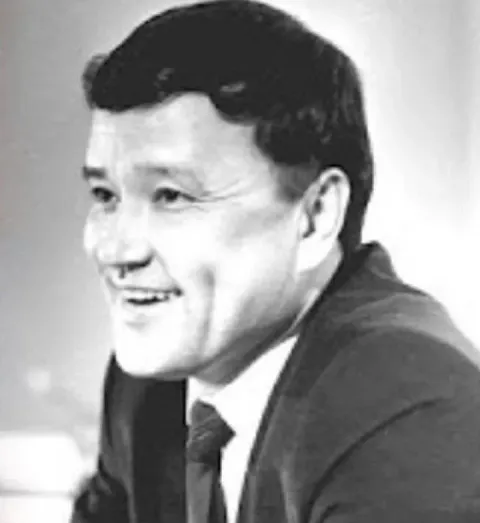
Tog'ay Murod
Uzbek prose writer and People's Writer of Uzbekistan (1999), author of the novellas “The Evening the Horse Neighed” and “People Walking in the Moonlight” and of “The Fields My Father Left”, a novel about the Uzbek peasant.
- Occupation:
- Writer, Prose writer
- Real name:
- Togaymurod Mengnorov
- Born:
- February 3 1948(55 years old) ♒ — May 27, 2003
- Birthplace:
- Oltinsoy District, Surkhandarya
Biography
Tog'ay Murod (born Tog'aymurod Mengnorov) was born on 3 February 1948 in the village of Xo'jasoat in the Surxondaryo Region. At the time the village belonged to Denov District; since 1981 it has been part of Oltinsoy District, formed that year. After finishing the village school No. 43 in 1966, he entered the journalism faculty of Tashkent State University (now the National University of Uzbekistan) and graduated in 1972.
He then worked as an editor at the republic's radio in 1972–1975, as a translator for the newspaper “O'zbekiston fizkulturachisi” in 1976–1978 and as a section editor at the magazine “Fan va turmush” in 1982–1984. In 1985–1987 he studied in Moscow on the Higher Literary Courses of the Literature Institute.
He began with short stories and sketches in newspapers and magazines. The work that made his name was the novella “The Stars Burn Forever”, printed in the magazine “Sharq yulduzi” in 1976 and issued in 1980 by the Ghafur Ghulam publishing house as the author's first book. It was followed by “The Evening the Horse Neighed” (1979), about the horseman Ziyodulla; “People Walking in the Moonlight” (1980), about Qoplon and Oymomo, a couple who wait all their lives for a child; and “The Song of Mother Earth” (1985), an ironic portrait of a writer cut off from his native soil. Drawn from village life in Surxondaryo, written in lively spoken Uzbek and close in tone to folk song, these novellas made him widely known, and “People Walking in the Moonlight” won him the Writers' Union's Oybek Prize.
Tog'ay Murod also translated: he put a play and short stories by Jack London into Uzbek, as well as the animal stories of the Canadian writer Ernest Thompson Seton, which came out in 1989 as the book “Yovvoyi yo'rg'a” (“The Wild Pacer”).
His major work is the novel “The Fields My Father Left” (“Otamdan qolgan dalalar”), written in 1986–1991. The magazine “Yoshlik” printed part of it in 1993, and the Sharq publishing house issued it in full in 1994. Through three generations — Jaloliddin Ketmon, his son Aqrab and his grandson Dehqonqul — the novel tells what the Uzbek peasant went through under colonial and Soviet rule: Dehqonqul spends his whole life in the cotton fields and is finally jailed in the “cotton affair”. The novel brought its author the Abdulla Qodiriy State Prize in 1994, and in 1997 the director Shuhrat Abbosov made a four-hour film of it under the same title.
In 1999 Tog'ay Murod was named People's Writer of Uzbekistan. His second novel, “In This World One Cannot Die” (2001), is an allegorical satire on former party leaders who wasted their lives believing in false slogans. According to his contemporaries, he spent long periods writing in Parkent, near Tashkent.
Tog'ay Murod died suddenly in Tashkent on 27 May 2003, aged 55, and was buried in the Chig'atoy cemetery. Two volumes of his selected works appeared after his death (2008, 2012), and his contemporaries' memories of him were collected in the book “Men qaytib kelaman” (“I Will Come Back”). In 2018 an evening of remembrance, “The Stars Burn Forever”, marked his 70th anniversary in Tashkent, and in 2024 the Alisher Navoi National Library of Uzbekistan held a literary evening devoted to his work.
Education
- National University of UzbekistanUniversity · Tashkent · 1966–1972 · Faculty of Journalism
- Maxim Gorky Literature InstituteUniversity · 1985–1987 · Higher Literary Courses
Career
- Uzbek RadioEditor · Tashkent · 1972–1975
- O'zbekiston fizkulturachisi newspaperTranslator · Tashkent · 1976–1978
- Fan va turmush magazineSection editor · Tashkent · 1982–1984
Awards
 People's Writer of Uzbekistan1999 · Uzbekistan
Life path
- 1966–1972Tashkent State University
Studied at the journalism faculty.
- 1972–1975Republic radio
Worked as an editor.
- 1976“The Stars Burn Forever”
His first novella, printed in the magazine “Sharq yulduzi”, introduced him to readers.
- 1976–1978“O'zbekiston fizkulturachisi”
Worked as a translator for the newspaper.
- 1979–1980New novellas
“The Evening the Horse Neighed” and “People Walking in the Moonlight” were published; the second won the Oybek Prize.
- 1982–1984“Fan va turmush” magazine
Worked as a section editor.
- 1985–1987Higher Literary Courses
Studied at the Literature Institute in Moscow.
- 1993–1994“The Fields My Father Left”
The novel appeared in the magazine “Yoshlik”, then as a book, and won the Abdulla Qodiriy State Prize.
- 1997Film adaptation
Shuhrat Abbosov filmed “The Fields My Father Left”.
- 1999People's Writer of Uzbekistan
Received the honorary title.
- 2001“In This World One Cannot Die”
His second novel was published.
- 2003Death
Died in Tashkent on 27 May and was buried in the Chig'atoy cemetery.
Books
- “The Stars Burn Forever”1976 · Novella
His first novella; printed in “Sharq yulduzi” and issued in 1980 as his first book.
- “The Evening the Horse Neighed”1979 · Novella
About the horseman Ziyodulla.
- “People Walking in the Moonlight”1980 · Novella
About Qoplon and Oymomo, who live in hope of a child; Oybek Prize.
- “The Song of Mother Earth”1985 · Novella
An ironic portrait of a writer cut off from his native soil.
- “The Wild Pacer”1989 · Translation
Ernest Thompson Seton's animal stories, translated from Russian.
- “The Fields My Father Left”1993 · Novel
Three generations of peasants; published as a book in 1994, Abdulla Qodiriy State Prize (1994), filmed in 1997.
- “In This World One Cannot Die”2001 · Novel
An allegorical satire on former party leaders.
- “Selected Works”2008 · Collected works
Two volumes published after his death (2008, 2012).
Legacy
Tog'ay Murod's prose stands out for a distinctive style built on the spoken language of the Surxondaryo village and the cadences of folk songs and epics. “The Fields My Father Left” is regarded as one of the notable events in Uzbek literature of the 1990s, and its hero Dehqonqul has become a composite image of the Soviet-era peasant. The film made from the novel and the book of contemporaries' memoirs “I Will Come Back” keep his memory alive.
Era: Uzbek prose of the 1970s–1990s- Abdulla Qodiriy State Prize for “The Fields My Father Left” (1994)
- Shuhrat Abbosov films “The Fields My Father Left” (1997)
- Named People's Writer of Uzbekistan (1999)
- First volume of his selected works published (2008)
- Evening of remembrance “The Stars Burn Forever” for his 70th anniversary in Tashkent (2018)
- Literary evening on his work at the National Library of Uzbekistan (2024)