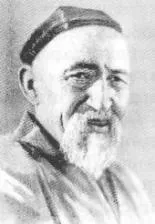
Tuychi Hafiz
Tashkent-born hafiz, a leading exponent of Uzbek classical vocal art and one of the first Uzbek singers to be recorded on gramophone discs.
- Occupation:
- Singer, Folk singer
- Born:
- 1868 — 1943
- Birthplace:
- Tashkent
Biography
Mulla Tuychi Tashmukhamedov was born in 1868 in Tashkent into a family of weaving artisans. As a child he helped his father in the workshop; after his father died he worked at a madrasa and then as a neighbourhood cook. In 1878–1884 he attended an old-style school.
He learned the secrets of singing in youth from his uncle Qo'chqor-ota. He knew the ghazals of Navoi, Mashrab, Bedil and Fuzuli well and sang them as songs; together with the hafizes Abduqahhor, Saidahmad and Nazirkhan he organised «Qo'shiq bazmi» evenings. The song cycle “Shahnoz–Gulyor”, sung in 1890 with the hafiz Shojalil and the tanbur player Shobarot, brought him fame, and his name later spread to every town of the Turkestan region.
Tuychi Hafiz was among the first singers to have his songs recorded on gramophone discs. The firm “Pishushchiy Amur” recorded 25 of his songs in all (in Riga in 1905 and in Skobelev in 1911), among them the two-part “Ilg'or”, “Xisrav” and “Suvora”, as well as “Bobo Ravshan”, “Yangi kurd” and “Avji kurd”. People called these recordings “Mulla Tuychi's records”. In 1908–1910 he was also the first to have the singing of the Fergana Valley women singers Adolatkhan and Mozidakhan put on disc, and on his initiative gramophone and record shops opened in Andijan, Fergana, Khujand and other towns (1906–1912). Before Soviet times he sang mostly in small circles and at family celebrations; in 1912 the poet Xislat compiled the collection “Armug'oni Xislat” in his honour, and most of its poems came from his repertoire.
In 1913–1914 he performed in towns of Eastern Turkestan. In Soviet times he sang for wide audiences: in 1923 he took part, with a group of Uzbek musicians, in concerts at the All-Russian Agricultural Exhibition in Moscow, and in the 1920s he helped choose the music for stagings of “Farhod and Shirin” and “Layli and Majnun”. In 1927 his many years of work were widely celebrated and he was given the title of People's Hafiz of the Uzbek SSR; sources add that the same year he was named Hero of Labour of the Uzbek SSR. From 1927–1928 until his death he was a soloist of the folk-instrument ensemble of the Uzbek radio committee and a leading singer of the Uzbek State Philharmonic.
In 1937 he took part in the Decade of Uzbek Art in Moscow; that year the All-Union radio committee recorded his performances of the maqoms “Bayot” and “Ushshoq”, and researchers led by V. A. Uspensky recorded “Chorgoh”, “Bayot”, “Ko'cha bog'i”, “Suvora” and other songs. On 31 May 1937 he was awarded the Order of the Badge of Honour. The hafiz died in Tashkent in 1943 and was buried at the Chilonzor Ota cemetery.
His performing tradition was carried on by singers such as Sh. Shoumarov, Yunus and Rixsi Rajabiy, K. Zokirov and B. Mirzayev. From 1945 the Tashkent gramophone record factory bore his name, and the Kashkadarya regional musical drama and comedy theatre is also named after Tuychi Hafiz. In 2000 he was posthumously awarded the Order «Buyuk xizmatlari uchun» (For Outstanding Services).
Career
- Uzbek RadioSoloist of the radio committee ensemble · Tashkent · …–1943
- Uzbek State PhilharmonicLeading singer · Tashkent
Awards
 Order «For Outstanding Merit»2000, posthumously · Uzbekistan
- People's Hafiz of the Uzbek SSR1927 · Uzbek SSR
 Order of the Badge of Honour1937 · USSR
Life path
- 1868Born in Tashkent
Born into a family of weaving artisans.
- 1878–1884Old-style school
Studied at a school of the old type.
- 1890The “Shahnoz–Gulyor” cycle
A song cycle sung with the hafiz Shojalil and the tanbur player Shobarot made his name.
- 1905–1911Gramophone recordings
The firm “Pishushchiy Amur” recorded 25 of his songs (Riga, 1905; Skobelev, 1911).
- 1912“Armug'oni Xislat”
A collection compiled by the poet Xislat was dedicated to him; most of its poems came from his repertoire.
- 1913–1914In Eastern Turkestan
Performed in towns of Eastern Turkestan.
- 1923Moscow exhibition
Took part with Uzbek musicians in concerts at the All-Russian Agricultural Exhibition.
- 1927People's Hafiz
As his many years of work were celebrated, he was given the title of People's Hafiz of the Uzbek SSR.
- 1927–1943Radio and philharmonic
Soloist of the Uzbek radio committee ensemble and a leading singer of the Uzbek State Philharmonic.
- 1937Decade in Moscow
Took part in the Decade of Uzbek Art; “Bayot” and “Ushshoq” recorded for radio; awarded the Order of the Badge of Honour.
- 1943Death
Died in Tashkent and was buried at the Chilonzor Ota cemetery.
- 2000Posthumous honour
Posthumously awarded the Order «Buyuk xizmatlari uchun».
Songs
| # | Song | Listen |
|---|---|---|
| 1 | “Ilg'or” | |
| 2 | “Xisrav” | |
| 3 | “Suvora” | |
| 4 | “Bobo Ravshan” | |
| 5 | “Yangi kurd” | |
| 6 | “Avji kurd” | |
| 7 | “Bayot” | |
| 8 | “Ushshoq” (to Navoi's ghazal “Qaro ko'zum”) | |
| 9 | “Chorgoh” | |
| 10 | “Ko'cha bog'i” | |
| 11 | “Segoh” | |
| 12 | “Girya” | |
| 13 | “Taronai Dugoh” |
Legacy
Tuychi Hafiz left audible and written records of the classical Uzbek song tradition: his songs were recorded on discs and for radio, and singers such as Sh. Shoumarov and Yunus and Rixsi Rajabiy carried on his manner. The Tashkent gramophone record factory and the Kashkadarya regional musical drama and comedy theatre were named after him.
Era: Uzbek vocal art from the early 20th century to the 1940s- His songs recorded on gramophone discs (Riga) (1905)
- Title of People's Hafiz of the Uzbek SSR (1927)
- The Tashkent gramophone record factory takes his name (1945)
- Order «Buyuk xizmatlari uchun» (posthumous) (2000)