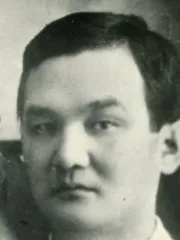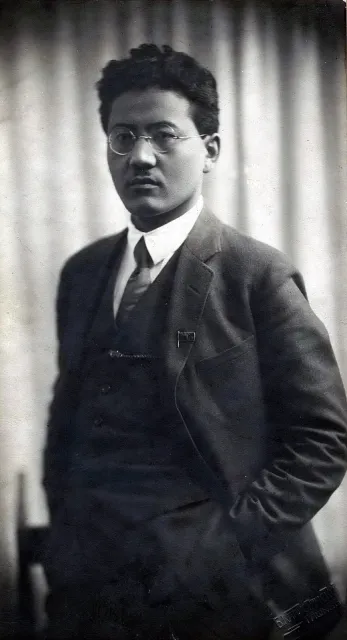
Turar Ryskulov
Kazakh-born Soviet statesman who chaired the Turkestan ASSR's Central Executive Committee (1920) and Council of People's Commissars (1922–1924) and was later deputy head of the RSFSR government; executed in 1938, rehabilitated in 1956.
- Occupation:
- Politician, Head of state, Minister
- Lived:
- December 26 1894(43 years old) ♑ — February 10, 1938
Biography
Turar Ryskulov, a Kazakh by origin, was a Soviet state and party figure who held the highest offices of the Turkestan Autonomous Soviet Socialist Republic between 1920 and 1924. He is remembered as an advocate of keeping the peoples of Turkestan together in a single republic; he later worked in the RSFSR government in Moscow and was arrested in 1937 during the Great Purge.
He was born on 26 December 1894 (14 December Old Style) in the East Talgar volost of Verny uyezd, Semirechye Oblast, into a poor herding family. He first learned to read in a prison literacy school, then attended a Russian-native school in Merke and graduated from an agricultural school in Bishkek (1907–1914). He moved to Tashkent in 1914, took part in the 1916 uprising, and studied at the Tashkent Teachers' Institute in 1916–1917.
From 1918 to 1924 he held several senior posts in Turkestan: People's Commissar of Health (1918–1919), chairman of the Central Commission for Combating Famine (1918–1919), chairman of the Turkestan ASSR Central Executive Committee from January to July 1920, and from autumn 1922 to early 1924 chairman of the republic's Council of People's Commissars. He worked to ease the consequences of the famine, openly criticised Moscow's treatment of the local population, and proposed a Turkic Republic and a Turkic Communist Party. The centre did not accept the proposal.
In 1920–1922 he served as second deputy People's Commissar for Nationalities of the RSFSR and as the commissariat's representative in Azerbaijan. When preparations for the national-territorial delimitation of Central Asia began, he was recalled to Moscow in February 1924: he worked in the Middle East section of the Comintern's Executive Committee, advised in Mongolia in 1924–1926, and was deputy chairman of the RSFSR Council of People's Commissars from 1926 to 1936 (some sources say 1937). He wrote articles on the 1916 uprising and the history of Turkestan; the first part of his book on the revolution and Turkestan's native population was published in Tashkent in 1925.
Ryskulov was arrested in Moscow in May 1937, sentenced to death, and shot on 10 February 1938. His case was reviewed in 1956 and he was rehabilitated. A district, streets and institutions in Kazakhstan bear his name.
Life path
- 1894Birth
Born in Semirechye into a herding family.
- 1916–1917The 1916 uprising
Took part in the uprising and studied at the Tashkent Teachers' Institute.
- 1918–1919People's Commissar of Health
Headed health care in the Turkestan republic and the famine-relief commission.
- 1920Chairman of the CEC
Chairman of the Turkestan ASSR Central Executive Committee from January to July.
- 1920–1922Commissariat for Nationalities
Deputy People's Commissar for Nationalities of the RSFSR and its representative in Azerbaijan.
- 1922–1924Chairman of the Council of People's Commissars
Headed the Turkestan ASSR government; recalled to Moscow in February 1924.
- 1924–1926Comintern and Mongolia
Worked in the Comintern's Middle East section and advised in Mongolia.
- 1926–1936Deputy chairman of the RSFSR Sovnarkom
Served as deputy head of the RSFSR government.
- 1937–1938Arrest and execution
Arrested in May 1937, shot on 10 February 1938; rehabilitated in 1956.