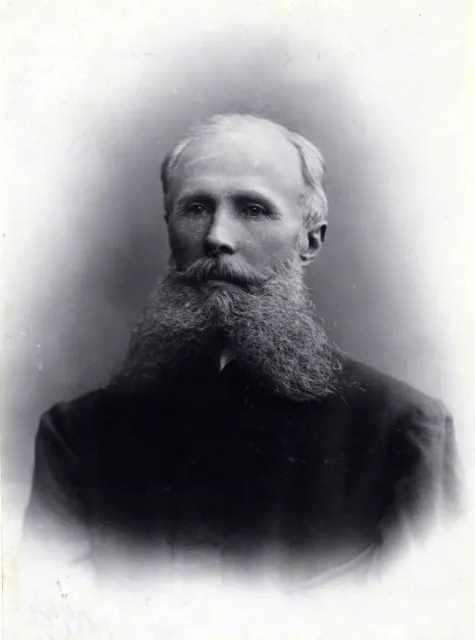
Vladimir Nalivkin
Russian ethnographer, linguist and educator who studied the life of the Fergana Valley population, author of Uzbek-Russian dictionaries and a deputy of the Second State Duma.
- Occupation:
- Scientist, Politician, Educator, Orientalist
- Lived:
- 1852 — February 2, 1918
Biography
Vladimir Nalivkin was a Russian ethnographer and educator who spent decades in Turkestan. He studied the way of life, languages and history of the local population and left books and dictionaries on these subjects. He died in Tashkent.
Born in 1852 in Kaluga into a military family, he graduated from the 1st Military Gymnasium and the Pavlovsk Military School in St Petersburg and was posted to the Orenburg Cossack Host. He took part in the Khiva campaign of 1873 and in the Kokand campaign that began in 1875. Troubled by the harsh treatment of civilians, he left combat service and became assistant head of Namangan district in Fergana Province.
In 1878 he resigned and, with his wife Maria Vladimirovna, lived for about six years as a farmer in the village of Nanay near Namangan. The couple learned Uzbek, Kyrgyz, Tajik and Arabic and became closely acquainted with local life.
From 1884 he taught at the newly opened Russian-native school in Tashkent, as its first teacher, and then taught local languages at the Turkestan Teachers' Seminary. In 1890–1895 he inspected people's schools in the Syr Darya, Fergana and Samarkand provinces, arguing for teaching in the pupils' own language and for Uzbek textbooks. From 1901 he served as assistant to the military governor of Fergana Province.
In 1886 he and his wife published in Kazan an essay on the life of women of the settled native population of Fergana, which won the Large Gold Medal of the Russian Geographical Society. The same year saw his «Brief History of the Kokand Khanate», later translated into French in Paris. He compiled Uzbek-Russian, Russian-Uzbek and Persian-Russian dictionaries; his wife wrote a grammar of the Andijan dialect.
In 1907 Tashkent elected him to the Second State Duma, where he spoke for the Social Democratic faction. After the Duma was dissolved he returned to Tashkent and lived by writing; his book «Natives Past and Present» appeared as a separate edition in 1913.
From July 1917 he chaired the Turkestan Committee of the Provisional Government. After the change of power in November he went into hiding. He died in Tashkent on 20 January (2 February) 1918.
Education
- Pavlovsk Military SchoolCollege
Career
- State Duma of the Russian EmpireDeputy of the Second Duma for Tashkent · 1907–1907
Life path
- 1873Khiva campaign
Took part as a young officer.
- 1875Kokand campaign
Took part, then became assistant head of Namangan district.
- 1878Nanay village
Left service, lived in a village near Namangan and studied the local languages.
- 1884Russian-native school
First teacher of the school in Tashkent.
- 1886Ethnographic essay and history
Published the essay on the life of Fergana women and the «Brief History of the Kokand Khanate».
- 1890–1895Inspector of people's schools
Syr Darya, Fergana and Samarkand provinces.
- 1901Fergana Province
Assistant to the military governor.
- 1907Second State Duma
Deputy from the city of Tashkent.
- 1913«Natives Past and Present»
Book published as a separate edition in Tashkent.
- 1917Turkestan Committee
Chairman of the Provisional Government's Turkestan Committee (from July).
- 1918Death
Died in Tashkent on 20 January (Old Style).
Works
- «Ocherk byta zhenshchiny osedlogo tuzemnogo naseleniya Fergany» (1886)Ethnographic essay (with his wife)
- «Kratkaya istoriya Kokandskogo khanstva» (1886)History
- «Tuzemtsy ranshe i teper» (1913)Ethnographic essays
- Uzbek-Russian and Russian-Uzbek dictionariesDictionary