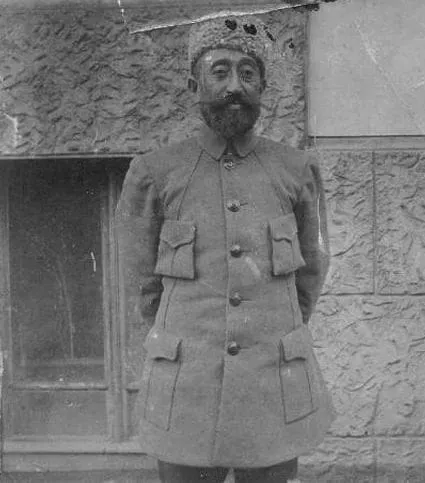
Biography
Khudaibergen Devanov was born in 1879 in Khiva into the family of Nurmuhammad Devanov, who managed estates of the Khivan khanate. He was educated in Khiva, learned Arabic, wrote verse, played nearly every Uzbek musical instrument and grew some forty varieties of roses in the family garden.
His course was set by a meeting with Wilhelm Penner, the elder of the German Mennonite community near Khiva, who taught him photography. In a society where religion forbade images of living beings, Devanov became the khanate’s first photographer. He had the patronage of the vizier Islam Khoja and worked in the khan’s chancery.
In 1908 he travelled to St Petersburg with a Khivan delegation and stayed on for two months, learning from Russian photographers and studying how to shoot and screen films. He came home with photographic and film supplies and a Pathé camera. Histories of Uzbek cinema customarily begin with that year.
In 1910 he filmed the Khivan khan Asfandiyar leaving in a carriage, the first Uzbek documentary footage. Films of Khiva’s monuments and of views of Turkestan followed. After the Khorezm People’s Soviet Republic was proclaimed in 1920, Devanov held a senior post in its finance service; later he was Sovkino’s correspondent in Khorezm, sending Moscow footage that appeared in newsreels.
Devanov was arrested on 17 August 1937. According to Memorial, on 5 October 1938 the Military Collegium of the USSR Supreme Court sentenced him to death and he was shot the same day; some publications place his death in 1940, in a camp at Yangiyul. He was rehabilitated in 1958.
Most of his footage was destroyed after the arrest. What survived is kept in the Russian State Archive of Film and Photo Documents in Krasnogorsk and in the Devanov family archive in Urgench. A photo exhibition for the 130th anniversary of his birth was held in Tashkent in 2009; a cinema in Urgench and a street in Khiva carry his name.
Career
- Court of the Khanate of KhivaClerk of the khan’s chancery, photographer · Khiva
- SovkinoCorrespondent in Khorezm
Life path
- 1879Born in Khiva
Into the family of Nurmuhammad Devanov, who managed estates of the Khivan khanate.
- 1908Trip to St Petersburg
With a Khivan delegation; spent two months learning photography and filming, and returned with a film camera.
- 1910First documentary footage
Filmed Khan Asfandiyar leaving in a carriage.
- 1913“Architectural Monuments of Our Land”
A film of 114 metres.
- 1916“Views of Turkestan”
A film of about 100 metres.
- 1920sIn the Khorezm People’s Soviet Republic
Held a senior post in the republic’s finance service.
- 1920sSovkino correspondent
Sent Khorezm footage to Moscow, where it appeared in newsreels.
- 1937Arrested
Arrested on 17 August.
- 1938Sentence and death
According to Memorial, sentenced by the Military Collegium on 5 October and shot the same day.
- 1958Rehabilitated
Cleared posthumously.
- 2009Anniversary exhibition
A photo exhibition for the 130th anniversary of his birth was held in Tashkent.
Filmography
Legacy
Devanov was the first photographer and cinematographer of Khorezm, and the history of Uzbek documentary film is traced from his work. His films and photographs are a rare record of the Khivan khanate and of the Khorezm republic.
Era: The last years of the Khivan khanate and the Khorezm People’s Soviet Republic- Trip to St Petersburg with the Khivan delegation (1908)
- Rehabilitation (1958)
- Exhibition for the 130th anniversary of his birth (2009)