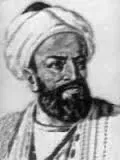
Al-Jawhari
Ninth-century mathematician and astronomer at the House of Wisdom in Baghdad; wrote a commentary on Euclid’s Elements and made an early attempt to prove the parallel postulate.
- Occupation:
- Scientist, Mathematician, Astronomer
- Born:
- c. 800 — c. 860
Biography
Al-Abbas ibn Said al-Jawhari was a mathematician and astronomer of the first half of the ninth century. Sources disagree on where he was born: Russian and Uzbek reference works name Farab (today in the Turkistan Region of Kazakhstan), while English-language ones say Baghdad. His dates are approximate too: about 800 to about 860.
Al-Jawhari worked at the House of Wisdom (Bayt al-Hikma) in Baghdad under the caliph al-Ma’mun, at the same time as al-Khwarizmi. He had an excellent command of Greek, which was unusual among Muslim scholars of his day. He is also credited with translating into Arabic the Book of Poisons by the Indian author Shanaq.
Around 830 in Baghdad and around 833 in Damascus he took part in the astronomical observations commissioned by al-Ma’mun, together with Yahya ibn Abi Mansur, al-Marwarrudhi and Sanad ibn Ali. Their results formed the basis of the “Verified Tables of al-Ma’mun” (al-Zij al-Ma’muni al-Mumtahan). According to later accounts, the same scholars measured the length of one degree of the Earth’s meridian on the Sinjar plain, and al-Jawhari was among them.
His main work is a commentary on Euclid’s Elements, which added nearly fifty extra propositions, new figures for the first book and a revision of the theory of proportion in Book V: he tried to define the equality of two ratios as the equality of the partial quotients that arise when Euclid’s algorithm is applied to both.
He also attempted to prove Euclid’s fifth (parallel) postulate, as reported by Nasir al-Din al-Tusi. The proof rests on a tacit assumption, but along the way al-Jawhari proves that through any point inside an angle a line can be drawn that meets both of its sides. Legendre tacitly relied on the same statement in his own proof in 1800. Al-Jawhari is also credited with a treatise on determining the distance from the centre of the Earth to the Sun, and with a zij. He died around 860, probably in Baghdad.
Career
Works
- “Commentary on Euclid’s Elements”Commentary
A commentary on Euclid’s Elements with nearly fifty additional propositions and an attempted proof of the parallel postulate.
- “Propositions Added to the First Book of Euclid’s Elements”Geometrical work
A collection of figures and statements the author added to Book I of the Elements.
- “Additions to Book V of Euclid’s Elements”Mathematical work
A revision of the theory of proportion in which equality of ratios is defined through Euclid’s algorithm.
- “Improvement of the Book of the Elements”Mathematical work
A work correcting and supplementing Euclid’s text.
- “Treatise on Determining the Distance from the Centre of the Earth to the Sun”Astronomical work
A treatise on the distance of the Sun from the Earth’s centre.
- “Zij”Astronomical work
A set of astronomical tables.
Life path
- c. 800Birth
Sources give different birthplaces: Farab or Baghdad.
- 813–833Work at the House of Wisdom
Worked among the scholars of Baghdad’s Bayt al-Hikma under the caliph al-Ma’mun.
- c. 830Observations in Baghdad
Took part in astronomical observations with Yahya ibn Abi Mansur, al-Marwarrudhi and Sanad ibn Ali.
- c. 830Measuring the meridian
According to later accounts, took part in measuring the length of a degree of the meridian on the Sinjar plain.
- c. 833Observations in Damascus
The results of the observations gave the “Verified Tables of al-Ma’mun”.
- 9th centuryCommentary on Euclid
Wrote a commentary on the Elements with extra propositions and an attempt to prove the fifth postulate.
- c. 860Death
Died probably in Baghdad; the exact date is unknown.
Legacy
Al-Jawhari’s commentary on Euclid’s Elements is one of the early geometrical works in Arabic, and his attempt to prove the fifth postulate is among the earliest in Muslim mathematics on the theory of parallel lines; Nasir al-Din al-Tusi reported on it in later centuries. His additions to Book V of the Elements were analysed in a 1997 article by the historian of mathematics Gregg De Young.
Era: The science of the House of Wisdom in Baghdad, 9th century- Astronomical observations in Baghdad (approximate year) (830)
- Astronomical observations in Damascus (approximate year) (833)