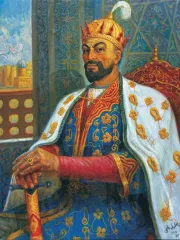
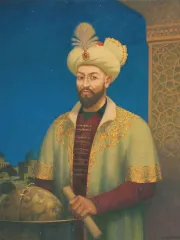
Abdullah Mirza
Timurid prince, grandson of Shah Rukh; governor of Fars (1435–1447), nephew of Ulugh Beg and ruler of Samarkand and Transoxiana (1450–1451), defeated and executed by Abu Sa'id.
- Occupation:
- Historical figure, Politician
- Born:
- March 19 1433(18 years old) ♓ — June 22, 1451
- Father:
- Ibrohim Sulton
Biography
Abdullah was born on 19 March 1433 in Shiraz to the Timurid prince Ibrahim Sultan. His father was a grandson of Timur, a son of Shah Rukh and a younger brother of Ulugh Beg, which made Ulugh Beg his uncle.
When Ibrahim Sultan died in 1435, Shah Rukh gave Fars to the young boy, though regents ran the province in practice. During Abdullah's governorship (1435–1447) Shiraz was one of the main centres of the art of the book: copies of the Shahnama (1437, 1441, 1444), Nizami's Khamsa and other manuscripts were produced and illuminated there. After complaints from the amirs of Shiraz he was removed from office twice and reappointed in 1441–42 and in 1446.
In the autumn of 1446 his cousin Sultan Muhammad besieged Shiraz but withdrew when Shah Rukh's army approached. After Shah Rukh died in 1447 and the Timurid princes began to fight for the throne, Sultan Muhammad took Fars and Abdullah went over to Ulugh Beg.
In 1449 Ulugh Beg's son Abd al-Latif defeated his father, and Abdullah fell into his hands and was imprisoned. When Abd al-Latif was killed in May 1450, the amirs of Samarkand freed Abdullah and raised him to the throne. To keep the army's loyalty he had to spend heavily, and outside Transoxiana his rule was not recognised.
Abu Sa'id Mirza, who had been set up as ruler in Bukhara, rose against him. In 1450 Abdullah managed to fend off Abu Sa'id's troops once, after which Abu Sa'id took the frontier town of Yasi (Turkestan). The next year Abu'l-Khayr Khan of the nomadic Uzbeks came to Abu Sa'id's aid: on 22 June 1451, in a battle at the village of Shiraz near Samarkand, Abdullah's army was beaten and he was captured and put to death.
According to the sources, Ulugh Beg's body was buried in the Gur-e Amir mausoleum in Samarkand during Abdullah's reign. Abu Sa'id took the throne, and Abu'l-Khayr, richly rewarded, married Ulugh Beg's daughter Rabia Sultan Begum.
Career
Life path
- 1433Birth
Born on 19 March in Shiraz to Ibrahim Sultan.
- 1435Governor of Fars
After his father's death the province was given to him; regents governed in practice.
- 1441–1442Reappointment
Removed after complaints from the amirs of Shiraz, then appointed governor of Fars again.
- 1446Siege of Shiraz
Sultan Muhammad besieged Shiraz but withdrew when Shah Rukh's army approached.
- 1447Leaves Fars
After Shah Rukh's death Sultan Muhammad took Fars; Abdullah went over to Ulugh Beg.
- 1449–1450Imprisonment
Captured by Abd al-Latif and imprisoned.
- 1450Throne of Samarkand
After Abd al-Latif was killed in May, the amirs of Samarkand raised him to the throne.
- 1450War with Abu Sa'id
Repulsed the army of Abu Sa'id Mirza once.
- 1451Defeat and execution
On 22 June he was beaten near Samarkand by the combined forces of Abu Sa'id and Abu'l-Khayr, and executed.
Legacy
Abdullah Mirza is remembered as the last supporter of Ulugh Beg to rule Samarkand: his brief reign fell during the break-up of the Timurid state and ended with the contest for Transoxiana won by Abu Sa'id Mirza and Abu'l-Khayr Khan of the nomadic Uzbeks. The Shahnama and Khamsa manuscripts produced in Shiraz during his governorship are counted among notable examples of Timurid book art.
Era: Break-up of the Timurid state, mid-15th century- Death of Ibrahim Sultan (1435)
- Death of Shah Rukh (1447)
- Killing of Abd al-Latif (1450)
- Battle near the village of Shiraz by Samarkand (1451)