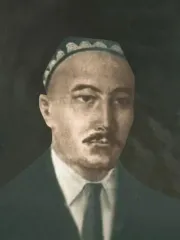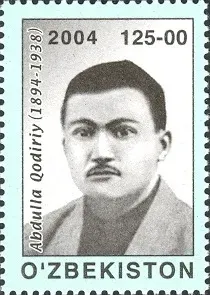
Writer, founder of the Uzbek novel, author of “Days Gone By”.
Biography
Abdulla Qodiriy was born on 10 April 1894 in Tashkent, the son of the gardener Qodirbobo, who was 74 when his son was born. He studied at an old-method Muslim school (1904–1906), then at a Russian-native school (1908–1912) and at the madrasa of Sheikh Abulqosim (1916–1917); in 1914 he married Rahbarnisa, daughter of Rasulmuhammadboy.
After school he worked as a copyist of books for a merchant and tried many odd jobs, and in the mid-1910s he began to write. In 1919–1920 he wrote the novel “Days Gone By” (“O‘tkan kunlar”): its chapters appeared in the journal “Inqilob” from 1922, and the complete novel came out in separate volumes in 1924–1926. It was the first full-length novel in Uzbek literature.
In 1923–1926 he sat on the editorial board of the satirical magazine “Mushtum” and published under many pen names, the best known of which is Julqunboy. In 1926 he was briefly arrested over the feuilleton “Yig‘indi gaplar” (“A Collection of Rumours”).
His second novel, “The Scorpion from the Altar” (“Mehrobdan chayon”), came out in 1929. Qodiriy also translated Russian classics into Uzbek, among them Gogol’s comedy “Marriage”.
He enjoyed the protection of Akmal Ikramov, head of the Communist Party of Uzbekistan, but after Ikramov’s arrest in 1937 he was left defenceless: on 31 December 1937 Qodiriy was arrested as an “enemy of the people”, and on 4 October 1938 he was shot in Tashkent. He was posthumously rehabilitated on 9 October 1956.
Education
- Abulqasim Shaykh Madrasa (Tashkent)Madrasa · Tashkent · 1916–1917
Career
- Mushtum magazineEditorial board member · 1923–1926
Life path
- 1922“Days Gone By” in instalments
Chapters of the future novel began to appear in the journal “Inqilob”.
- 1923–1926Editorial board of “Mushtum”
Sat on the editorial board of the satirical magazine and published under the pen name Julqunboy, among others.
- 1924–1926“Days Gone By” in book form
The novel came out in separate volumes — the first full-length novel in Uzbek literature.
- 1926Arrested over a feuilleton
Briefly arrested over the feuilleton “Yig‘indi gaplar” in “Mushtum”.
- 1929“The Scorpion from the Altar”
The writer’s second novel, “Mehrobdan chayon”, came out.
- 1937Arrested as an “enemy of the people”
Arrested on 31 December after the arrest of his patron, the party leader Akmal Ikramov.
- 1938Execution
Shot in Tashkent on 4 October on charges of counter-revolutionary activity.
Works
- “Days Gone By” (1926)Novel
The first full-length novel in Uzbek literature, about life in 19th-century Turkestan.
- “The Scorpion from the Altar” (1929)Novel
The writer’s second novel, continuing the historical theme of “Days Gone By”.
- “From the Diary of Kalvak Makhzum”Satirical story
One of the best-known satirical stories in the Uzbek language.
- “What Does Hot-Tempered Toshpo‘lat Say?”Satirical story
A satirical story mocking the manners of its time.
- Translation of Gogol’s “Marriage”Translation
Translated Nikolai Gogol’s comedy into Uzbek.
Legacy
Qodiriy is regarded as the founder of the Uzbek novel and of realism in 20th-century Uzbek literature; his works have been translated into Russian, English, German, Italian, Arabic and other languages and are studied in schools. The Institute of Culture in Tashkent bore his name until it merged with the Institute of Arts in 2012.
Era: Jadid Tashkent- Posthumously rehabilitated (1956)
- The Abdulla Qodiriy State Prize was established (1990)
- The Abdulla Qodiriy House Museum opened in Tashkent (2019)