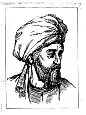
Abu Nasr Mansur ibn Iraq
Khwarazmian mathematician and astronomer, known for his work on spherical trigonometry and the law of sines, and the teacher of al-Biruni.
- Occupation:
- Scientist, Mathematician, Astronomer
- Born:
- c. 960 — c. 1036
- Birthplace:
- Khorezm
- Father:
- Ali
Biography
Abu Nasr Mansur ibn Ali ibn Iraq was born some time between about 960 and 970. Sources give his birthplace as either Gilan or Khwarazm, and the question has not been settled. He belonged to the Afrighid dynasty that ruled Khwarazm: a grandson of the Afrighid Iraq and a cousin of Abu Abdallah Muhammad, the last Khwarazmshah of that line. He is reported to have studied mathematics under Abu al-Wafa, and he lived at Kath (today the town of Beruniy).
From about 990 he taught the young al-Biruni. In 995 a coup toppled the Afrighids and the Ma’munids came to power in Khwarazm; some time later Ibn Iraq entered their service at Gurganj, first under Ali ibn Ma’mun and then under his successor Abu al-Abbas Ma’mun. Al-Biruni, who had left Khwarazm because of the civil strife, resumed working with his teacher from around 1004, and Ibn Iraq dedicated about a dozen of his treatises to him.
In 1017 Mahmud of Ghazna conquered Khwarazm, and both scholars followed the sultan to Ghazna. Ibn Iraq appears to have spent the rest of his life at Mahmud’s court.
He wrote roughly twenty-five works, seven on mathematics and eighteen on astronomy. His main contribution lies in spherical trigonometry: he wrote a commentary on Menelaus’ “Spherics”, improved its propositions and gave proofs of the spherical law of sines, and he used the polar triangle to find the sides of a triangle from its angles. He reduced the construction of a regular heptagon to a cubic equation and solved it with conic sections. His principal astronomical work, the “Shah’s Almagest”, is lost; several treatises on making and using the astrolabe survive.
The exact date of his death is unknown: in a treatise written in 427 AH (1035/36), al-Biruni already speaks of his teacher as deceased. His death is therefore usually placed around 1036, near Ghazna, in present-day Afghanistan.
Career
- Court of Khwarazmshah Ma’mun in Gurganj (“Ma’mun Academy”)Court scholar · 995–1017
- Ghaznavid court in GhaznaCourt scholar · 1017–…
Life path
- 960–970Birth
Born into the Afrighid family that ruled Khwarazm; the birthplace (Gilan or Khwarazm) is not firmly established.
- 990Teacher of al-Biruni
From about this time he taught the young al-Biruni at Kath.
- 995Fall of the Afrighids
A coup transferred power in Khwarazm to the Ma’munids; Ibn Iraq later became a scholar at their court in Gurganj.
- 1004Collaboration with al-Biruni resumed
After al-Biruni returned to Khwarazm, teacher and pupil worked together again; Ibn Iraq dedicated about twelve treatises to him.
- 1009–1017At the court of Abu al-Abbas Ma’mun
Dedicated a treatise on the spherical shape of the heavens to the Khwarazmshah Abu al-Abbas Ma’mun.
- 1017Move to Ghazna
After Mahmud of Ghazna conquered Khwarazm, he followed the sultan to Ghazna together with al-Biruni.
- 1036Death
Died around this year near Ghazna; al-Biruni refers to him as deceased in a treatise of 1035/36.
Works
- “Book on the Construction of the Heptagon”Mathematical work
Reduces the construction of a regular heptagon to a cubic equation and solves it with conic sections.
- “Commentary on Menelaus’ Spherics”Mathematical work
A detailed commentary on Menelaus’ classic work on spherical triangles.
- “Book on the Improvement of a Proposition in Menelaus’ Spherics”Mathematical work
Replaces Menelaus’ double chords with sines and outlines the basic method of spherical trigonometry.
- “Book on the Plane and Spherical Law of Sines”Mathematical work
Gives proofs of the law of sines for right-angled and oblique triangles.
- “Book of Azimuths”Astronomical work
A treatise on astronomical methods for determining azimuths.
- “Treatise on the Knowledge of Celestial Arcs”Mathematical work
Introduces the polar triangle for computing the sides of a spherical triangle from its angles.
- “Treatise on Drawing the Azimuth Circles on the Astrolabe”Astronomical work
A guide to constructing and using the astrolabe.
- “The Shah’s Almagest”Astronomical work
His principal astronomical work, now regarded as lost.
Legacy
Ibn Iraq is one of the scholars who shaped spherical trigonometry: he proved the spherical law of sines, recast Menelaus’ calculations in terms of sines and described the polar-triangle method that Nasir al-Din al-Tusi later repeated. His close collaboration with al-Biruni is one of the best-known chapters of scientific life in Khwarazm in the 10th and 11th centuries.
Era: Science at the courts of Khwarazm and Ghazna, 10th–11th centuries- The Afrighids were overthrown and the Ma’munids took power in Khwarazm (995)
- Mahmud of Ghazna conquered Khwarazm; Ibn Iraq and al-Biruni followed him to Ghazna (1017)