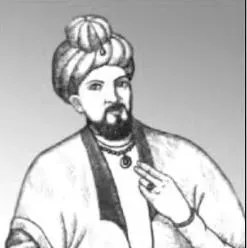
Abu al-Ghazi Bahadur
Khan of Khiva (1643–1663) of the Shaybanid dynasty and historian, author of the “Genealogy of the Turkmens” and “Genealogy of the Turks”, works on the history of the Turkic peoples.
- Occupation:
- Historical figure, Politician, Scientist, Writer
- Born:
- 1603 — 1664
- Birthplace:
- Khorezm
- Father:
- Arab Muhammadxon
- Children:
- Anushaxon
Biography
Abu al-Ghazi Bahadur was born in 1603 in Urgench, the old capital of Khorezm (today Köneürgenç in Turkmenistan). Sources give his birthday in August as the 12th, 23rd or 24th. He was a son of Arab Muhammad Khan, who ruled Khorezm from 1602, and belonged to the Shaybanid dynasty (the Arabshahid branch), descended from Genghis Khan.
Around 1620–1621 two of his brothers, Habash and Ilbars, rose against their father. Abu al-Ghazi, who sided with the father, had to flee towards the Khanate of Bukhara, while Arab Muhammad Khan was captured and later killed. When another brother, Isfandiyar, took the throne of Khiva in 1623, he made Abu al-Ghazi governor of Urgench.
The brothers soon fell out. About 1627 Abu al-Ghazi went to the Kazakh khan Esim and then spent roughly two years with Tursun Khan, the ruler of Tashkent. Back in Khorezm, he was sent by Isfandiyar in 1630 to the Safavid shah Safi in Iran. He spent about ten years there, near Isfahan, under supervision but on a pension, and read the Persian histories of the Mongols and Turks that later served as sources for his own books.
In 1639 he escaped from captivity and returned to Khorezm around 1641, by way of the Turkmen lands and Mangyshlak, where he stayed with the Kalmyks. After Isfandiyar died in 1643 he was proclaimed khan; he had to fight the Turkmen who backed Isfandiyar’s sons and the Bukharan troops they had called in, and took Khiva in 1644–1645 (sources differ on the year).
As khan he fought the Turkmen, repelled Kalmyk raids in 1649 and 1653, and led campaigns against Abd al-Aziz, the khan of Bukhara. In 1663 he handed power to his son Anusha Muhammad (Anusha Khan).
Abu al-Ghazi wrote two works of history. The “Genealogy of the Turkmens” (Shajara-yi tarakima, finished by 1661) deals with the origins of the Turkmen tribes and was written at the request of Turkmen notables. The “Genealogy of the Turks” (Shajara-yi turk) tells the history of the Turkic and Mongol peoples from Oghuz Khan through Genghis Khan and the Shaybanids to his own day; he began it in 1663–1664 and did not finish it, and his son Anusha completed it. Its language is far from the heavily Persianised literary Chagatai and close to the plain speech of the Khorezmian Uzbeks.
Abu al-Ghazi died in Khiva in 1664 (some sources say 1663). The “Genealogy of the Turks” has been studied in Europe since the 18th century: it was translated into French (Leiden, 1726) and Russian (1768–1774), and Desmaisons published an edition in 1871–1874. Streets in Urgench and Samarkand and the asteroid 16413 Abulghazi are named after him.
Career
- Court of the Khanate of KhivaKhan of Khiva (1643–1663) · Khiva · 1643–1663Everyone who held this post →
Life path
- 1603Birth
Born in Urgench into the family of Arab Muhammad Khan.
- 1620–1621Fall of his father
His brothers Habash and Ilbars rose against their father; Abu al-Ghazi fled towards Bukhara.
- 1623Governor of Urgench
Became governor of Urgench after his brother Isfandiyar took the throne of Khiva.
- 1627–1629Among the Kazakhs and in Tashkent
After a quarrel with Isfandiyar he went to the Kazakh khan Esim, then lived with Tursun Khan, the ruler of Tashkent.
- 1630–1639In Iran
Isfandiyar sent him to Shah Safi; he lived about ten years near Isfahan and studied historical works.
- 1639–1641Escape and return
Escaped from captivity and returned to Khorezm through the Turkmen lands and Mangyshlak.
- 1643–1645Accession
Proclaimed khan after Isfandiyar’s death and took Khiva while fighting the Turkmen and the Bukharan troops (the year differs between sources).
- 1649–1653Kalmyk raids
Repelled Kalmyk raids on Khorezm in 1649 and 1653.
- 1653–1661Campaigns against Bukhara
Led campaigns against Abd al-Aziz, the khan of Bukhara.
- 1661“Genealogy of the Turkmens”
Finished his work on the genealogy of the Turkmen tribes.
- 1663Handing over power
Passed the throne to his son Anusha Muhammad and began the “Genealogy of the Turks”.
- 1664Death
Died in Khiva (some sources say 1663).
Works
- “Genealogy of the Turkmens” (Shajara-yi tarakima) (1661)Historical work
On the origins and genealogy of the Turkmen tribes; written at the request of Turkmen notables.
- “Genealogy of the Turks” (Shajara-yi turk) (1664)Historical work
The history of the Turkic and Mongol peoples from Oghuz Khan to Genghis Khan and the Shaybanids; left unfinished by the author and completed by his son Anusha. Translated into European languages from the 18th century.
Legacy
As ruler of the Khanate of Khiva in the 17th century Abu al-Ghazi restored its strength after the years of infighting, and as a historian he left two works on the history of the Turkic and Turkmen peoples. The “Genealogy of the Turks” has been studied in Europe since the 18th century and is counted among the main sources for the history of Central Asia. His plain style, close to popular speech, also matters for the history of the Uzbek written language.
Era: 17th century, the Khanate of Khiva (Shaybanid dynasty)- Sent to Iran, where he lived about ten years (1630)
- “Genealogy of the Turkmens” finished (1661)
- Power handed to his son Anusha Khan (1663)
- “Genealogy of the Turks” translated into French (Leiden) (1726)
- Desmaisons’s edition begins to appear (1871–1874) (1871)