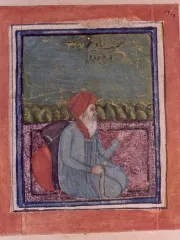
Alauddin Attar
14th-century Sufi shaykh, son-in-law and deputy of Baha al-Din Naqshband, who led the Khwajagan-Naqshbandi order after his death.
- Occupation:
- Religious figure
- Real name:
- Muhammad ibn Muhammad al-Bukhari al-Attar
- Nickname:
- Khwaja Ala al-Din Attar
- Died:
- 1400
- Birthplace:
- Khorezm
- Father:
- Muhammad
- Children:
- Hasan Attor
Biography
Alauddin Attar — Muhammad ibn Muhammad al-Bukhari al-Attar — was a Sufi shaykh of the second half of the 14th century who led the Khwajagan-Naqshbandi order after Baha al-Din Naqshband. According to most sources he was born in Khwarazm into a family of perfume and herb merchants; his year of birth is unknown. The name «Attar» points to that family trade.
As a child he moved to Bukhara with his parents: his father kept several shops in the bazaar, and the boy helped him trade. Alauddin was studying at a madrasa when his father died; he gave up his share of the inheritance to his younger brothers and devoted himself wholly to study. While still a student he resolved to take the path of a Khwajagan dervish.
He longed to become a disciple of Baha al-Din Naqshband and married the shaykh’s daughter, thereby joining his household. Naqshband valued his intellect and austere life but, to rein in the young son-in-law’s impetuosity and pride, took him out of the madrasa to his own home in Qasr-i Hinduvan and initiated him into the order. Alauddin soon became one of the shaykh’s first deputies and, while Naqshband was still alive, guided many of his followers.
After Naqshband’s death in 1389, a rivalry over leadership of the order arose between Alauddin Attar and Muhammad Parsa. The two reached an understanding: Parsa recognised Attar’s right to carry on his teacher’s work and went on to serve as shaykh al-Islam in Balkh, while Attar headed the order. In these years Parsa, at Attar’s request, wrote «Risala-yi Qudsiyya» about Naqshband, quoting many stories about the master’s life as told by Attar. Alauddin’s own writings have not survived: later authors cite a treatise of his called «Maqalat-i Arvah», and his sayings are preserved in works such as «Rashahat» and «Nafahat».
Attar settled with his family in Chaghaniyan, around present-day Denau, and trained disciples at a khanqah. Among them were Yaqub Charkhi, who continued the Naqshbandi chain, and the scholar Sayyid Sharif Jurjani. The sources report that he demanded complete obedience to the shaykh and strict observance of etiquette (adab) from his disciples. His son Hasan Attar appears in the order’s history as a grandson of Baha al-Din Naqshband.
Alauddin Attar died on 20 Rajab 802 AH — March 1400 (one source gives the year of death as 804 AH). His tomb is in the Denau district of the Surkhandarya region; in 2019 the shrine of Khwaja Alauddin Attar was added to the national list of immovable material cultural heritage and placed under state protection.
Career
Life path
- Mid-14th centuryBirth
Born in Khwarazm into a family of perfume merchants; the exact year is unknown.
- YouthMove to Bukhara
Moved to Bukhara with his parents as a child; his father kept shops in the bazaar.
- Student yearsDeath of his father
His father died while he studied at a madrasa; he gave up his share of the inheritance to his brothers.
- Student yearsDisciple of Naqshband
Married Baha al-Din Naqshband’s daughter and entered the shaykh’s household and order.
- 1389Head of the order
After Naqshband’s death he reached an understanding with Muhammad Parsa and led the Khwajagan-Naqshbandi order.
- After 1389In Chaghaniyan
Settled with his family in Chaghaniyan, around present-day Denau, and trained disciples at a khanqah.
- 1400Death
Died on 20 Rajab 802 AH (March 1400); his tomb is in the Denau district.
Legacy
After Baha al-Din Naqshband, Alauddin Attar led the order from 1389, kept it united and passed the chain of succession on through Yaqub Charkhi; the Naqshbandiyya then spread across Transoxiana and beyond. Important accounts of Naqshband survive thanks to «Risala-yi Qudsiyya», written down from his words. His tomb in Denau is a place of pilgrimage and has been under state protection since 2019.
Era: Transoxiana in the Timurid age, late 14th century- Baha al-Din Naqshband died; Attar became head of the order (1389)
- Alauddin Attar died (1400)
- The shrine was added to the national cultural heritage list (2019)