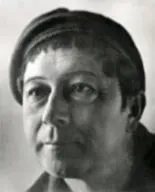
Biography
Alexander Nikolaevich Volkov was born on 31 August 1886 (19 August in the old style) in New Margelan, later called Skobelev and now Fergana, in the family of a garrison doctor. He grew up in Turkestan and finished the Orenburg Cadet Corps in 1905.
He entered St Petersburg University but left it after a few years for painting, working in the studio of the watercolourist D. Bortniker, then in 1908–1910 in V. Makovsky's class at the Higher Art School of the Academy of Arts, and in 1910–1911 at M. Bernstein's private school, where Nicholas Roerich, Ivan Bilibin and Leonid Sherwood taught. From 1912 to 1916 he studied at the Kyiv Art School under F. Krichevsky and V. Menk.
From 1916 Volkov lived in Central Asia, mostly in Tashkent. In 1919 he became director of the State Museum of Arts of Central Asia and taught at the Turkestan art workshops (1919–1921); in 1922 he headed the Theatre of Proletarian Culture. In 1921–1923 he travelled to Bukhara, Khiva and Samarkand and took part in designing and making military badges for the Bukharan and Khorezm People's Soviet Republics. From 1929 to 1946 he taught at the Tashkent art college.
His best-known canvases date from these years: Caravan (Arrival) (1922–1923), The Pomegranate Tea House (1924) and Girls with Cotton (1932), all three held by the Tretyakov Gallery. He belonged to the Association of Artists of Revolutionary Russia (AKhRR) from 1927, joined the society Masters of the New East in 1929, and in 1931–1932 formed the art group known as Volkov's Brigade. After a Moscow exhibition in 1934 the Tretyakov Gallery and the Russian Museum bought several of his works. From the mid-1930s his painting was criticised as formalist.
During the war Volkov designed posters for TASS (1941–1946). He was named Honoured Art Worker of the Uzbek SSR in 1941 and People's Painter of the Uzbek SSR in 1946. Solo exhibitions were held in 1943, 1944–1945 and 1957. He died in Tashkent on 17 December 1957.
Volkov is regarded as one of the founders of modern art in Central Asia. His paintings are held by the Tretyakov Gallery and other museums, and have sold at international auctions for hundreds of thousands and millions of dollars.
Education
- Orenburg Military Cadet CorpsSchool · 1900–1905
- Imperial Academy of Arts (St Petersburg)University · 1908–1910 · Higher Art School, V. Makovsky's class
- Kyiv Art SchoolCollege · 1912–1916
Career
- Benkov Republican Art CollegeTeacher · Tashkent · 1929–1946
- Association of Artists of Revolutionary Russia (AKhRR)Member · 1927–…
Awards
 People's Painter of the Uzbek SSR1946 · Uzbek SSR
- Honoured Art Worker of the Uzbek SSR1941 · Uzbek SSR
Life path
- 1886Born in New Margelan
Born in New Margelan (now Fergana) in the family of a garrison doctor.
- 1908–1910At the Academy of Arts
Studied at the Higher Art School in St Petersburg in V. Makovsky's class.
- 1912–1916Kyiv Art School
Studied under F. Krichevsky and V. Menk; returned to Central Asia in 1916.
- 1919Museum director
Became director of the State Museum of Arts of Central Asia in Tashkent and taught at the Turkestan art workshops (1919–1921).
- 1921–1923Journeys to Bukhara, Khiva and Samarkand
Took part in designing and making badges for the Bukharan and Khorezm People's Soviet Republics.
- 1927Member of AKhRR
Joined the Association of Artists of Revolutionary Russia; in 1928 he exhibited with its Tashkent branch.
- 1929–1946Teacher at the Tashkent art college
Joined the society Masters of the New East in 1929.
- 1931–1932Volkov's Brigade
Founded the art group Volkov's Brigade.
- 1934Moscow exhibition
After the Moscow exhibition the Tretyakov Gallery and the Russian Museum bought several of his works.
- 1941Honoured Art Worker
Named Honoured Art Worker of the Uzbek SSR; during the war he designed posters for TASS.
- 1946People's Painter title
Named People's Painter of the Uzbek SSR.
- 1957Last solo exhibition and death
A solo exhibition was held; he died in Tashkent on 17 December.
Works
- Caravan (Arrival) (1922)Painting
Painted in 1922–1923; held by the Tretyakov Gallery.
- The Pomegranate Tea House (1924)Painting
One of the artist's best-known works; held by the Tretyakov Gallery.
- Girls with Cotton (1932)Painting
Held by the Tretyakov Gallery.
- The Collective FarmerPainting
Held by the Museum of Oriental Art in Moscow.
- Morning in Shakhimardan (1934)Painting
A landscape linked to his trips to Shakhimardan (1930–1934); shown in 1934 at an exhibition of Soviet art in the United States.
- Spain (1937)Painting
Counted among Volkov's best-known works.
- Autumn (1946)Painting
Painted in the year he was named People's Painter of the Uzbek SSR.
- Wild Flowers (1955)Still life
Held by the State Art Museum of Uzbekistan.
Legacy
Volkov is regarded as one of the founders of modern art in Central Asia. His paintings are held by the Tretyakov Gallery, the Museum of Oriental Art in Moscow, the State Art Museum of Uzbekistan and the Karakalpakstan art museum. At London auctions in 2010–2013 individual works went for hundreds of thousands of dollars, and Children Musicians sold for more than three million.
Era: Turkestan and the Uzbek SSR, 1910s–1950s- The Pomegranate Tea House painted (1924)
- Moscow exhibition; purchases by the Tretyakov Gallery (1934)
- Named People's Painter of the Uzbek SSR (1946)
- Children Musicians sold at auction in London (2013)