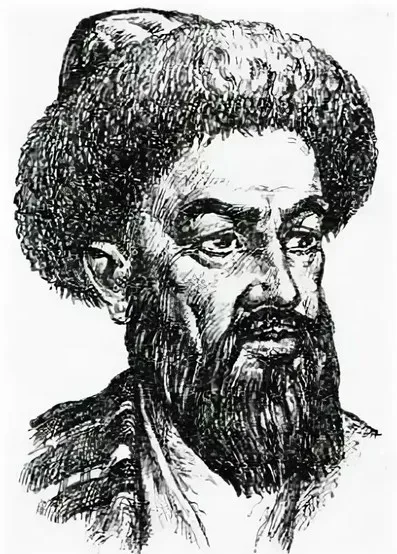
Boborahim Mashrab
Uzbek Sufi poet of the late 17th and early 18th centuries, a wandering qalandar dervish whose ghazals, mustazads and mukhammases spread widely among the people.
- Occupation:
- Writer, Religious figure, Poet
- Born:
- c. 1640 — 1711
- Birthplace:
- Namangan
- Father:
- Mulla Vali
Biography
Boborahim Mashrab was born in Namangan into the family of Mulla Vali, a poor weaver. Sources disagree on the year of his birth: most Uzbek works give 1640 (1050 AH), while others give 1653 or 1657; some accounts place his birth in the village of Andigan near Namangan. His father died early, and his mother supported the family by spinning thread.
In Namangan he studied the religious sciences, Sufi teaching and Persian under the Sufi scholar Mulla Bozor Okhund. Around 1665, on his teacher’s advice, he went to Kashgar to join Afaq Khoja (Hidayatullah), an influential sheikh of the Naqshbandi order, and remained his disciple for about seven years. Many of his poems in praise of his master date from this time, among them the ghazals with the refrains “Koshki” and “O‘zum” and the mukhammas with the refrain “Qolmadi”.
Around 1672–1673 Mashrab left Afaq Khoja’s lodge. Later popular tales attribute this to his love for one of the master’s servant girls, while scholars also point to differences in outlook between master and disciple. He spent the following forty or so years on the road as a wandering qalandar dervish, visiting Namangan, Samarkand, Bukhara, Tashkent, Khujand, Turkestan, Badakhshan and Balkh.
His poems combine mystical love of God with attacks on injustice, hypocritical clerics and oppressive officials, and they spread quickly by word of mouth. He wrote mainly in Turki (Old Uzbek) and partly in Persian, in the forms of the ghazal, mustazad, murabba, mukhammas, musaddas, masnavi and rubai, and is counted among the authors of the largest number of mustazads in Uzbek literature.
In 1711 he was hanged on the orders of Mahmud Biy Qataghan, the ruler of Balkh and Kunduz, backed by a fatwa of the clergy; sources name either Balkh or Kunduz as the place of execution. Mashrab never collected his poems into a divan: they have come down mainly through “Qissai Mashrab” (also known as “Devonai Mashrab”), an anonymous narrative compiled later, in which historical facts are mixed with legends and verses attributed to him. The works “Mabdai nur” and “Kimyo” are also attributed to Mashrab, but his authorship is disputed.
Later poets such as Nodira, Huvaydo, Furqat and Hamza wrote takhmis and nazira poems on his ghazals, and his verses are still sung by Uzbek performers. A museum of the poet opened in Namangan in 1992, and a street and a park in the city bear his name; novels, stories and stage works have been devoted to his life, among them “The Flights of Mashrab” (2006) at the Ilkhom theatre in Tashkent.
Career
- Afaq Khoja’s lodge in KashgarDisciple · 1665–1673
Life path
- c. 1640Birth
Born in Namangan into the family of the weaver Mulla Vali; other accounts give 1653 or 1657 and the village of Andigan near Namangan.
- Studies in Namangan
Studied the religious sciences, Sufi teaching and Persian under the Sufi scholar Mulla Bozor Okhund.
- c. 1665Disciple of Afaq Khoja
On his teacher’s advice went to Kashgar and spent about seven years as a disciple of the Naqshbandi sheikh Afaq Khoja.
- 1672–1673Departure from Kashgar
Left Afaq Khoja’s lodge after a rift with his master.
- 1673–1711Years of wandering
Roamed as a qalandar dervish through Namangan, Samarkand, Bukhara, Tashkent, Khujand, Turkestan, Badakhshan and Balkh; his poems spread by word of mouth.
- 1711Execution
Hanged in Balkh (by other accounts, in Kunduz) on the orders of Mahmud Biy Qataghan, the ruler of Balkh and Kunduz.
Works
- “Koshki” and “O‘zum”Ghazals with a refrain
Ghazals in praise of his master Afaq Khoja, written during his years as a disciple in Kashgar.
- “Qolmadi”Mukhammas with a refrain
A mukhammas from the same period in which the poet hails his master as his guide.
- “Qissai Mashrab”Anonymous narrative
The main source for the poet’s life and verse, interwoven with legends; it circulated in manuscripts and lithographs as “Devonai Mashrab” and “Hazrati Shoh Mashrab”.
- “Mabdai nur” (“The Source of Light”)Attributed work
A large collection of verse parables and ghazals; attributed to Mashrab, though his authorship is disputed.
- “Kimyo”Attributed work
A work attributed to Mashrab; scholars dispute his authorship.
Legacy
Uzbek literary scholarship regards Mashrab’s poetry as a significant stage in bringing a popular voice and social themes into classical verse, and credits him with a major role in the development of the murabba and mustazad forms. Nodira, Huvaydo, Furqat and Hamza wrote takhmis and nazira poems on his ghazals. His life turned into popular legend, gathered in “Qissai Mashrab”; his poems have been translated into Russian, English, French and other languages, and his ghazals are still sung.
Era: Transoxiana and East Turkestan under the Ashtarkhanids, late 17th – early 18th century- The Boborahim Mashrab Museum opened in Namangan (1992)
- Mark Weil staged “The Flights of Mashrab” at the Ilkhom theatre in Tashkent (2006)