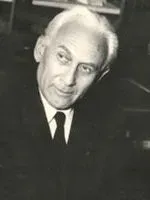
Boris Beder
Soviet hydrogeologist, Honoured Geologist of the Uzbek SSR; took part in discovering and studying more than 30 deposits of mineral, industrial and thermal waters in Uzbekistan and is credited with finding Tashkent mineral water.
- Occupation:
- Scientist, Geographer or geologist
- Born:
- August 4 1908(81 years old) ♌ — December 31, 1989
- Birthplace:
- Tashkent

Biography
Boris Aleksandrovich Beder was born in Tashkent on 4 August 1908 into the family of an office employee. After finishing school in 1925 he entered the geology department of the physics and mathematics faculty of Central Asian State University. When the department was turned into the Central Asian Geological Prospecting Institute in 1930, he graduated from it that spring as a hydrogeologist.
After graduating he worked for the Central Asian Geological Prospecting Administration as head and technical manager of various hydrogeological parties. From March 1943 he led the Uzbek Hydrogeological Expedition, which compiled the republic’s summary hydrogeological maps, and from August 1944 he also headed the hydrogeology department of the geological administration. In 1947 he prepared and defended a candidate’s dissertation without leaving his job.
In March 1951 Beder helped set up a large joint hydrogeological expedition as its chief geologist and then, at his own request, moved to head its hydromineral party. In May 1960 he won a competition for a post at the Central Asian Research Institute of Geology and Mineral Resources (SAIGIMS), where he was a senior researcher and head of the laboratory of hydromineral raw materials. In 1970 he moved to the newly created Institute of Hydrogeology and Engineering Geology (GIDROINGEO), where he worked until the end of his life.
Beder took a direct part in discovering and studying more than 30 deposits of mineral, industrial and thermal waters in Uzbekistan and is regarded as the discoverer of Tashkent mineral water. Under his direction the first cadastre of Uzbekistan’s groundwater and summary small-scale hydrogeological maps were compiled. He was one of the authors and editors of the multi-volume monograph “Underground Waters of Uzbekistan”, published during the war.
He identified patterns in the distribution of mineral and thermal water deposits in Central Asia, proposed a hydrogeological criterion for oil and gas prospecting, and made recommendations on using oilfield waters in balneology and on extracting iodine and bromine from them. Deposits discovered or studied with his participation include Chartak, Chimyon, Tashminvody, Chinabad and Jayronkhona in Uzbekistan, Shaambary in Tajikistan, Changyrtash in Kyrgyzstan and Cheleken in Turkmenistan. His work underlay more than ten plants bottling natural mineral water.
Beder published over 220 scientific works, and about 190 more are held in geological archives. For many years he was a member of the presidium of the Republican Society for Nature Protection and deputy chairman of its section for the protection of groundwater. He was awarded the Order of the Red Banner of Labour, seven medals and three honorary certificates of the Presidium of the Supreme Soviet of Uzbekistan, and held the honorary titles Honoured Geologist of the Uzbek SSR and Discoverer of a Deposit.
Boris Beder died in Tashkent on 31 December 1989 and was buried at the Dombrabad cemetery.
Education
- Central Asian State UniversityUniversity · Tashkent · 1925–1930 · Hydrogeology
Career
- Central Asian Geological Prospecting AdministrationHead of hydrogeological parties and expeditions, head of the hydrogeology department · Tashkent · 1930–1960
- Central Asian Research Institute of Geology and Mineral Resources (SAIGIMS)Senior researcher, head of the laboratory of hydromineral raw materials · Tashkent · 1960–1970
- Institute of Hydrogeology and Engineering Geology (GIDROINGEO)Researcher · Tashkent · 1970–1989
Awards
Life path
- 1908Birth
Born in Tashkent into the family of an office employee.
- 1925–1930Higher education
Studied in the geology department of Central Asian State University and then at the Central Asian Geological Prospecting Institute, qualifying as a hydrogeologist.
- 1930Joins the geological service
Began work at the Central Asian Geological Prospecting Administration as head and technical manager of hydrogeological parties.
- 1943Head of the hydrogeological expedition
Took charge of the Uzbek Hydrogeological Expedition, which compiled summary hydrogeological maps of the republic.
- 1944Head of the hydrogeology department
Also headed the hydrogeology department of the geological administration.
- 1947Candidate’s dissertation
Prepared and defended a candidate’s dissertation while continuing his regular work.
- 1951Joint hydrogeological expedition
Helped organise it as chief geologist, then became head of its hydromineral party.
- 1960SAIGIMS
Senior researcher and head of the laboratory of hydromineral raw materials at the Central Asian Institute of Geology and Mineral Resources.
- 1970GIDROINGEO
Moved to the new Institute of Hydrogeology and Engineering Geology, where he worked until the end of his life.
- 1989Death
Died in Tashkent on 31 December.
Works
- “Underground Waters of Uzbekistan”Multi-volume monograph
A monograph published during the war; Beder was one of its authors and editors.
- “Artesian Waters of South-Western Uzbekistan” (1961)Book
Tashkent, 47 pp.
- “Artesian, Mineral and Thermal Waters of Uzbekistan” (1973)Book
Tashkent, Uzbekistan publishing house, 39 pp.