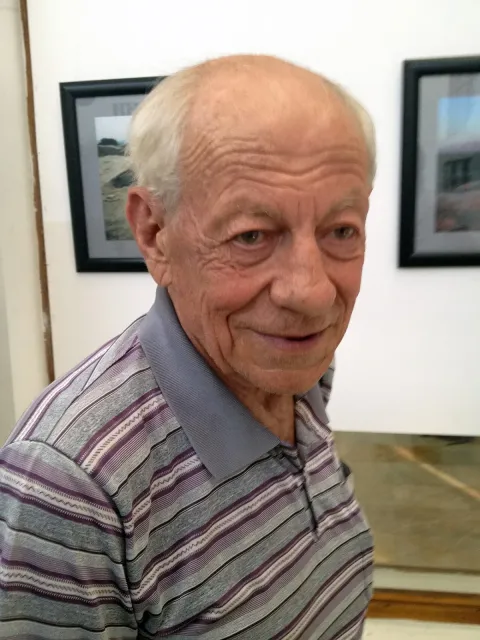
Edvard Rtveladze
Uzbekistani archaeologist and historian, academician of the Academy of Sciences of Uzbekistan; director of the Kampirtepa excavations and scholar of Central Asia's ancient history and coins.
Biography
Edvard Vasilyevich Rtveladze was born on 14 May 1942 in Borjomi, in the Georgian SSR, and grew up in Kislovodsk. He was drawn early to geography and travel, then to history and archaeology, and from the summer of 1958 he did fieldwork on his own with a schoolmate.
In 1967 he graduated in history and archaeology from Tashkent State University (now the National University of Uzbekistan). Among his teachers were Mikhail Masson and Galina Pugachenkova. He was a laboratory assistant and junior researcher at the Institute of Art Studies of the Academy of Sciences of Uzbekistan in 1967–1969, taught at the Tashkent Theatre and Art Institute in 1970–1973, and then returned to the Institute of Art Studies. He defended his candidate's dissertation in Leningrad in 1975, became a Doctor of Historical Sciences in 1989 and a professor in 1992.
Rtveladze studied the ancient and medieval history, archaeology, numismatics, epigraphy and art of Central Asia. He took part in more than 80 archaeological expeditions in Central Asia, the Caucasus, Cyprus, France and Japan. In 1972 he identified the fortified settlement of Kampirtepa in Northern Bactria, directed its systematic excavation in 1982–1991, and in 1999 formed an independent Tokharistan Archaeological Expedition under the Academy of Arts of Uzbekistan. In 1991 he discovered the Uzundara fortress.
From 1985 to 2009 he headed a department at the Institute of Art Studies; in 1985 he received the Beruni State Prize of the Uzbek SSR. In 1995 he was elected a full member of the Academy of Sciences of Uzbekistan. His books, written alone and with co-authors, deal with Northern Bactria, ancient coins and the Great Silk Road; collective monographs prepared under his direction include «Amir Temur in World History», «Khiva — the City of a Thousand Domes», «Shakhrisabz», «Termez» and «Jalaluddin Manguberdi». By published accounts he wrote more than 800 scholarly works, including 41 monographs.
From 2016 he was scientific director of the international project «The Cultural Heritage of Uzbekistan in World Collections». He chaired the scientific council of the World Scientific Society for the Study, Preservation and Popularization of the Cultural Heritage of Uzbekistan, founded in 2017. In 2019, on the basis of the Kampirtepa excavations, he suggested that the lost Greco-Bactrian city of Alexandria on the Oxus might have stood there. He was a member of the Senate of the Oliy Majlis.
Edvard Rtveladze died in Tashkent on 10 February 2022. His wife Lidia Lvovna (1941–2020) was also an archaeologist and archivist. By a presidential decree of 28 May 2026 he was posthumously awarded the Order of Dustlik.
Education
- National University of UzbekistanUniversity · Tashkent · 1967 · Historian-archaeologist
Career
- Academy of Sciences of UzbekistanAcademician · Tashkent · 1995–…
- Senate of the Oliy Majlis of UzbekistanSenator, member of the foreign policy committee · Tashkent
- Institute of Art Studies (Tashkent)Laboratory assistant, junior and senior researcher, head of department (1985–2009) · Tashkent · 1967–2009
- World Scientific Society for the Study, Preservation and Popularization of the Cultural Heritage of UzbekistanChairman of the scientific council · TashkentEveryone who held this post →
Awards
 Order «For Outstanding Merit»2001 · Uzbekistan
 Order «El-yurt hurmati»2017 · Uzbekistan
 Order of Labor Glory2003 · Uzbekistan
 Order «Do'stlik» (Friendship)2026, posthumously · Uzbekistan
 Beruni State Prize of the Uzbek SSR1985 · Uzbek SSR
Life path
- 1942Born
In Borjomi, Georgian SSR.
- 1967Tashkent State University
Graduated as a historian-archaeologist and began work at the Institute of Art Studies.
- 1970–1973Teaching
Lecturer at the Tashkent Theatre and Art Institute.
- 1972Kampirtepa
Identified the fortified settlement in Northern Bactria.
- 1975Candidate's dissertation
Defended in Leningrad.
- 1982–1991Kampirtepa excavations
Led the Institute of Art Studies expedition.
- 1985–2009Head of department
At the Institute of Art Studies; the Beruni State Prize in 1985.
- 1989Doctor of Sciences
Doctor of Historical Sciences; professor from 1992.
- 1995Academician
Elected a full member of the Academy of Sciences of Uzbekistan.
- 1999Tokharistan Expedition
Formed an independent expedition under the Academy of Arts.
- 2016–2017Cultural heritage project
The project «The Cultural Heritage of Uzbekistan in World Collections»; in 2017 the World Scientific Society.
- 2022Death
Died in Tashkent on 10 February.
Works
- «In the Land of Golden Fire» (1985)Book
A co-authored book.
- «Monuments of Bygone Centuries» (1986)Book
A co-authored book.
- «Ancient Coins of Central Asia» (1987)Book
A monograph on ancient coins.
- «Northern Bactria — Tokharistan. Essays on History and Culture» (1990)Book
A co-authored book.
- «The Great Silk Road» (1999)Book
A book on the history of the Great Silk Road.
- «The Civilisation of Ancient Uzbekistan. Essays on the History of Statehood and Law» (2001)Book
A co-authored book.
- «Ancient and Early Medieval Coins of the Historical and Cultural Regions of Uzbekistan» (2003)Book
A numismatic study.